A country’s history can be read in its images. It lives in the posters pasted onto walls, the magazines passed between friends, the record sleeves that defined musical eras and the advertisements that sold people a particular vision of themselves. These objects are easy to overlook once their original purpose has passed. Yet together, they tell us how a society saw itself, who held power and how people used visual culture to challenge it.
South Africa has a rich history of graphic design and printed material, much of it connected to political struggle, popular culture and the development of a distinctly local visual language. But who is preserving this history, and how easily can today’s designers, researchers and the public access it?
The archive is already here
One important repository is the South African History Archive (SAHA), which holds a collection of 4,789 posters spanning the 1940s to the present, with the bulk dating from the 1980s and 1990s. The collection includes material associated with the United Democratic Front, the End Conscription Campaign, trade unions, youth movements and anti-apartheid activism. It is open for research, although copyright restrictions apply to some items.
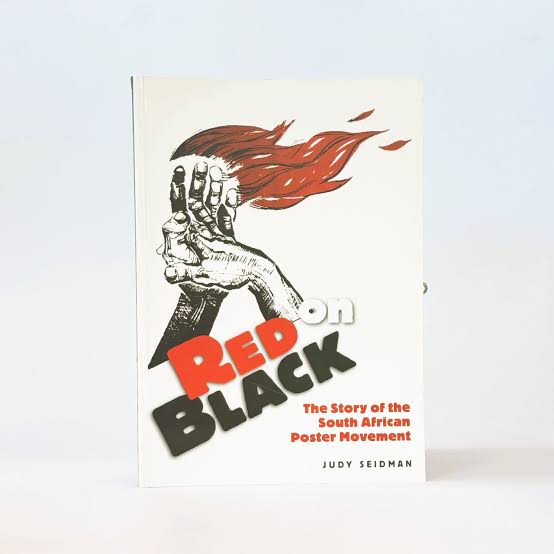
These posters were more than illustrations accompanying political messages. They were tools of communication, mobilisation and resistance, often produced under conditions of censorship and repression. The publication Red on Black: The Story of the South African Poster Movement, written by Judy Seidman, documents how poster-makers developed visual languages to communicate ideas, organise communities and record the struggle for liberation. The collection demonstrates that graphic design has long played a role in shaping South African public life.
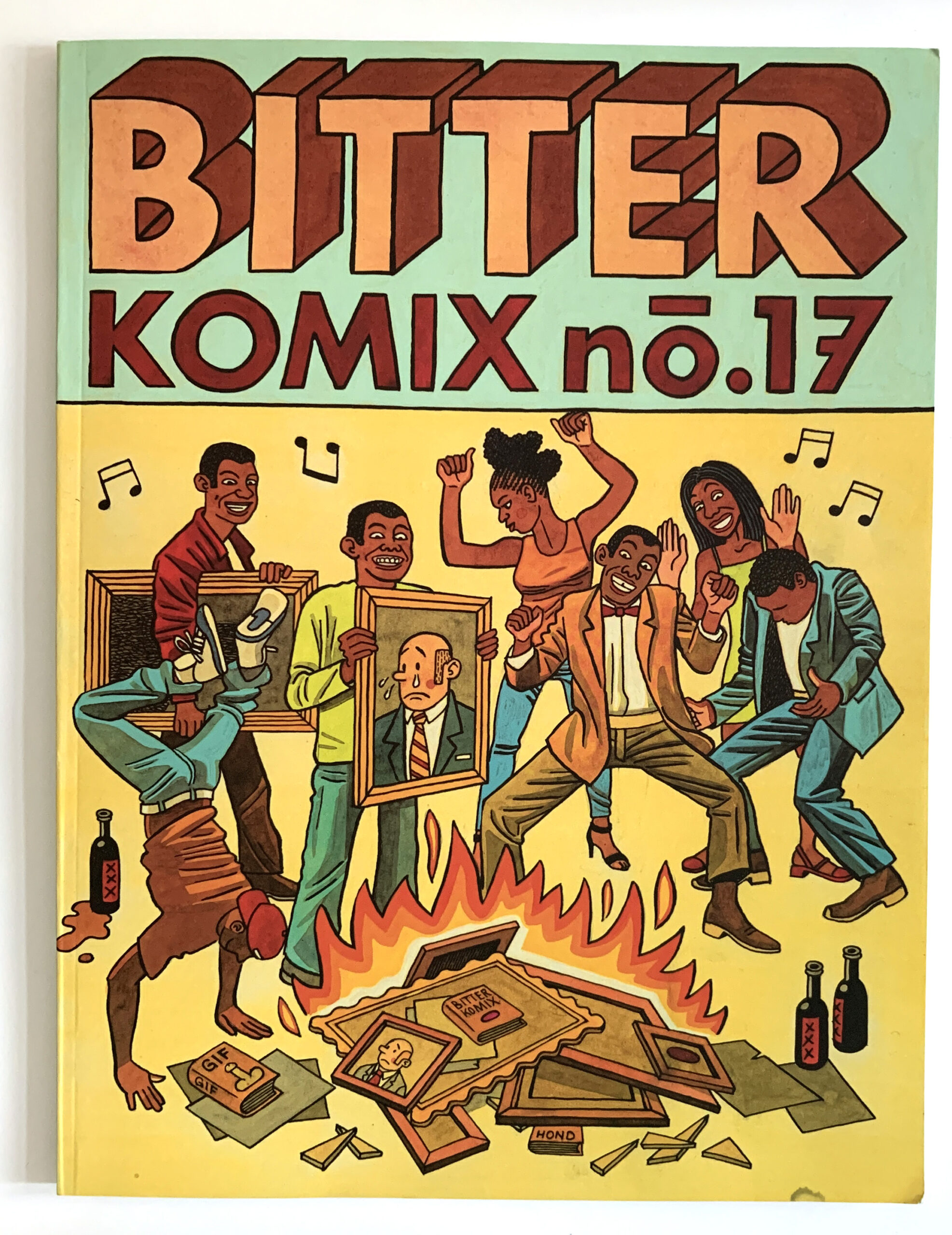
Political posters are only one part of the story, however. Independent magazines, comics, editorial design, commercial graphics and other printed ephemera also document the country’s cultural life. The Colophon Collection, for example, focuses on South African underground and independent print media. Its holdings include publications such as Bitterkomix, iJusi, Sheet, Stet and Jungle Jim, preserving work that offers an alternative view of the country’s design and publishing culture. Its online selection represents only a fraction of the physical archive.
These collections show that preservation is already happening. The question is how much of this material is discoverable beyond the people who already know where to look.
Whose design history gets told?
Research at the University of Johannesburg offers another way to understand the gaps. Professor Deirdre Pretorius has spent decades investigating South African graphic design history, partly because the textbooks she encountered as a lecturer in the 1990s focused heavily on Europe and North America, with little attention given to South African examples.
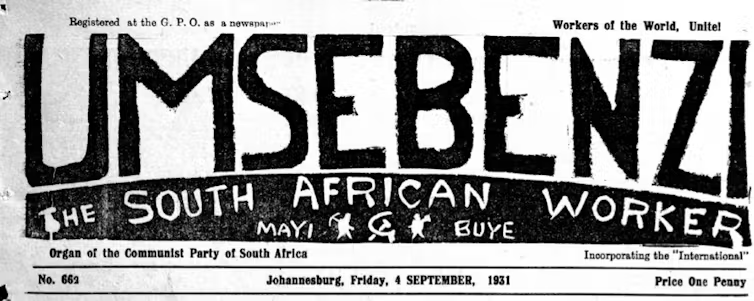
Her research has examined subjects including Communist Party print propaganda, government graphic design, resistance posters, visual identities, election graphics, and gender and design. One example is a 1934 front page of Umsebenzi, the newspaper of the Communist Party of South Africa, featuring a linocut illustration by Edward Roux. The image demonstrates how an inexpensive printing technique could carry a pointed political message.
The significance of this work extends beyond filling gaps in design education. Pretorius’s research has explored how graphic design was implicated in settler colonialism, while also serving as a means of resistance. Images have helped construct racial stereotypes, communicate political ideologies and contest the structures that produced them. Preserving design therefore means preserving evidence of how power has operated through visual culture.
It also raises questions about whose work receives recognition. Collective poster-making, independent publishing and community-based visual communication do not always fit neatly into histories organised around celebrated individual designers, commercial agencies or award-winning campaigns. When attribution is missing, context is lost or material remains difficult to access, important contributors can disappear from the record.
Preservation is only half the job
Keeping an object safe is one thing. Making its history available to others is another.
Physical materials can deteriorate, become separated from their original context or remain in collections that are difficult for the public to explore. Digitisation can widen access, but it requires resources, accurate cataloguing and attention to copyright. A scanned image without information about its creator, date, purpose or original audience may be visible online while remaining difficult to interpret or credit correctly.
There is also a difference between making a collection available and ensuring that it influences how design is taught and practised. Students need access to local references. Researchers need reliable records. Working designers need to be able to study earlier approaches to typography, illustration, composition and visual storytelling without relying exclusively on international design histories.
For contemporary creatives, these archives can provide a deeper understanding of the visual languages already developed in South Africa. They offer ways to trace connections between political movements, publishing, music, advertising and design, instead of treating each as an isolated discipline.
What happens next?
The responsibility for preserving this history cannot rest on one institution or a handful of researchers. It involves archives, universities, museums, publishers, designers, collectors and the organisations that commission creative work. Businesses also have a role to play in retaining records of campaigns, identities and publications that may eventually become valuable historical sources.
There is no single archive that can tell the complete story of South African design. Different collections preserve different experiences, and their value depends partly on how well those holdings are documented, connected and made accessible.
South Africa’s design history is already being recovered, catalogued and studied. The task now is to make that work more visible, support its continuation and ensure that future generations can encounter these materials as part of their own cultural inheritance.
The images we leave behind will shape how future creatives understand the people, ideas and movements that came before them. Preserving them gives those stories a chance to keep speaking.