Love is not always the easiest subject for men to speak about, particularly when it comes to the relationships they share with one another. Ideas of masculinity have often made room for strength, independence and emotional restraint, while leaving affection, tenderness and vulnerability at the margins. In the South African context, where expectations around manhood continue to shape how men relate to themselves and one another, making space for different expressions of love carries its own significance.
At Gallery MOMO, My Loves Summer brings together the work of Fhatuwani Mukheli, Justice Mukheli and Sthu Manaka in an exhibition that opens up this conversation through art. The exhibition draws on the relationships between the three artists, whose friendship stretches back years, and considers how love can take shape through identity, faith, care, community and the freedom to be vulnerable.
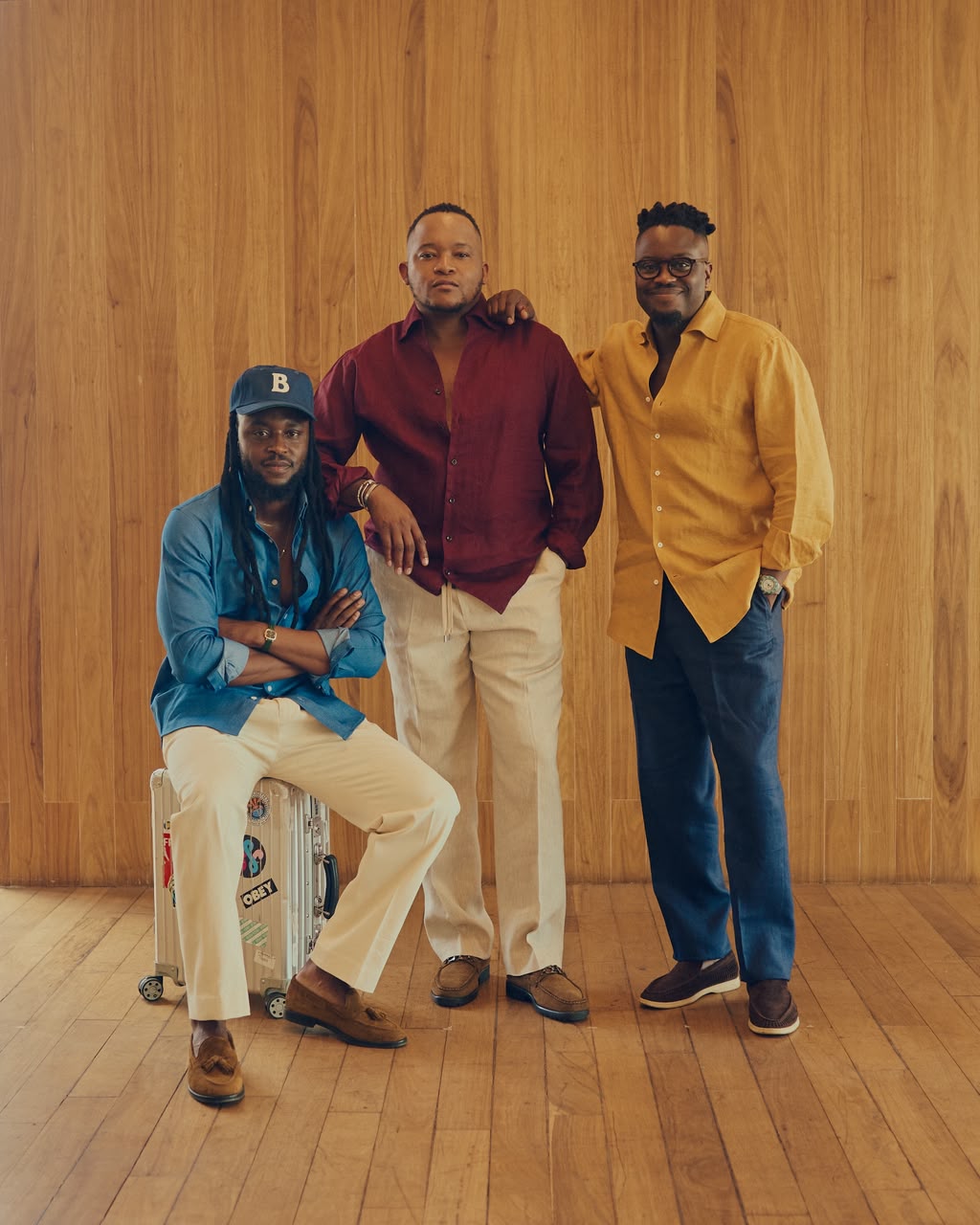
Fhatuwani and Justice are twin brothers, while Sthu is their longtime friend. Their relationship has developed through years of shared experiences and a common creative environment, including their work at My Loves Studio. Bringing their practices together in a gallery for the first time gives that history a public dimension. The exhibition makes visible a form of affection that exists beyond the private spaces of friendship and family, allowing it to be expressed through their individual artistic practices.
Love as the freedom to experience joy
In Fhatuwani Mukheli’s work, love emerges through the representation of Black life beyond the familiar narratives of struggle and hardship. His paintings place Black figures within compositions that draw on the visual language and scale of Renaissance painting, giving them space to rest, gather and experience joy.
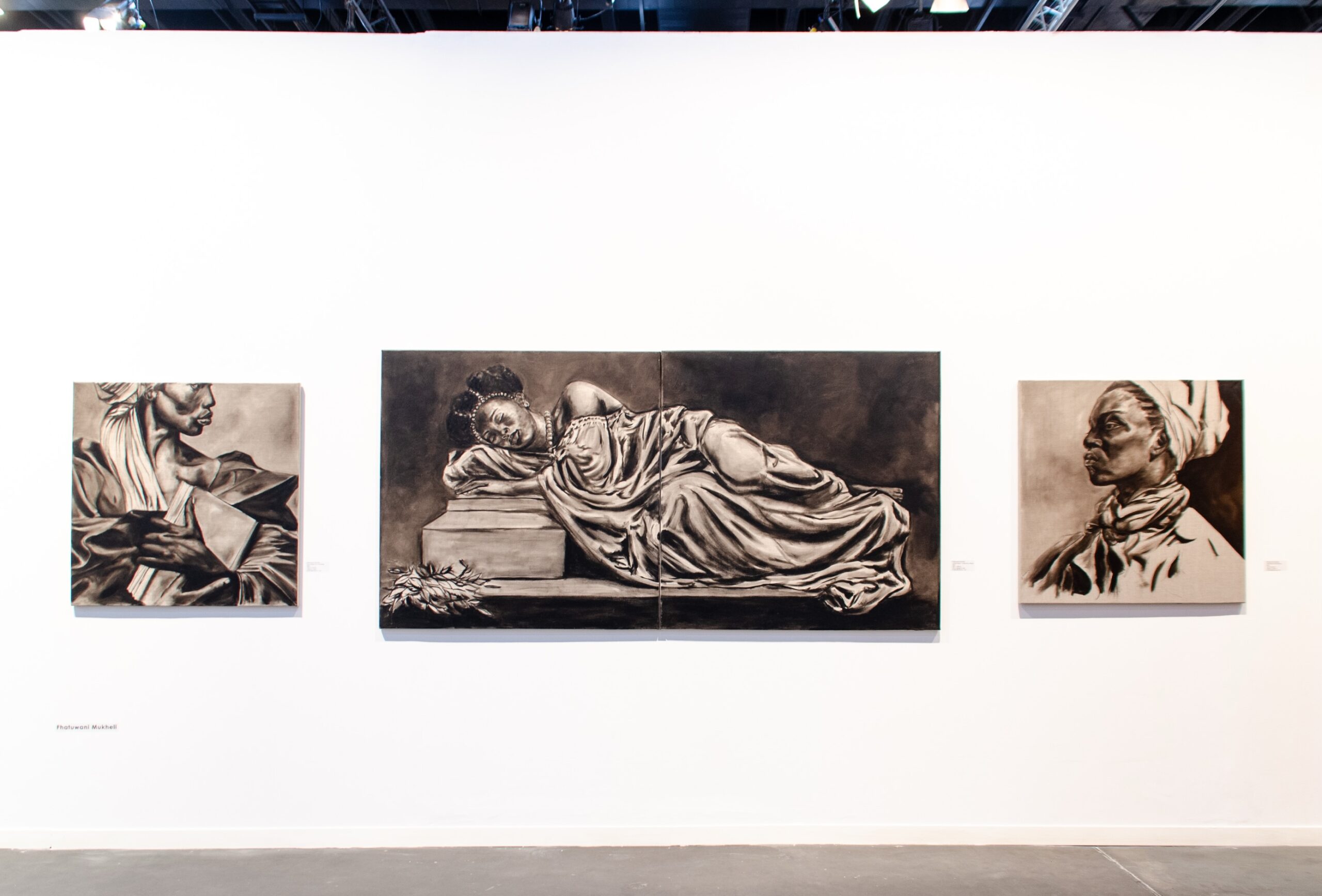
This choice carries particular weight within an art history in which Black figures have frequently been excluded, marginalised or represented through the perspectives of others. Mukheli’s subjects occupy the centre of the image and are allowed the dignity of leisure, pleasure and presence.
There is an understanding of love in this kind of representation. To depict Black people experiencing joy is also to recognise their entitlement to it. It makes room for lives that are not defined exclusively by adversity and offers a fuller picture of what Black existence can look like. Within the context of My Loves Summer, this becomes one expression of love: the affirmation of people, their experiences and their right to exist beyond the expectations placed upon them.
Love as a connection to community and ancestry
Justice Mukheli approaches the exhibition through questions of faith, ancestry and the ways spiritual traditions inform identity. His photographic series, I Heard There Are Rivers in the Sky, considers the relationship between Christianity and African ancestral spirituality, using water as a recurring point of connection.
Water carries different meanings across these spiritual practices. It is central to Christian baptism and also features in cleansing rituals within African ancestral traditions. By drawing attention to this shared element, Mukheli creates space to consider how different belief systems can exist in conversation with one another, even when their practices and understandings are distinct.

His work invites reflection on the spiritual and cultural histories people inherit, as well as the ways they negotiate those histories in their own lives. The connection to love lies partly in the recognition of community: the traditions, relationships and collective experiences that give people a sense of belonging.
In this context, water becomes a way of thinking about connection across different experiences of faith and spirituality. It offers a visual language through which Mukheli can explore the relationship between inherited beliefs, personal understanding and the communities that sustain them.
Love as vulnerability and care
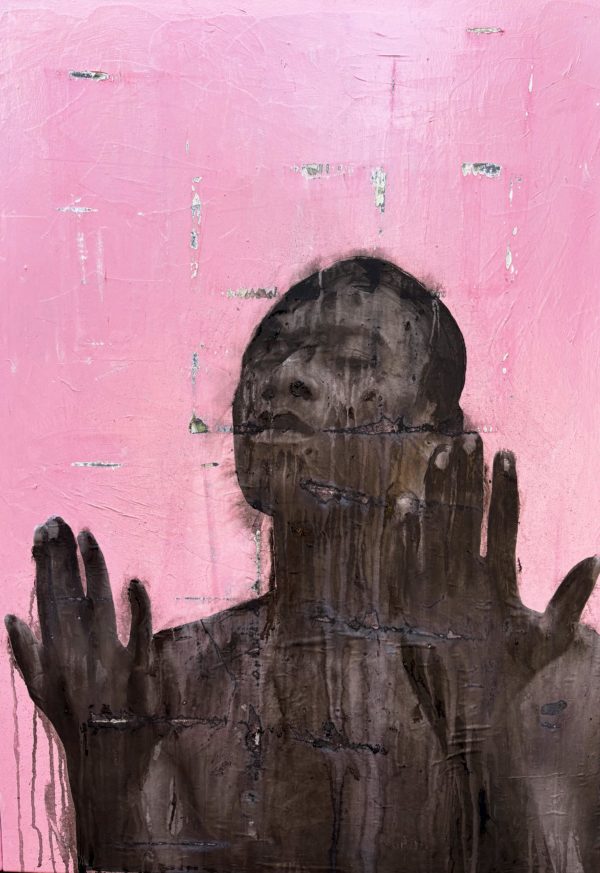
For Sthu Manaka, the conversation takes another direction through Lost Boys, a body of work that moves away from the eye imagery associated with his earlier practice. The series considers vulnerability, faith and the need for support during periods of uncertainty.
The shift in visual language opens up a different way of approaching the emotional experiences that shape people’s lives. Vulnerability requires an acknowledgement that people do not always have the answers, and that uncertainty is something they must sometimes navigate with the help of others.
One of the works, Morwa Waka, depicts a hand reaching towards a kneeling figure. Inspired by Nduduzo Makhathini’s song At Your Feet, Oh Lord, the image draws on ideas of faith, surrender and support. The gesture of reaching towards another person becomes particularly significant within the wider exhibition. It suggests the importance of being held, guided or supported through moments when strength alone is not enough.
Here, love is expressed through care. It is the willingness to acknowledge vulnerability and the recognition that accepting support is part of being human. Within a conversation about masculinity, this challenges the expectation that men must always appear self-sufficient or emotionally guarded.
A friendship made visible
While the artists approach love through different subjects and visual languages, their relationship provides an important point of connection. Fhatuwani, Justice and Sthu have known one another for years, growing alongside each other and developing their practices within a shared creative environment.
That history gives My Loves Summer another dimension. Their decision to exhibit together brings a longstanding friendship into a public setting, allowing audiences to encounter the work of three artists who share a personal history while maintaining distinct artistic identities.
There is also something significant about the decision to make that affection visible. Expressions of love between men are often constrained by narrow ideas of masculinity, particularly when tenderness and emotional openness are treated as incompatible with strength. The exhibition offers a different possibility. It presents friendship as a relationship in which affection, mutual support and creative exchange can exist openly.

The artists do not need to approach love in the same way for their work to speak to one another. Black joy, spiritual connection and vulnerability become different points through which the subject can be explored. Together, they broaden the conversation beyond romantic love and consider the relationships, histories and experiences through which people learn to care for one another.
Ultimately, My Loves Summer asks audiences to consider what love can look like when it is given room to exist in its many forms. Through their work and the friendship that connects them, Fhatuwani Mukheli, Justice Mukheli and Sthu Manaka make a case for tenderness, joy and vulnerability as meaningful parts of the human experience, and of masculinity itself.
My Loves Summer is on view at Gallery MOMO in Johannesburg until 14 February 2027.