Fidèlle saunters into The Idiot Sandwich Cafe with a self-assuredness that mirrors the way he transitions through genres. We meet on the very day his EP, A Slow Burn, is released
He sits diagonally across from me in this hip Lower Main cafe, tucked away in the back, carrying with him a rare sense of relief.
“I really feel relieved, if anything, to just let go of this one,” he says, reflecting on the project that has consumed him since December last year. “It’s been a very odd journey… a lot of evolution and progress in my life, and a lot of baggage lowkey that comes with.”
Time weighs heavily on him; he mentions it often throughout our conversation, as though it is slipping away too quickly. There is a disillusionment that comes with age, though perhaps it is I who sounds condescending when I reassure him that time is not running out, and that at 20, life is only just beginning.
A Slow Burn, his first EP since his full-length album Voilette, is a love-lorn document of transformation, stitched together by solitude, self-doubt, and the slow burn of growth. “Sometimes it’s not flashy, not cinematic,” he says. “Just progress. Sometimes it’s slow as hell.”
The five-track EP is filled with emotion and intensity, and features live instrumentation that is well-strung together. Tracks like “Feng Shui” are a clear standout; heavy guitar strums anchor the song, creating a dense, grounded atmosphere. To complement this, songs such as “VIOLENCE” and “Purple Ink (In my head) lean into dreamy synths and layered distortion, introducing a darker, more atmospheric palette. Throughout the project, moments of haze and abrasion coexist, giving the EP a shadowy and immersive quality.
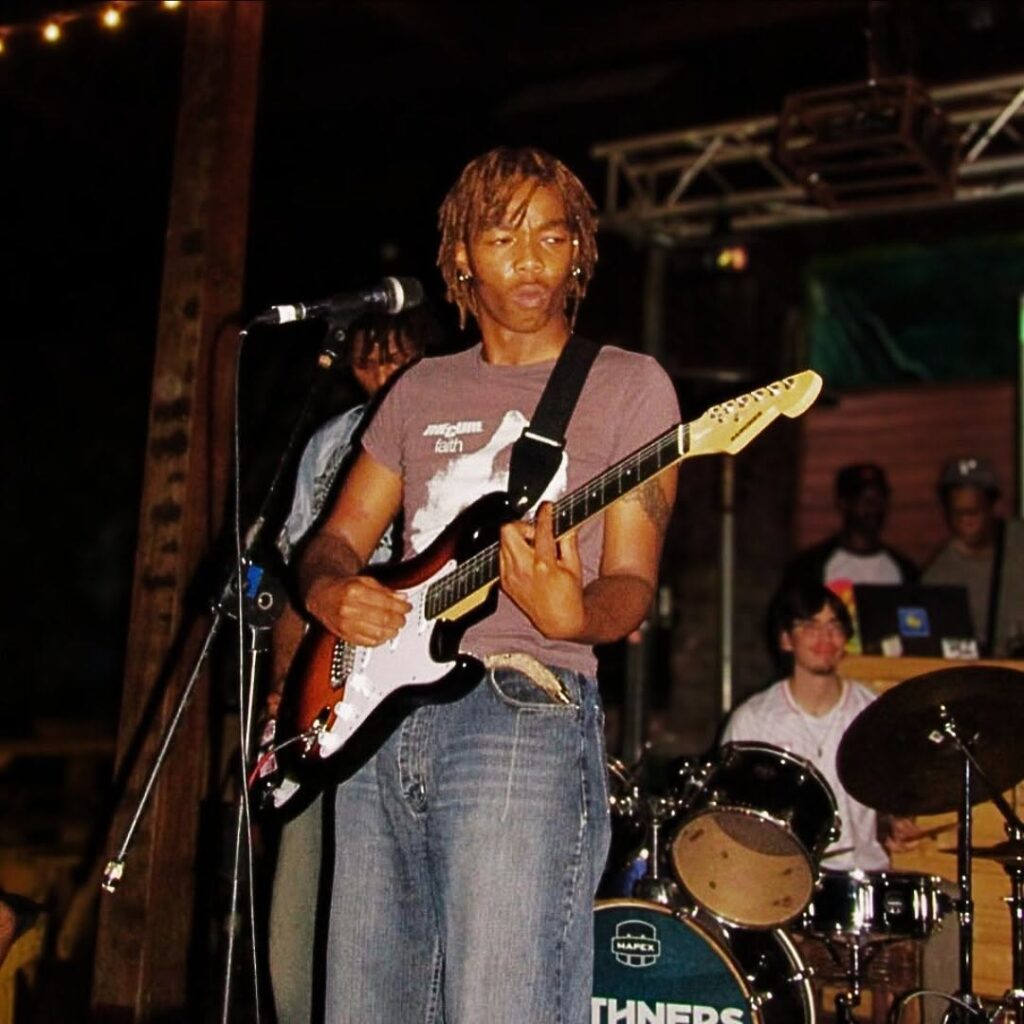
Before Fidèlle was there was Gemini, a trap artist with traction in Johannesburg’s underground. “I gained quite a bit of reach,” he admits. “But when I changed my name, I was basically starting from ground zero.” The shift wasn’t just aesthetic. It marked a departure from programmed beats and digital production toward live instrumentation and emotional clarity. “Everything since the name change has been the purest music I could ever make,” he says. “The most me I’ve ever been.”
When his laptop broke, Fidèlle turned to the guitar. “It [music] was the only outlet I had to make music and make sense of my emotions, I’d sit outside every day, just practising, writing in a notebook.” That period marked by isolation and the sting of a missed opportunity to study abroad became the foundation of the project. “I started playing because I had no other way to create, and I learned more through making my own songs than learning other people’s.”
He describes his process as an obsession. “I have zero music theory knowledge. Everything just went off sound.” Whether recording voicemails, filming studio sessions, or jamming with friends, Fidèlle is always documenting. “Who knows where those ideas could lead,” he muses.
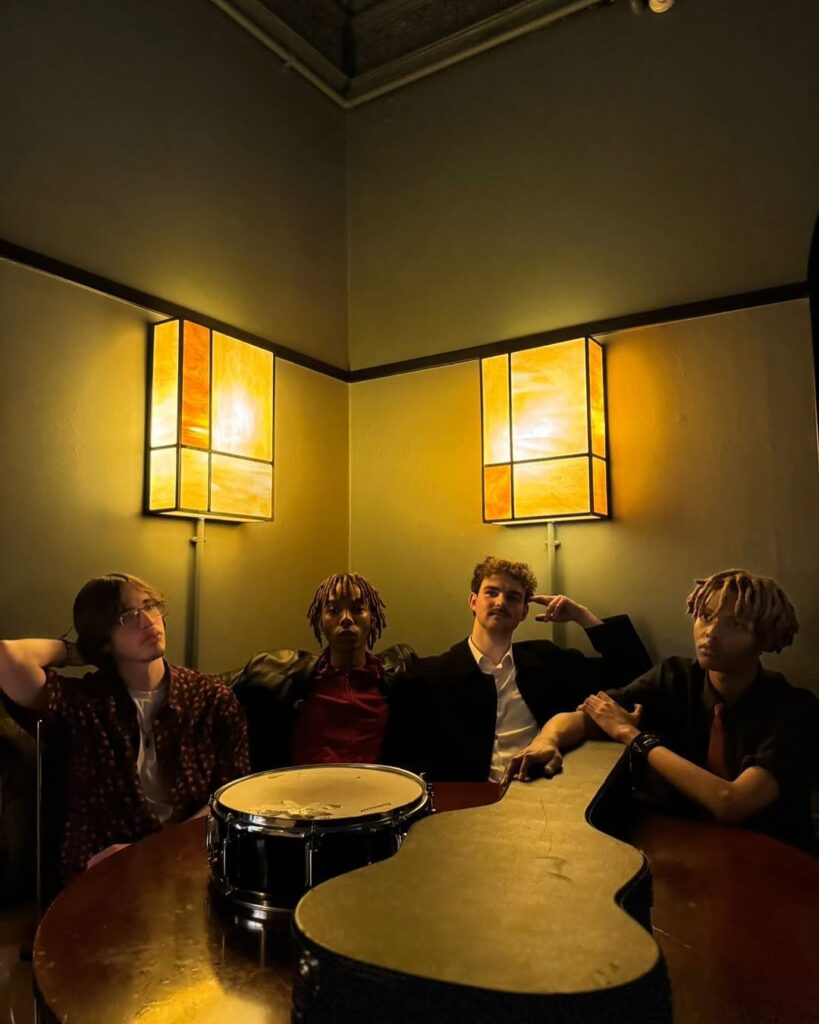
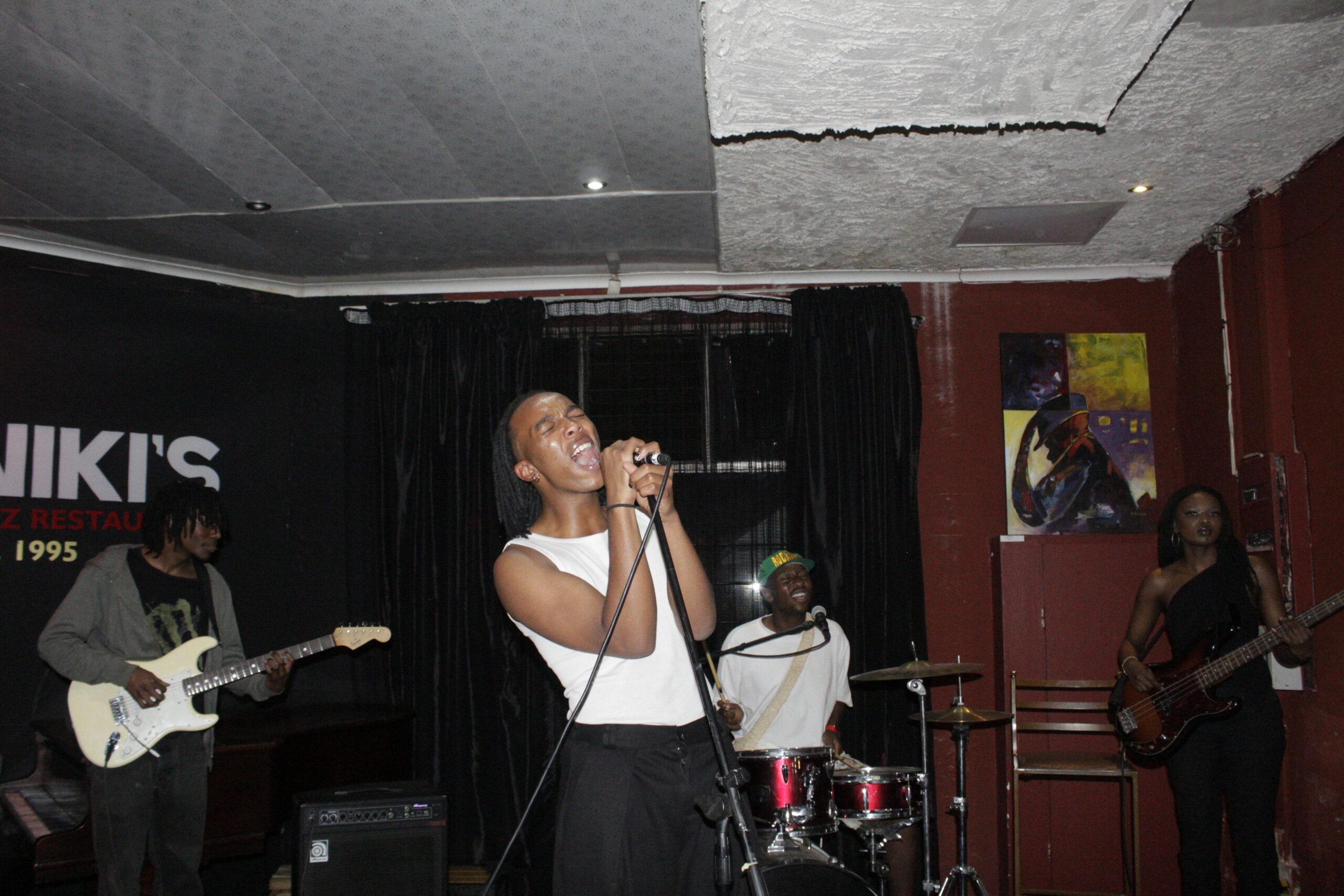
The formation of his band, Hi-Fidèllety was a series of chance encounters. “Our bassist was a plus one at a party,” he laughs. “We jammed the next weekend, and from then on, we were a band.” Rehearsals took place in front yards and packed pink houses, turning practice into performance. “Sometimes it felt like a mini show, people just walking by, stopping to listen,” he recalls. “”
The band name Hi-Fidèllety has a quirk to it, and it prompts questions about the obvious reference to his band’s namesake and whether his music draws from film. Instead, it’s photography that does. “There were times when I would sit looking at a photo for so long that it reminded me of something, or of a moment in time. I love fashion too, the craftsmanship of it — from making a dress to a couture dress, and the process of a fashion show. I think it’s so sick,”
The band’s name is a nod to his own, Fidèlle, fidelity, faithfulness. “I never want to use a backing track again,” he declares, “Live only.” The shift to live performance has been transformative. “Just seeing actual music being made… it changed everything for me.”
Relocating to Cape Town brought both freedom and friction. “I could just breathe here,” he says. “Be me unapologetically.” But the contrast with Johannesburg’s inclusive music scene is stark. “Joburg was cliquey, sure,” he says. “But people uplifted each other. Here, it’s different.”
With the move, he also felt the weight of perception, fashion assumptions, SoundCloud stereotypes, and the shadow of his musical lineage. “People treat how I dress like it’s crazy, but I’ve dressed like this for years.” Still, he’s committed to openness. “I try to be nice, even at the cost of looking cool,” he says. “Because how are you gonna thrive if you don’t create community?” Additionally, there is very little that shakes the multi-hyphenate creative’s confidence, and if any thing his look only adds to his rockstar persona.
With the project out, Fidèlle is returning to practice. “I’m not where I want to be skill-wise; I just want to immerse myself in the guitar again. Become obsessed.” He’s also ready to collaborate more widely. “For a while, I only worked with two people, but next year, I want to work with everyone.”
His vision is expansive: bass, keys, sax, violin. “Thirty years down the line, I want to know how to play everything,” he says. “Just create and document my creations.”
For now, Fidèlle is breathing. Practicing. Rehearsing with Hi-Fidèllety, and letting go of the version of himself that once felt like he was running out of time.