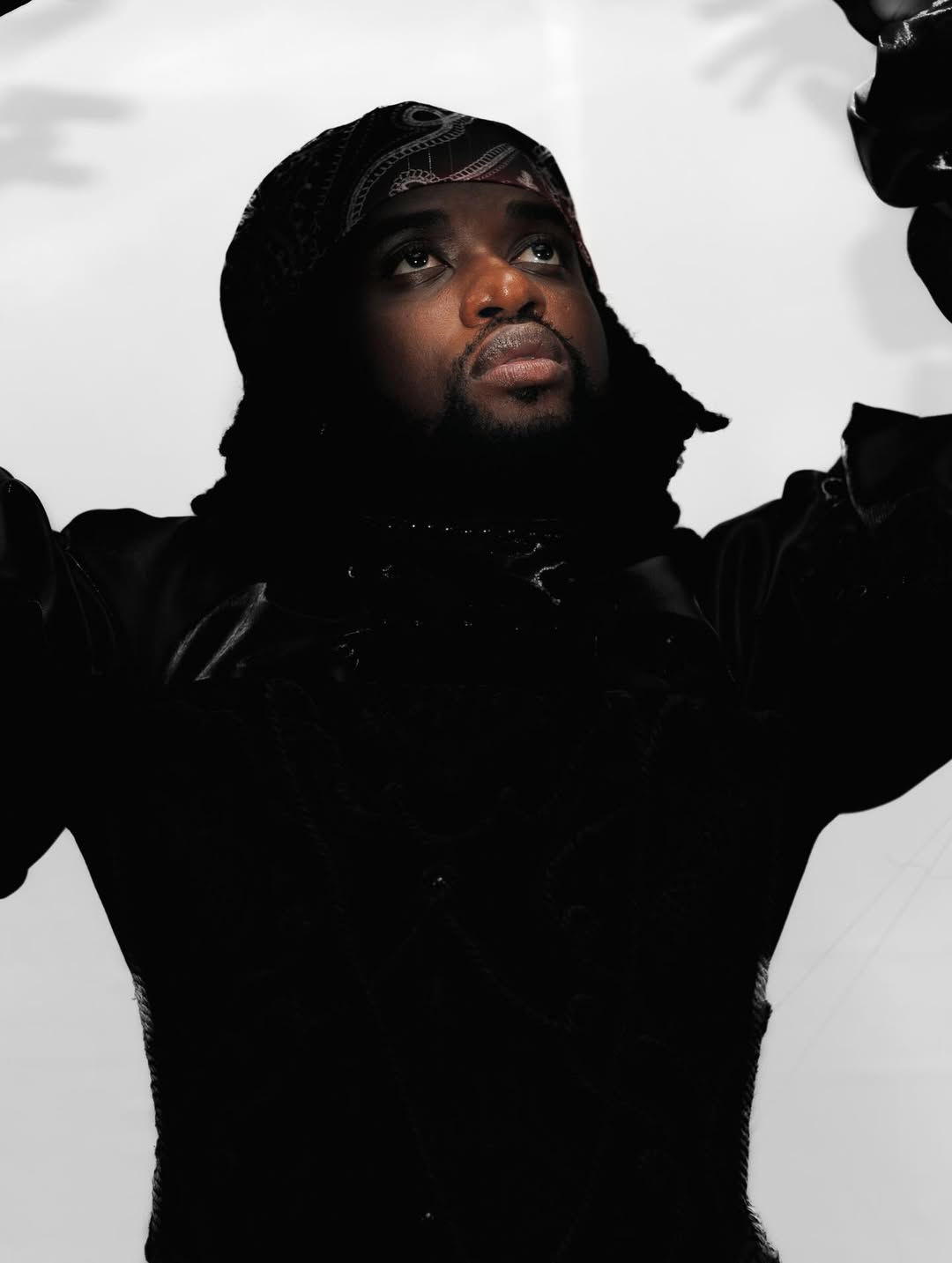
As Nkoli: A Fierce And Fabulous Life prepares to move from its South African stage to its international debut in Germany, we sit down with S’bo Gyre to unpack the journey behind a production that reimagines one of South Africa’s most significant queer and anti-apartheid figures through music, theatre and storytelling.
As the writer of the libretto and the MC who guides audiences through Simon Nkoli’s story, S’bo Gyre reflects on the years of creating this work, the responsibility of engaging with a complex legacy, and how the production reshaped the way he approaches storytelling as an artist.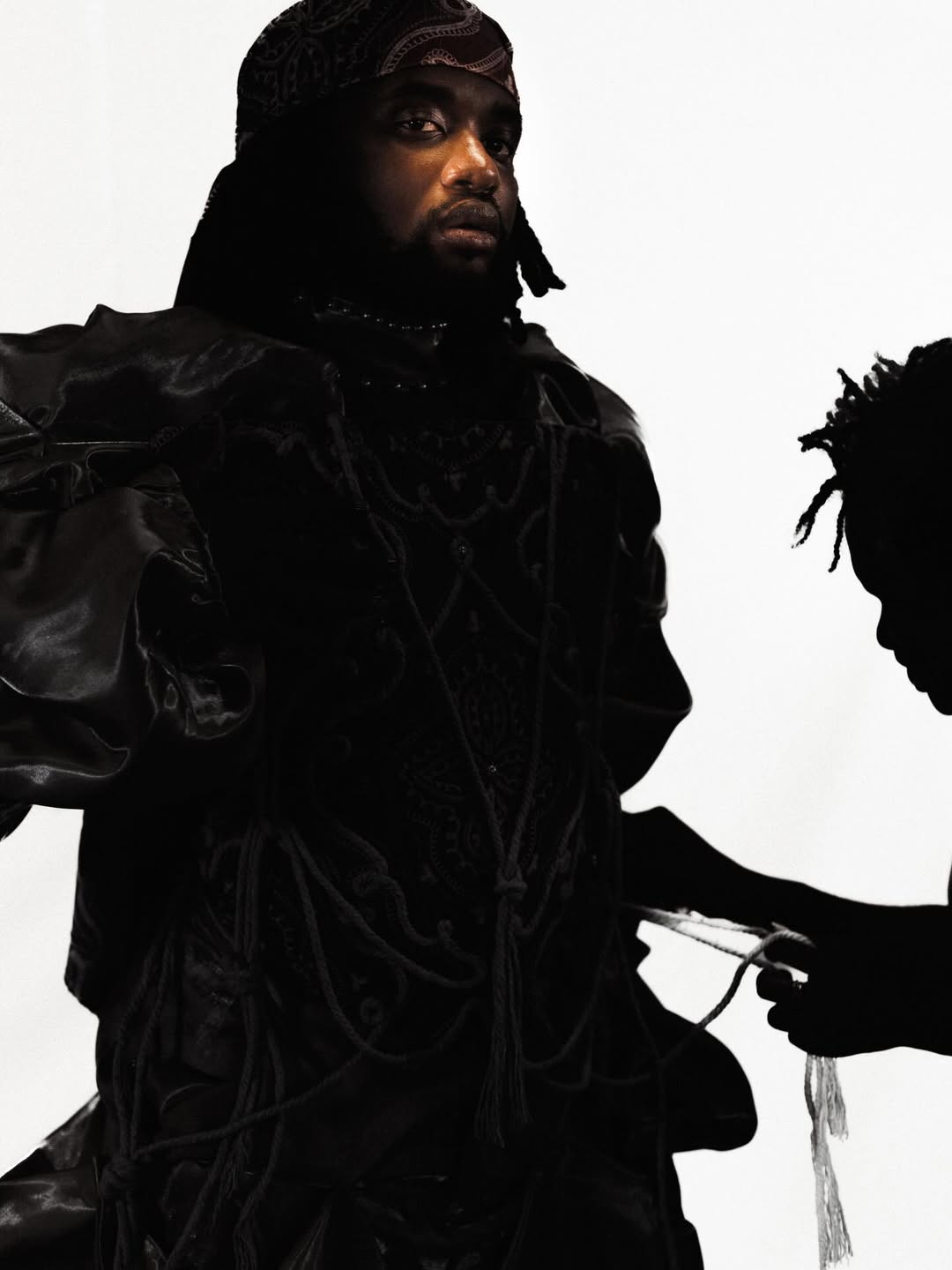
1. You’re a rapper, a writer, and now you’re performing in theatre. What has that journey looked like, and how did it lead you to this production?
So in the production, I play the MC, who’s essentially the narrator. Long story short, I’ve been working on this for almost a decade now. Philip Miller reached out to me around 2020 and eventually invited me to help write the production. A friend of mine had connected us after sharing some of my work.
At first, I was only brought on as a writer. Over time, I ended up co-writing the libretto and eventually performing in it as well. There were periods where I stepped away because I’d started working in corporate, but that ended up being valuable too. I got to learn about the business of theatre, marketing, directing, producing, all the things that happen around the work itself.
Then we pitched the show internationally in New York and it got an incredible response. After years of fundraising and trying to get it over the line, we finally arrived at this moment where the production is preparing to travel to Germany. So it’s been this long journey from writer, to collaborator, to performer, and now to helping carry the work into the world.
2. What was it about Simon Nkoli’s story that felt important for you to tell?
People often think of Simon Nkoli only as an LGBTQIA+ activist, but he was so much more than that. He was an anti-apartheid activist. He was an HIV/AIDS activist. He was somebody who was constantly navigating multiple struggles at once. One of the ideas we play with in the opera is this notion of “coming out” in different forms. Coming out as gay. Coming out as HIV positive. Coming out as an activist. Simon was always stepping into spaces where he had to declare himself and fight for his humanity.
What fascinates me is how complex he was. He wasn’t a saint. He wasn’t perfect. He was deeply human.There’s that famous quote where he says he won’t separate his struggles into primary and secondary struggles. Being Black and being gay were one struggle. For somebody to articulate that in 1990 is incredible. The complexity of who he was made it impossible not to tell this story.
3. When you first agreed to work on the project, what did you think it would demand of you? How different was the reality?
There’s this beautiful documentary called Simon and I that Beverley Ditsie produced that I’d watched years ago. That’s actually how I first learned about Simon Nkoli. So his complexity wasn’t something new to me.
If anything, the challenge was asking: how do we tell this story tastefully? We were fortunate enough to access archived footage and letters he wrote while he was in prison during the Delmas Treason Trial. In those letters, you learn so much about who he was that we actually used some of his own words as part of the lyricism in the opera.
But honestly, the biggest challenge for me wasn’t Simon. It was the music. I remember when Philip sent me the first demos. It was classical music. It was opera. And I’m a rapper. I was losing my mind. I was like, ‘Oh my God, this guy is going to think I suck because I don’t know where this starts. What do you mean I must write about being gay in the 1980s over this aria?’
That was the biggest challenge. Getting out of my own head and trusting my talent enough to know how to work around it. Eventually Philip and I became like butter and bread. We found a language together. I was learning from him, he was learning from me, and he treated me like an equal. In the end, I just trusted my intuition. I trusted my musicality. I trusted myself enough to figure it out.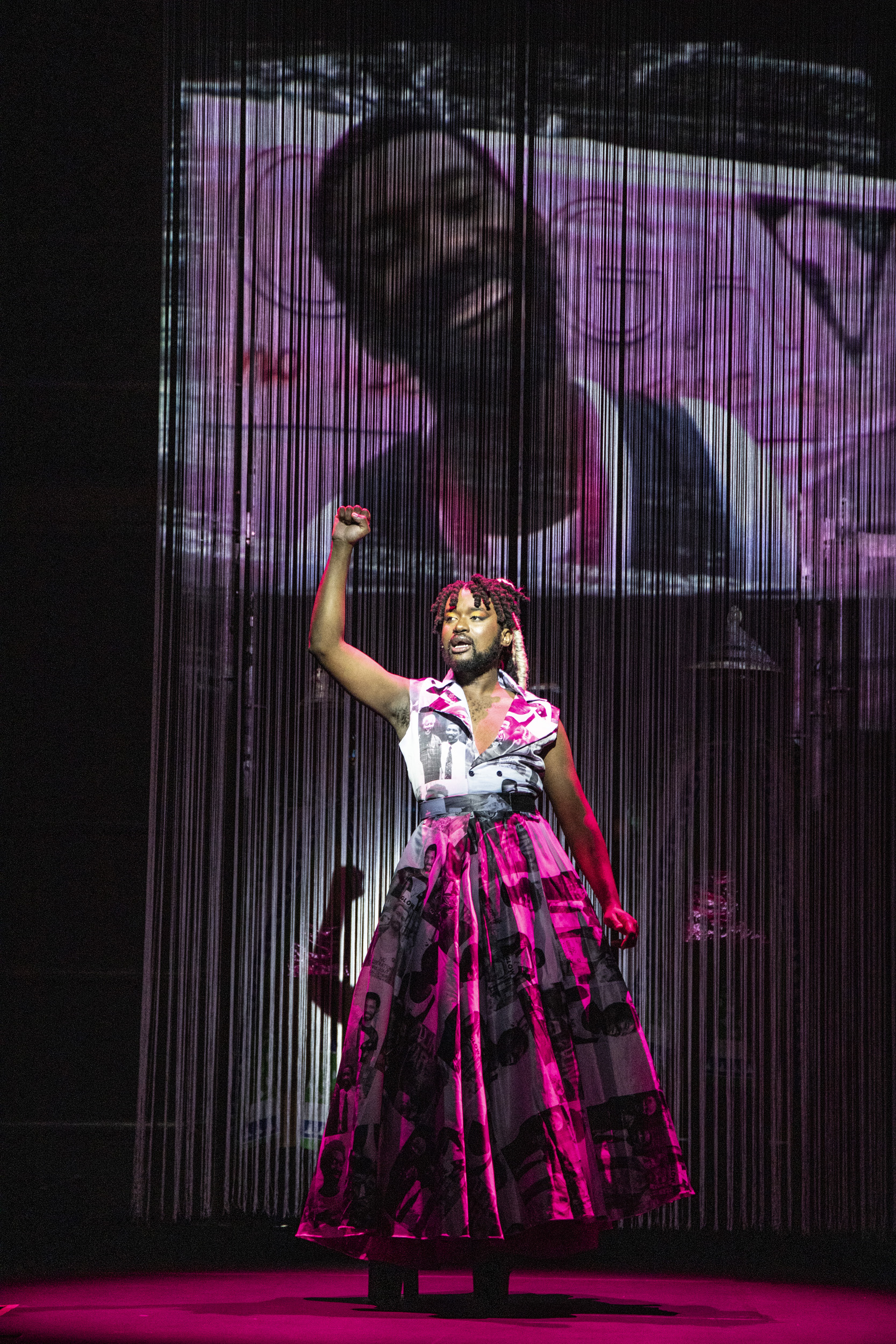
4. You mentioned feeling under-equipped in the beginning. Where did that self-doubt come from?
I think a lot of it came from where I was in my life at the time. When Philip first contacted me, I was working at Pick n Pay, trying to figure things out. My life was completely different. I was trying to break into music and I was still trapped in this mindset that success looked a certain way. At the time, I was so fixated on getting a co-sign from someone like AKA, because I thought that was what success looked like. I didn’t fully understand the vastness of being an artist and that you can exist as an artist in different ways. I didn’t understand that you could have a meaningful artistic career that didn’t look Instagrammable.
When Philip first reached out, I didn’t even know who he was, which was probably a blessing. If I’d known immediately, I might have been even more intimidated. But once I realised who he was and the kind of people involved in the project, that’s when the fear came in.
I was in my early twenties, walking into rooms with people who had these incredible careers and histories behind them, and I was one of the few young black people there. It was intimidating because I was being validated by people, but I hadn’t validated myself yet.
A lot of that came from the social media era we live in, where if it’s not visible or Instagram-worthy, it feels like it’s not a real career. This project really changed that for me. It showed me that people actually believed in me, and that I could do things beyond what I thought was possible.
5. Was there a moment where the responsibility of helping tell Simon Nkoli’s story really hit you?
Yeah, I think there was a moment where I realised, “This is actually in my hands.” Because the role I was writing for was the MC, essentially the narrator of the story, so Simon’s story was being filtered through my writing and my understanding of him. That responsibility was quite scary because of how important his life and legacy are.
The thing that helped us was the research process. We were able to find archived footage, letters Simon wrote while he was in prison during the Delmas Trial, and letters to his family, his lover and his friends. Through those, we were able to understand Simon not just as an activist, but as a person. 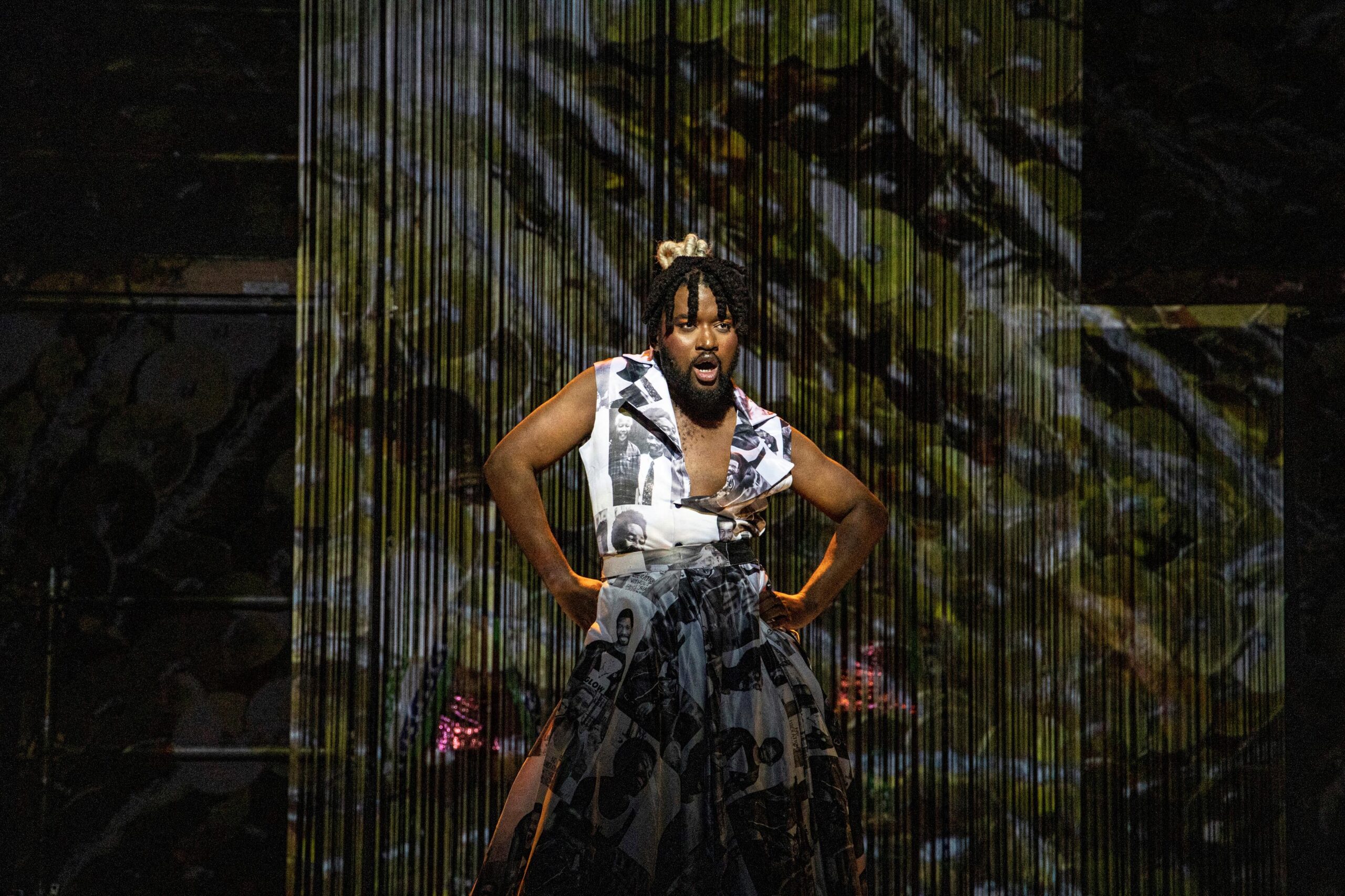
For me, the responsibility was about earning the right to tell the story by honouring it. Simon was the only person who could truly tell his story, and he did that through the life that he lived. Our job was to listen, learn and carry that story forward with care.
6. What parts of Simon Nkoli felt familiar to you?
The biggest thing for me was Simon’s relationship with his mother. She was incredibly proud of who he became and the work he was doing, but she never fully accepted his homosexuality. That really resonated with me because it mirrored parts of my own relationship with my parents, especially my mother.
My mother is proud of me and who I am, but she’s also homophobic, and a lot of the internalised homophobia I’ve had to work through comes from those voices. I’m still unpacking that, because it affects how I see myself and how I navigate relationships.
So that complexity of being loved by someone while still feeling like there’s a part of you they haven’t fully accepted was something I deeply connected with in Simon.
7. What parts of Simon challenged you the most?
The biggest challenge was confronting the parts of Simon that were complicated. It was difficult engaging with his misogyny and the fact that he was a man who was fighting for liberation while still having things within himself that he needed to unpack.
It forced me to look at my own self-awareness as well, because as gay men we’re still men, and we still have to confront the ways we carry those things. It wasn’t about judging Simon, but about understanding him as a human being with contradictions.
Even looking at his relationships and his attraction to white men brought up difficult questions around class, race and identity. Those are complex conversations, and I think the important thing is that we don’t sanitise people’s stories to make them easier to consume. We have to allow people to exist in their full complexity.
8. You’ve spoken about therapy a few times. What role has it played in your life as a creative?
Therapy is so important because the art is not where you deal with everything. The art is where you release it. Therapy is where you actually sit with yourself, confront things, and deal with the human side of who you are. I always say, if therapy is like a warm bubble bath where you soak and allow the dirt to loosen, then art is like using a loofah to scrub that dirt away. The two work together.
Because before you are an artist, you are a human being. If you don’t deal with yourself, your art can become a place where you avoid things instead of a place where you transform them. Therapy allows the art to come from a healthier, more honest place.
9. How has working on Nkoli changed the way you think about storytelling?
It completely changed the way I approach storytelling. It taught me about being intentional and understanding that every choice has to serve the story. Coming from rap, I was so focused on structure, rhyme and cadence. I remember Philip would literally tell me, ‘Girl, you don’t have to rhyme all the time,’ and I’d be like, ‘But I’m a rapper!’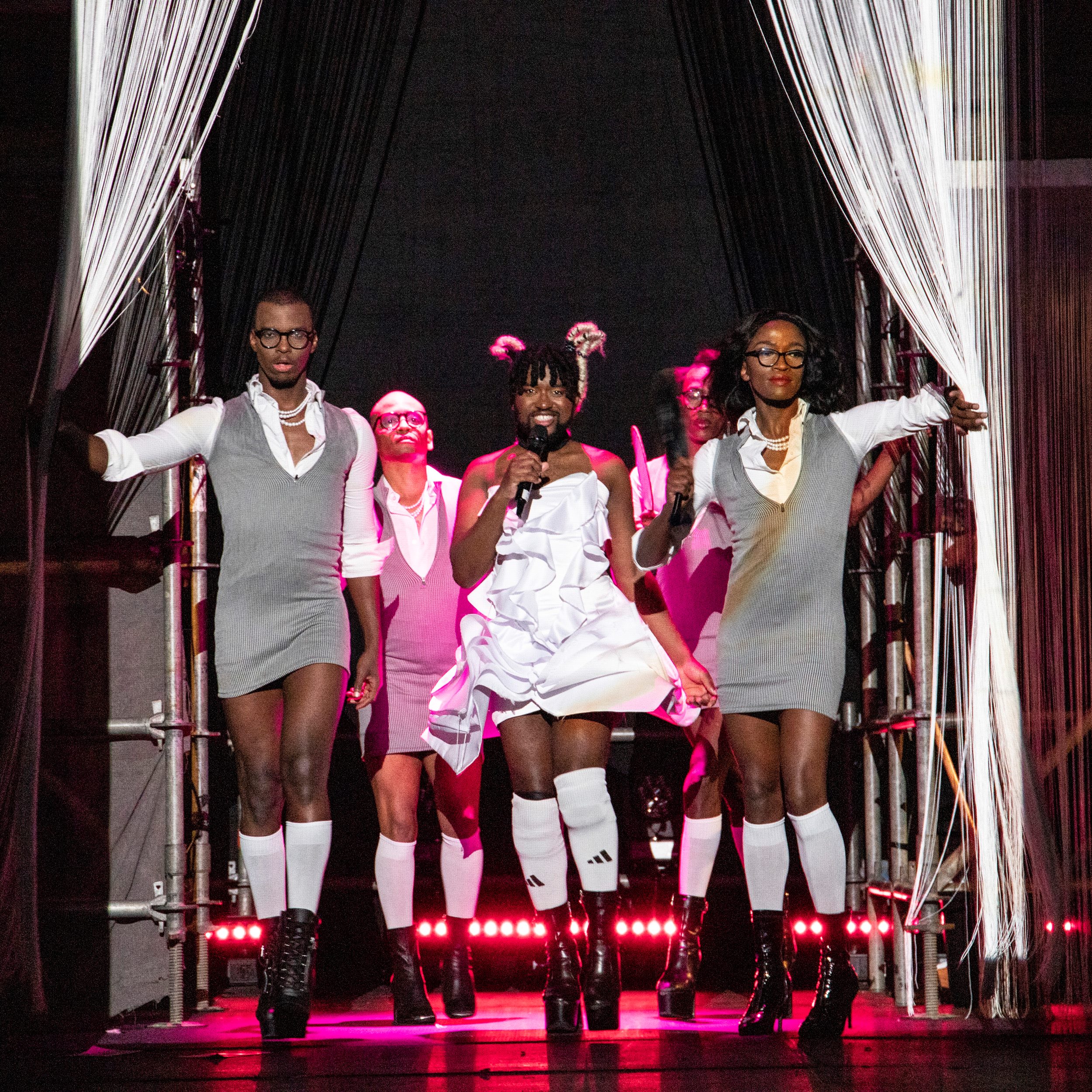
Working on Nkoli taught me that storytelling doesn’t always have to follow those rules. Writing for opera, especially a libretto, showed me that people don’t speak in rhyme. It’s about finding the emotion, the rhythm and the truth of the story. It really released me from the idea that I always have to create bars. I’m more interested now in telling the story and finding the best way for that story to exist.
10. Is there a particular reaction, conversation or moment during the South African run that stayed with you?
I’d say my partner coming to watch with his family. This is a very personal thing, but I was so nervous. His family is very chilled, but I was thinking: will they get it? It’s an opera, it’s queer culture, it’s ballroom. I showed my booty cheeks in this production. This is going to be a lot.
But they came out and they were like, ‘Wowsers.’ They were entertained from beginning to end. That stayed with me because sometimes you build things up in your head. You think people won’t understand it or connect with it, and then they do.
11. What does it mean to take this work to Germany?
It’s a big moment, but I think I’m still processing it. Therapy is required because I need to enjoy it a little more. I think because of my ambitions for the project, I’m always thinking about what comes next.
I’ve always seen Nkoli as something much bigger. For me, this is just the next step. The job isn’t done yet. Germany is the next match that we need to win, because if we can get this right, it opens the door for the bigger international journey I’ve always imagined for the production.
But personally, it’s also been validating. This project started with someone calling me while I was literally at Pick n Pay, and it changed the direction of my life. It helped me find a sense of belonging as an artist and reminded me that I’m not crazy for wanting art to be more than just entertainment. I want to create work that has impact.
12. What do you hope international audiences take away from the production?
I actually have no expectations. None. What excites me is showing people that South African creativity is so much bigger than what they usually see. When we went to New York, I realised people were genuinely blown away by what we create. They’re only scratching the surface of what exists here. We’re unbelievably talented.
I hope Nkoli allows people to experience Simon’s story, but also see the depth of South African storytelling, especially from young Black queer creatives. I hope it opens doors and reminds other creatives that there are more possibilities than they’ve been told.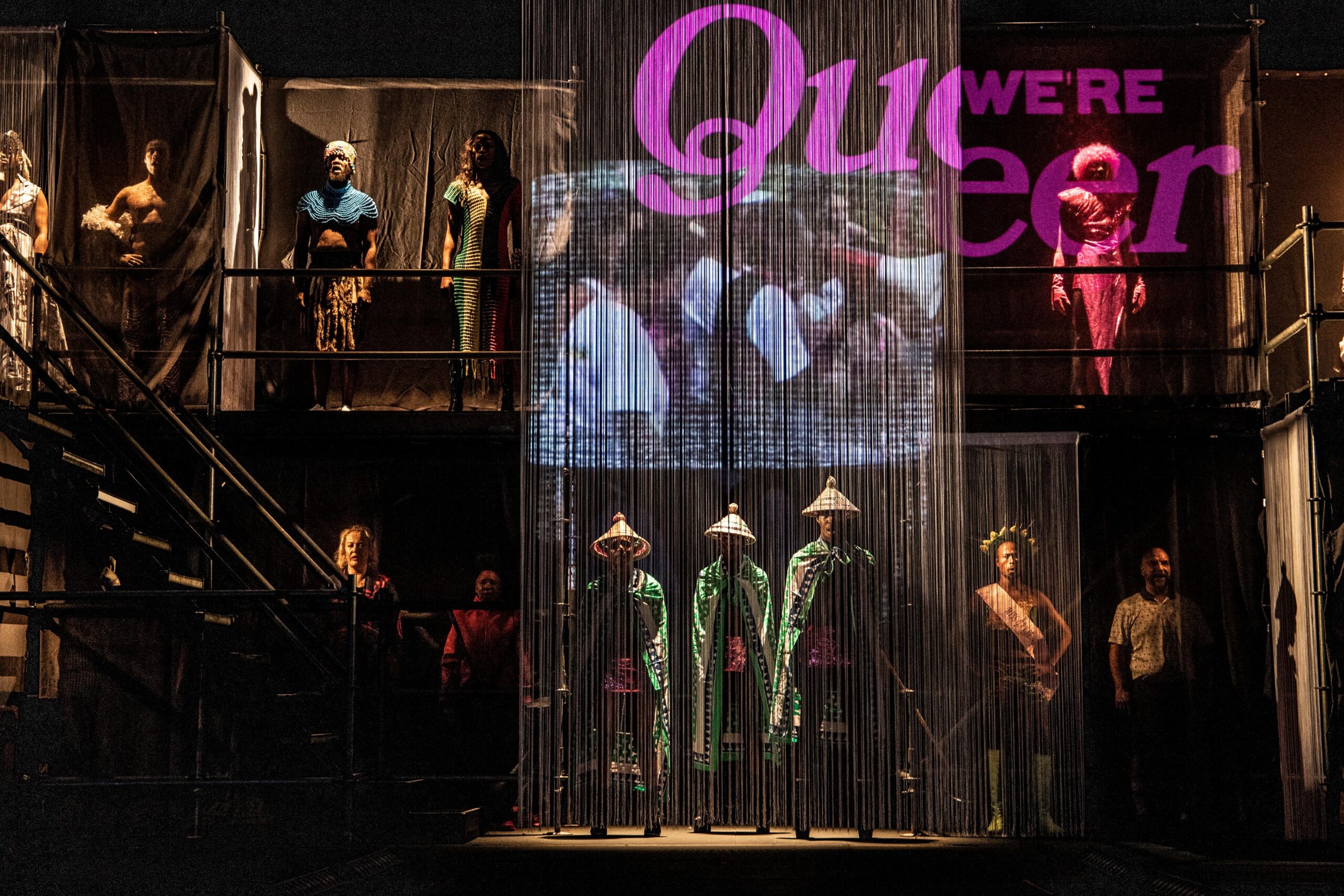
13. What excites you most about what’s next?
For the first time in my life, I’m seriously considering doing this full-time. And that’s terrifying. But it’s also exciting.
I’ve been in corporate for the last few years, and I feel fulfilled by what I’ve done there, but I’m ready to commit fully to being an artist. The rehearsal process reminded me of the level I want to take my work to. The discipline, the preparation, the intention behind creating a proper production. What excites me now is committing fully.
I want to keep growing as a performer and storyteller, whether it’s theatre, live performance, music, whatever form it takes. I still want mainstream success. I absolutely do. But I want it on my terms. I want to make work that’s thoughtful yet entertaining. Work that’s intentional.
Follow S’bo Gyre on all social media platforms at @gyre_sa to keep up with his music, performances, creative projects, and the international journey of Nkoli.