For aspiring journalists looking to break into the industry, few opportunities offer a better introduction to the newsroom than learning alongside experienced editors and reporters. Mail & Guardian has officially opened applications for its 2026 journalism internship programme, inviting recent graduates to gain practical experience at one of South Africa’s most respected news organisations.
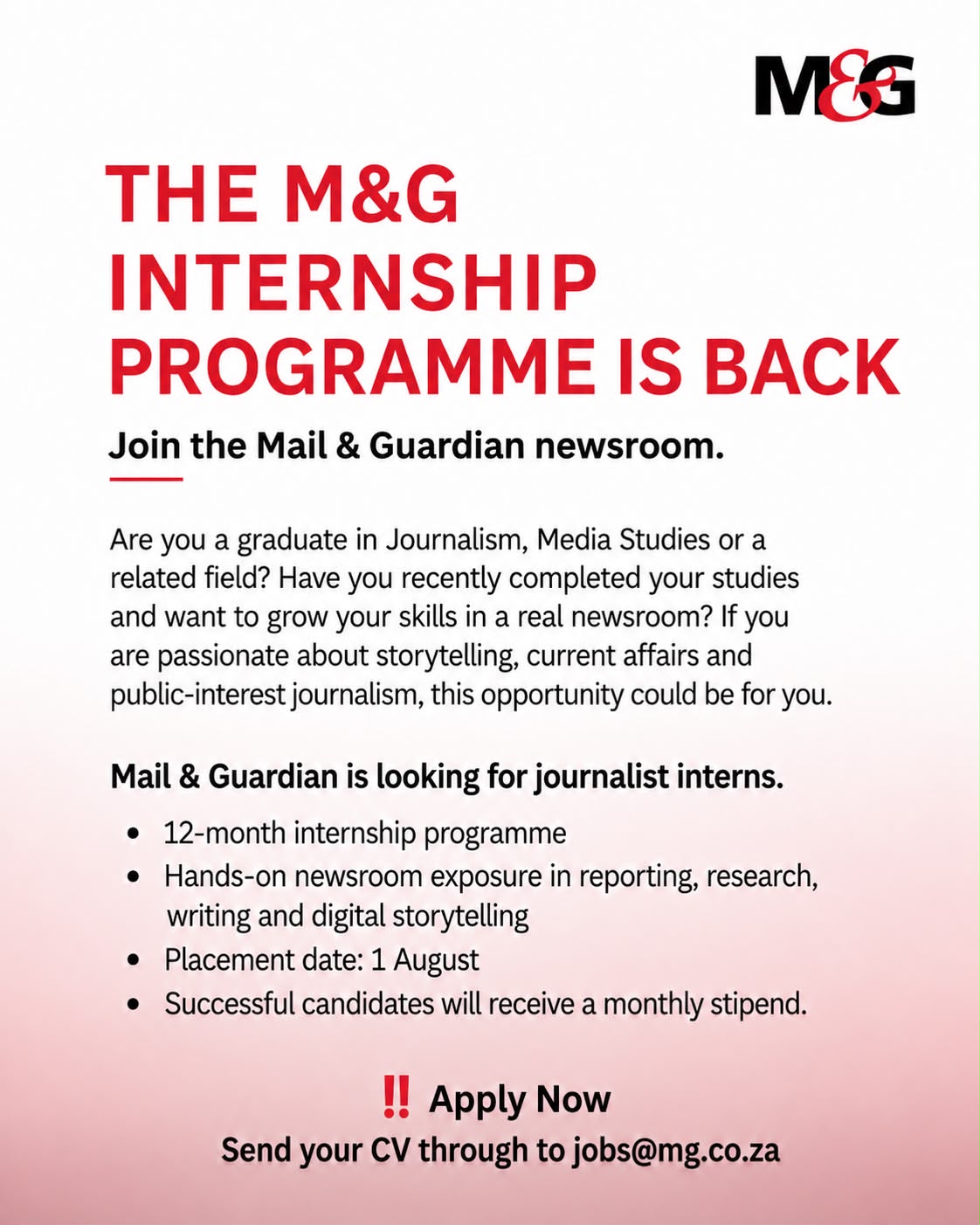
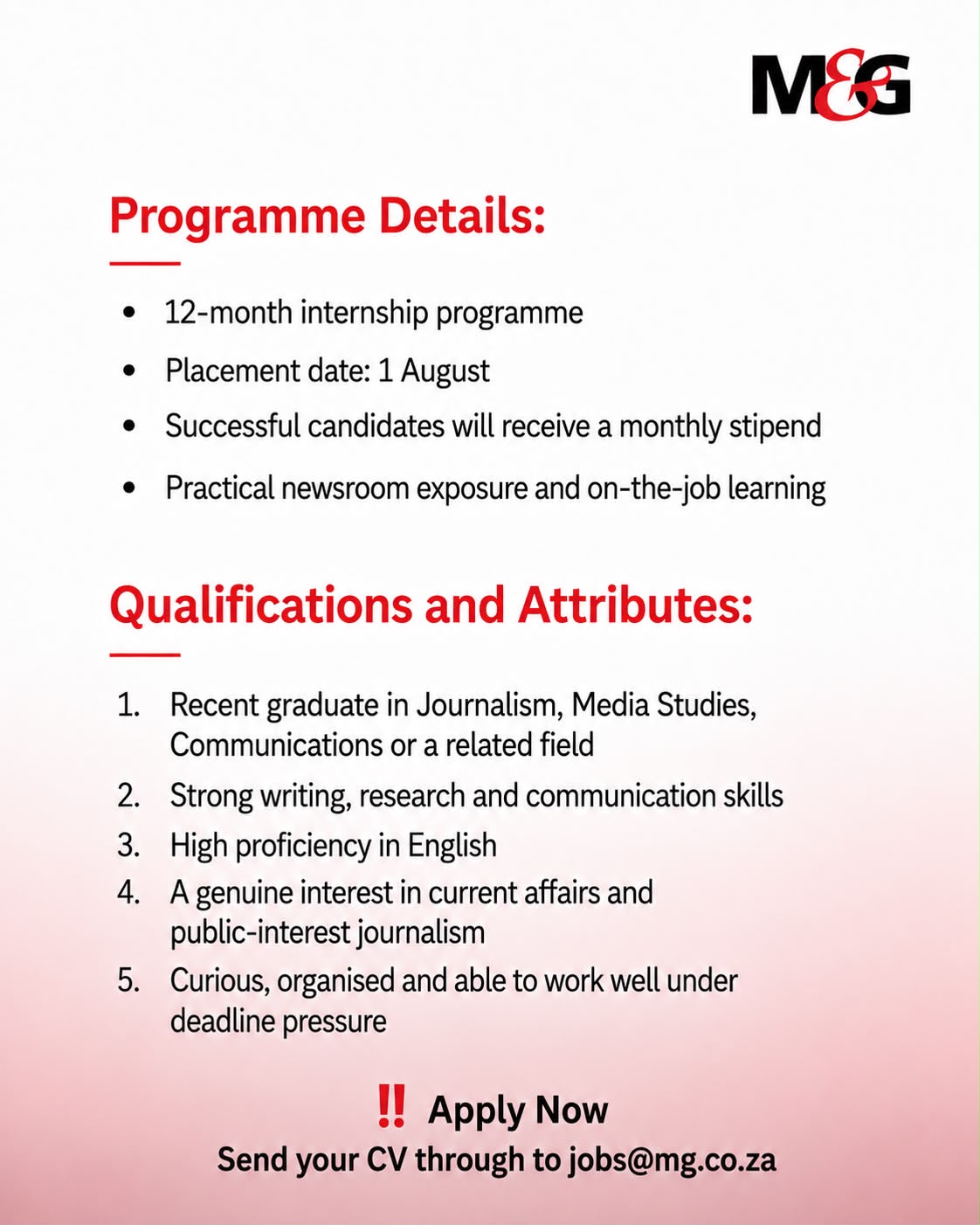
The 12-month internship is aimed at graduates in journalism, media studies, communications or related fields who are passionate about storytelling, current affairs and public interest journalism. Beyond adding a recognisable name to a CV, the programme is designed to immerse interns in the realities of modern journalism, from researching stories and fact-checking to reporting, writing and digital publishing.
Learning Journalism by Doing
Journalism is a profession best learned through practice.
While universities provide the foundations of reporting, ethics and media law, the fast-paced environment of a working newsroom teaches lessons that cannot always be replicated in a classroom. Deadlines, editorial judgement, interviewing sources, verifying information and adapting stories for digital audiences are skills developed through experience.
The Mail & Guardian internship reflects this approach by giving participants the opportunity to contribute to the newsroom while learning from editors and experienced journalists.

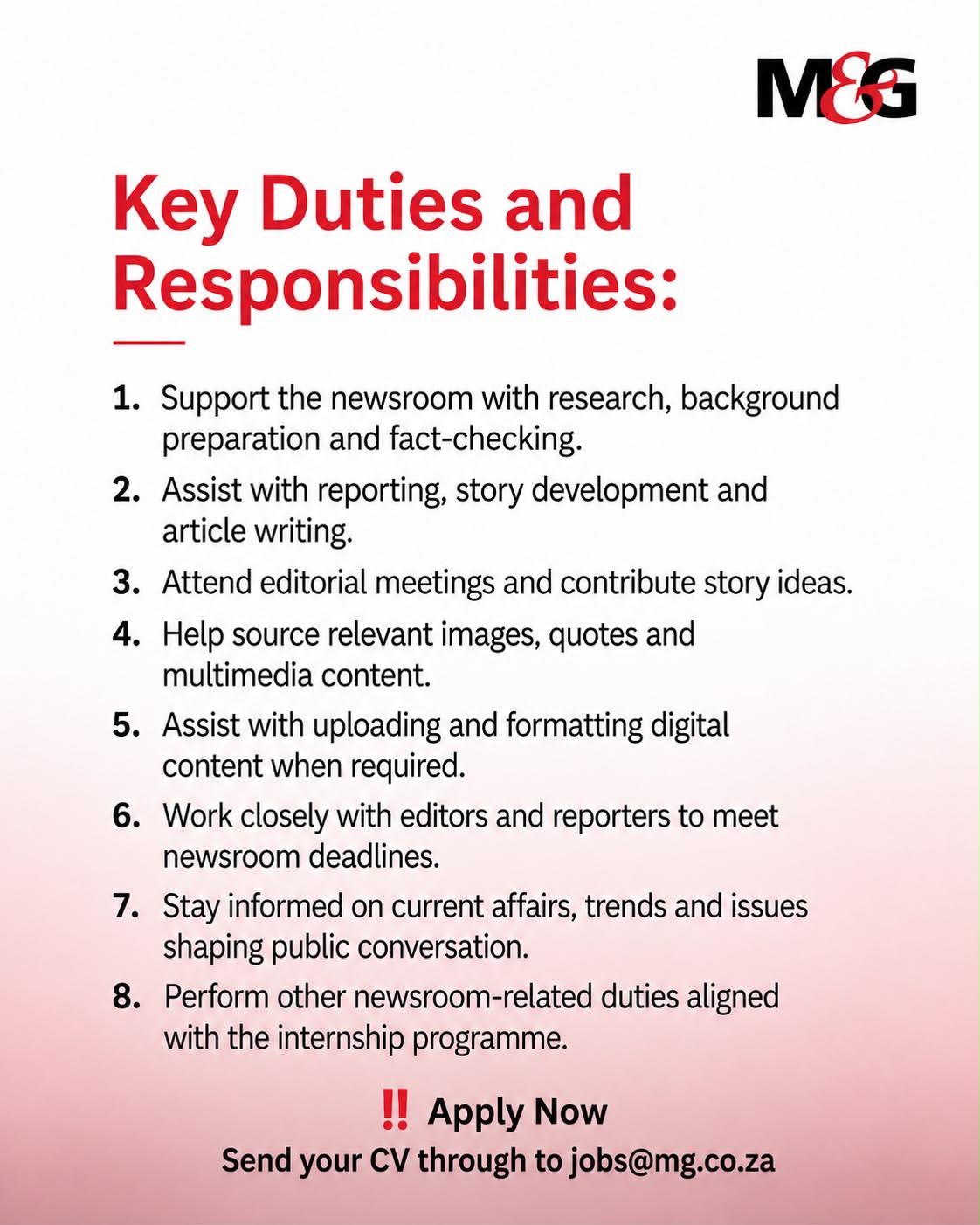
Interns will support reporting through research and background preparation, assist with article writing and story development, attend editorial meetings, contribute ideas, help source images and multimedia content, and assist with publishing digital stories. They will also work closely with newsroom staff to meet editorial deadlines while developing an understanding of how stories evolve from pitch to publication.
Building the Next Generation of Journalists
Internship programmes play an important role in strengthening South Africa’s media landscape.
As newsrooms continue to evolve alongside changing technologies and audience habits, young journalists are expected to develop skills that extend beyond traditional reporting. Digital storytelling, multimedia production, audience engagement and strong research abilities have become increasingly valuable in today’s media environment.
Programmes like this help bridge the gap between higher education and professional practice, giving graduates the confidence and experience needed to begin long-term careers in journalism.
For aspiring reporters, they also provide something equally valuable: mentorship. Learning directly from experienced journalists offers insight into editorial decision-making, ethical reporting and the everyday realities of covering stories that shape public conversation.
Who Can Apply?
Mail & Guardian is looking for recent graduates who have completed qualifications in journalism, media studies, communications or related disciplines.
Applicants should demonstrate strong writing, research and communication skills, be highly proficient in English and have a genuine interest in current affairs and public interest journalism. Successful candidates should also be organised, curious and comfortable working under deadline pressure.
The internship includes a monthly stipend, practical newsroom exposure and structured on-the-job learning throughout the year.
How to Apply
The internship is scheduled to begin on 1 August 2026.
Applicants are required to submit their CV to jobs@mg.co.za. Successful candidates will spend 12 months working alongside the Mail & Guardian editorial team, gaining experience across reporting, research, writing and digital publishing.
For graduates hoping to build careers in journalism, opportunities like this offer more than workplace experience. They provide a front-row seat to the craft of reporting and a chance to develop the skills needed to tell stories that inform, challenge and shape public conversation.
As South Africa’s media landscape continues to evolve, investing in the next generation of journalists remains one of the most important ways to ensure that thoughtful, independent and impactful storytelling continues into the future.