For a long time, the safest way to make a brand feel inclusive was to make that brand feel relatable.
The language was clean. The design was clean. The references were clean enough to travel. And when speaking to an international audience, this approach could feel downright provincial, unnecessarily specific and therefore, harder to communicate.
That thinking is due for an upgrade.
Across advertising, fashion, entertainment and brand building in South Africa, there is a growing desire for work that has a sense of origin. Not “inspired by Africa”, not some vague collage of third world aesthetics, but something distinctly, specifically South African.
And there’s a growing feeling that that specificity can be an advantage.
The danger of “making it relatable”
There is something ironically unrelatable about the way a lot of brands try to be inclusive.
They sound the same. They look the same. They utilise the same advertising lexicon.
You can barely tell them apart. That may not sound like a problem, but when you do see a difference, it can be startling. It’s a sensation akin to walking from one gallery into the next and realising that half the art has been swapped out for prints from the same stock photo website.
It becomes especially dissonant in South Africa, a country that has a uniquely complicated creative economy due to its multilingual, multi ethnic nature. It is difficult to speak both for and to a single audience when there are so many overlapping audiences with differing perspectives.
This is not an easy challenge for advertising to navigate. In fact, academic analyses of South African advertising have shown that advertisers have tried to “flatten” their languages in favour of more palatable, “universal” tones.
But the value of embracing cultural specificity is found in those things that cannot be flattened.
The joke that only makes sense in Joburg.
The phrase that has a strange pronunciation in isiXhosa.
The aesthetics of a certain area.
The rituals and cultural cues that make something feel both alien and familiar.
These are the elements that create a hook in people’s minds that lets the message resonate.
Specificity does not hurt reach.
It’s a counterintuitive notion. Some of the most specific advertising ever made has had universal appeal. And it is not hard to find reasons why that might be the case.
In fact, a recent Forbes article suggested that South African brands such as Mamelodi Sundowns have an advantage over their international competitors due to their ability to communicate their South Africa-specific stories effectively.

In this way, the danger of specificity is not that it is inaccessible, it is the danger of assuming that it somehow is.
A good idea can have a broad appeal, even if it is communicated using very specific tools.
When a campaign is too reliant on cultural cues that are difficult to decode, it can feel like it needs an accompanying thesis before it can be digested. But the truth is, the audience will always be able to find an entry point if the idea is strong enough.
That’s a very different proposition than “being specific for the sake of being specific”.
South African brands are already experimenting with this
One space where it’s easy to see the value in cultural specificity is in beauty.
Lelive, a South African skincare brand with a focus on African beauty, has made its positioning around Africa-specific ingredients and an African centric approach to skincare.

It is, ultimately, communicating to black consumers. But what it lacks in universal appeal, it gains in depth; it speaks to a certain understanding of skincare and beauty that is not as commonly found elsewhere.
This is a very valuable position to be in, as almost every other beauty brand in the country is focused on “universal appeal”.
The same can be seen in designers such as Thebe Magugu, whose collections are the result of extensive research into South African history and cultural anthropology. Magugu, however, is not limiting his inspiration and research to South Africa; he is using it to interrogate other cultural frameworks in similarly specific ways.

TSHEPO is another South African brand that has embraced its status as a “local” brand to its advantage. Its denim pieces are undeniably premium, but the brand insists on keeping its South African roots in the forefront of its positioning, suggesting that they are, in fact, crucial to the appeal and quality of the product.
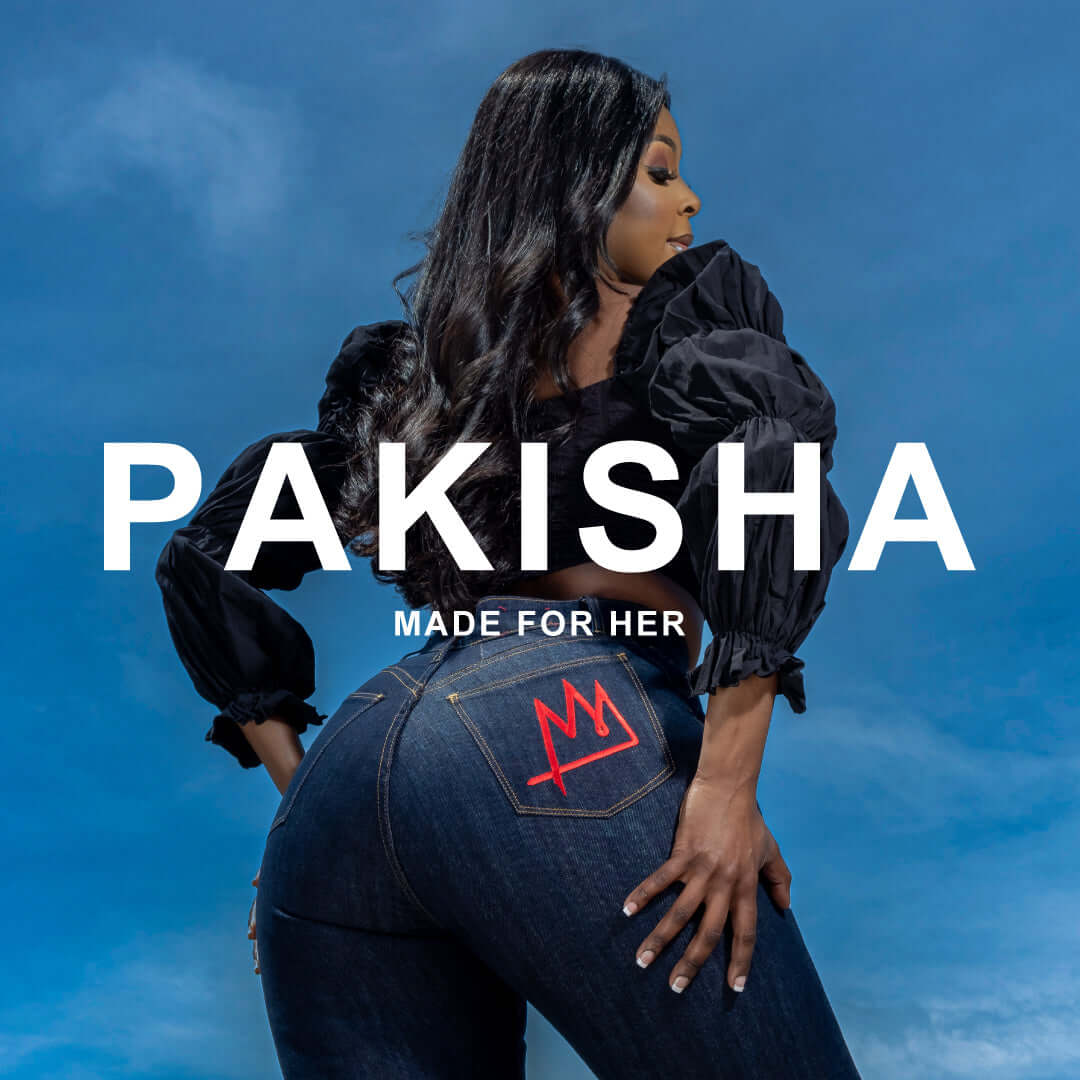
But the point is, none of these brands are necessarily saying “look, we’re South African”; in fact, many of them are striving to distance themselves from the “typical” South African brand with its loud prints and clichéd positioning. Instead, they are speaking to an internal understanding of culture and aesthetics and presenting a point of view that comes from them and their particular understanding of the world.
The same lesson can be seen in the wider push among international advertisers to make their products “local”, not just in language, but in tone, culture, humour, and references. It’s a reaction to the fact that it has become much harder for brands to appeal to a broad audience when that audience is used to seeing themselves represented elsewhere.
This is not a bad thing; in fact, it reinforces the central tenet of this article. The more people can relate to a brand, the more likely they are to engage with it.
But the nuance is that it is not a question of “can I make it relatable”; it is also a question of “can I make it mine”.
It is the difference between “translating” something and “authenticating” something.
There is value in cultural specificity as a competitive advantage
There’s an obvious commercial benefit to having a unique offering, especially in an industry where most brands look, sound, and act the same. The more unique you are, the better chance you have of standing out from the crowd. Even if that uniqueness is limited to a small audience.
But there is an extra benefit that comes from local uniqueness, which is that it is often difficult to replicate.
A competitor can copy your colour palette. They can copy your format. They can even copy your social media strategy. They cannot copy your knowledge and understanding of a culture, and more importantly, they cannot copy your relationships, networks, or the credibility you have built with local audiences.
That, ultimately, is the point of specificity, it gives you a distinct voice. It gives you something that cannot be stolen, even if that voice comes from the outside.
That’s something brands should be considering far more than they currently do.
In an increasingly competitive market, it can be tempting for brands to invest in expensive production value, brand positioning, and marketing to carve a space for themselves. But when they ignore the unique selling point that is right in front of them, a rich cultural heritage, local audience and deep roots, it can be very costly.
This principle is even more apparent when you consider the cost of differentiation.
It can take years to build a sustainable, authentic presence in a local market. Brands that rely on manufactured differentiation find themselves in an arms race against their competitors, with little ability to truly stand out. Meanwhile, “authentic” brands have a built-in edge, they can speak with the credibility of someone who knows what they are talking about, not just someone who sounds like they may have learned it from a textbook.
This creates a “first mover advantage”, but also an advantage of reputation. In short, it is exceptionally difficult to compete with a brand that has carved a specific space for itself in the local market.
Perhaps the most interesting thing about cultural specificity is that it is a competitive advantage on both sides of the market.
It is useful for authentic local brands with years of heritage, but it can also be leveraged by international advertisers looking to build relationships with local audiences. For the former, it is a tool to build credibility with their audience. For the latter, it is a tool to build relationships and differentiate themselves from other international firms.
But the danger is always the “costume” approach, using superficial elements of an unfamiliar culture in order to gain points with a local audience. It relies on misappropriation rather than true cultural understanding and runs the risk of alienating the audience it is trying to appeal to. This is why true cultural specificity always relies on research, consultation, and an understanding of the culture it is borrowing from.
Ultimately, the most effective way to utilise cultural specificity is to create something that reflects it, rather than trying to use it as a resource.
Does cultural specificity make brands more competitive?
That question is perhaps best rephrased as “is having a distinct cultural identity more valuable than trying to appeal to everyone at once?”
South African brands have an opportunity to embrace their cultural identities, there is an audience for that.
Not every brand needs to try to speak to everyone. Some can do much better by focusing on one specific audience and doing it well.
South Africa is one of the world’s most culturally diverse countries. There is a wealth of unique material to draw from. It would be a shame for brands to miss that due to a misguided desire to appear “international”.