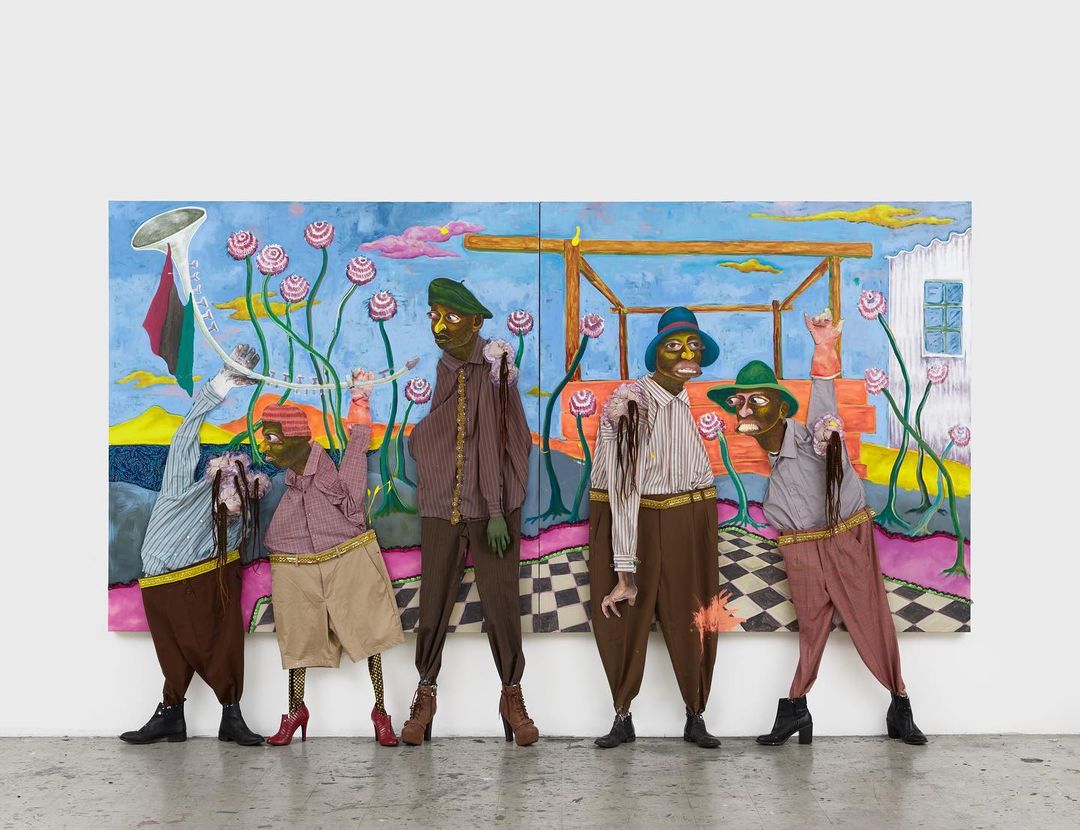
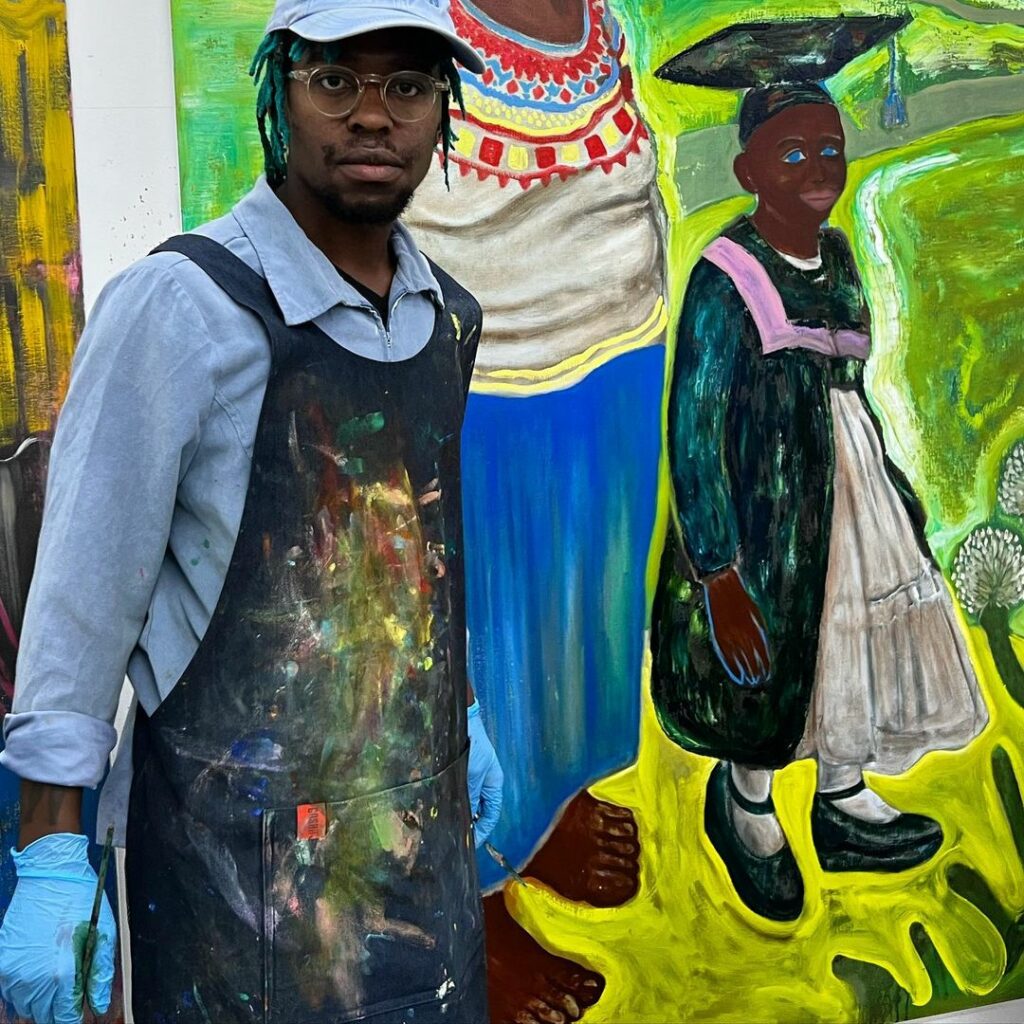
Simphiwe Ndzube stands out as a storyteller who stitches together myths and reality. His craft, shaped by influences like Ben Okri and Gabriel Garcia Marquez, takes us on a journey through post-apartheid South Africa.
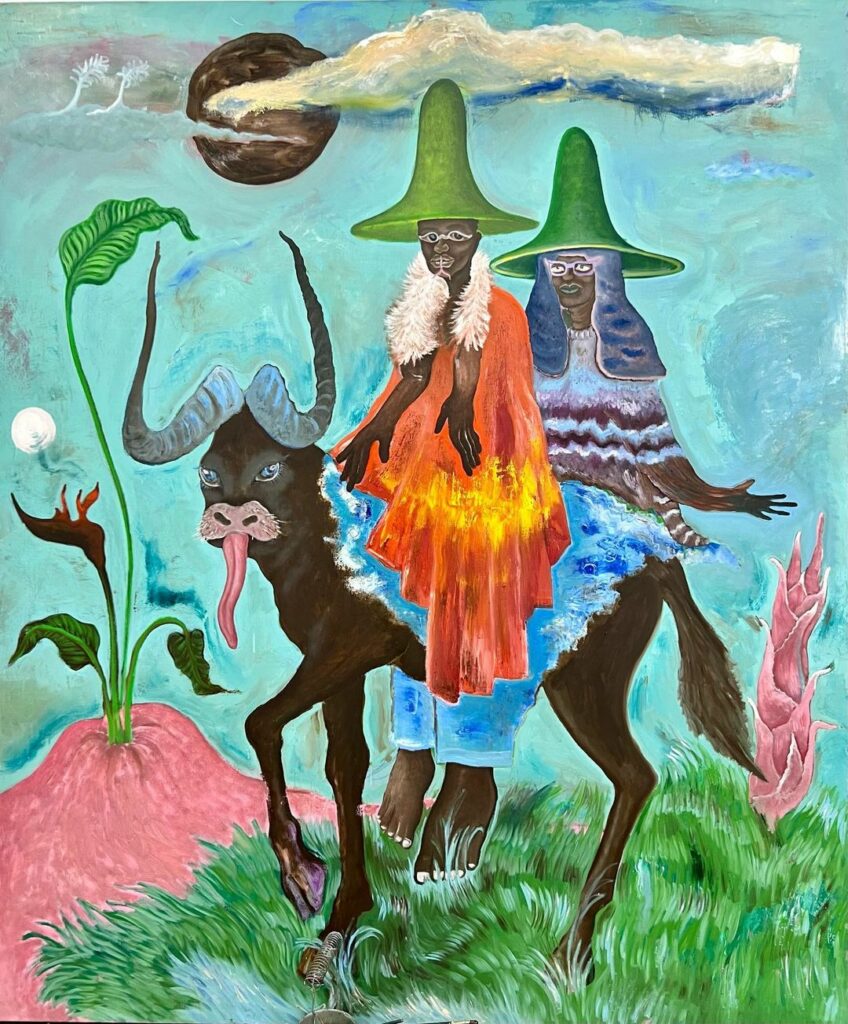
Ndzube’s art goes into the realm of magical realism, a mode of storytelling that perfectly suits his exploration of boundaries, be they ontological, political, geographical or generic. His creations transgress these boundaries with ease, presenting a fusion of realities that coexist harmoniously within his artwork. This ability to seamlessly blend the possible with the impossible elevates his craft to a whole new level, captivating viewers with its ethereal and thought-provoking nature.
READ MORE: Themba Khumalo: Painting The Soul Of South Africa
Through his art, Ndzube offers an intimate portrayal of the Black experience in post-apartheid South Africa. His work serves as a visual narrative, telling stories that challenge societal norms ad shed light on the struggles and triumphs of black individuals. He infuses his pieces with elements of magical realism, he invites viewers to explore a world where the boundaries that confine us are shattered, allowing for a more profound understanding of the complexities of the black experience.
READ MORE: ABANTU IN AFRICA Where Fashion Meets Sustainability & Culture
Simphiwe Ndzube’s journey is laced with with love for literature. Looking up to legends such as Alejandro Jodorowsky, Gabriel, Italo Calvino and Makes Mad, he embraces the essence of magical realism in his work. These literary influence have guided him in his exploration of storytelling, enabling him to create art that explores fresh prospectives on the world.
https://www.instagram.com/p/Cw-ftZNr0bV/?utm_source=ig_web_copy_link&igshid=MzRlODBiNWFlZA==
While Ndzube’s art touches into the realm of the fantastical, it remains grounded in the human experience. Through his use of visual elements, he captures the raw emotions, struggles, and joys that define our shared humanity. Through his craft, Ndzube offers a glimpse into the Black experience in post-apartheid South Africa,