Design does not begin and end with the finished object. Instead, it is shaped by the spaces where people work, the materials they have access to, the communities they collaborate with and the audiences who encounter what they make. Design Week South Africa highlights these relationships by taking its programme beyond traditional exhibition spaces and into studios, showrooms, cultural venues and the city itself.
Launched in 2024, the festival hosts two annual four-day editions: one in Johannesburg, the other in Cape Town. This year, Johannesburg’s programme ran from 8 to 11 October, with Cape Town’s edition due to take place on 22 to 25 October. Both fall under the theme The Shape of Us, which examines the different forms South African design takes and the people, histories and perspectives that shape it.

Although the two programmes share a broad approach to design, their separate projects suggest different ways of understanding the creative environments in which they take place. An exploration of the spaces, disciplines and conversations featured in each edition reveals how design intersects with urban life, independent creative practice, manufacturing and contemporary culture.
Johannesburg: Design across the city
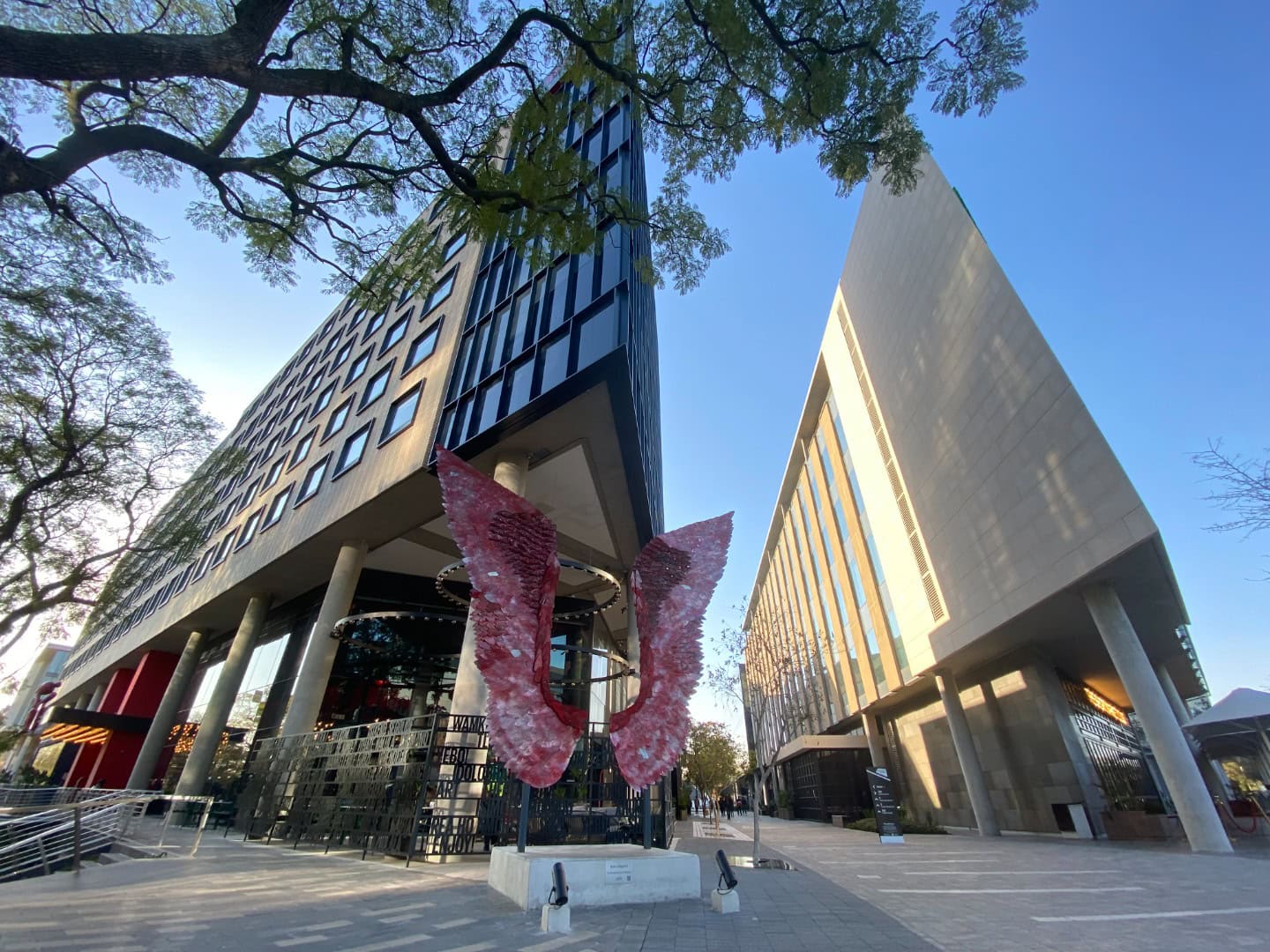
Johannesburg’s programme was held across four areas: Braamfontein and the CBD, Rosebank and its surrounds, The Parks, and Kramerville and the northern suburbs. Visitors could move between exhibitions, open studios, product launches, workshops, discussions and tours, encountering design in a range of professional and cultural environments. The programme’s relationship with the built environment was especially visible.
Why Is Sandton So Hard to Walk?, a discussion curated by Young Urbanists, invited audiences to consider how urban design affects movement through the city. The Joburg on Foot tour offered an alternative way of engaging with Johannesburg’s urban landscape, while guided visits to the Joburg Contemporary Art Foundation’s REVERSE FUTURES exhibition connected the programme to contemporary art and exhibition-making.
Elsewhere, visitors could discover Bumba Souled Ceramics’ open studio, attend activities at BCKRDS or encounter work through product launches and retail spaces. The programme moved between making, exhibiting, selling and discussing creative work, engaging different parts of the design process in the public eye.

This variety reflects the range of places where Johannesburg’s designers and artists work. Studios and showrooms provide opportunities to encounter objects and processes at close quarters, while galleries and cultural venues allow room for interpretation and exchange. Discussions about walking, architecture and public space extend design beyond questions of the object to how people experience the city.
The result is a programme that connects the designed object with the environment around it, from the spaces where creative work is produced to the streets and buildings through which people move, and the buildings through which people move.
Cape Town: From materials to the public realm
Cape Town’s programme, which runs from 22 to 25 October, also spans multiple districts and disciplines.
Events are scheduled across the inner city, District Six and surrounds, Green Point, and Woodstock and Salt River. It features exhibitions, workshops, studio visits, product launches, retail experiences and discussions about architecture and design. One of its flagship projects is UNBUILT, presented with the Mission for Inner City Cape Town.

The exhibition brings together ideas, prototypes and projects concerned with how urban precincts can become more interconnected, inclusive and people-oriented. Its subjects include public furniture, parklets, public toilets, trading infrastructure, modular spaces and other interventions in the built environment.
By uniting designers, architects, urbanists and organisations around these proposals, UNBUILT places design within the practical considerations of how cities function and who gets to use them. The work considers possibilities for public space at both street and precinct level, examining how design decisions relate to people’s everyday urban experiences.
Other Cape Town activations explore design through materials and production. An Alu-Cab factory visit offers an insight into the process of industrial design, from product development and testing to manufacturing. Where Textiles Tell Stories, an immersive experience by Somila Tshazibane, examines textiles as a medium for creative expression.
Meanwhile, MŪVEK and CVN present furniture and architecture in conversation, using objects and chairs to investigate the relationship between construction, proportion and material. Together, these projects demonstrate how the Cape Town programme connects design to different scales of making, from the material and the object to manufacturing and the public environment. They also illustrate how the boundaries between disciplines can become starting points for collaboration.

Where the programmes meet
The difference between the two editions is not a simple division between different types of design. Both programmes feature independent creative practices, commercial spaces, exhibitions, workshops and conversations about the built environment. They both also make room for work that crosses disciplinary boundaries.
Johannesburg’s IN HABIT, presented by The Art Vanguard SA, brought together contemporary art and design in an imagined interior that combined artworks, furniture, lighting, textiles and sound. Similarly, Cape Town’s MŪVEK and CVN presentation explored the connections between architecture, furniture and object design. Both projects use the relationship between disciplines to expand how audiences encounter creative work.
The programmes also illustrate how venues shape the experience of design. A factory visit reveals processes that may not be visible in a finished product, an open studio allows visitors to encounter a maker’s practice in its working environment, a gallery exhibition provides space to consider objects and images in relation to ideas, and an urban tour connects design to the streets and buildings people use every day.
These settings influence which aspects of creative work become visible and how audiences engage with them. They create opportunities for visitors to meet practitioners, learn about production, discover independent brands or engage with the built environment in a different light.There is also an industry dimension.
In both programmes, product launches and retail activations bring designers into contact with potential customers, while discussions and workshops create opportunities for exchanging knowledge. The programmes put creative work in the public eye, and make room for interactions between makers, audiences and businesses, though the extent to which those encounters lead to long-term collaborations or commercial opportunities requires further evidence.
Reading a city through its creative spaces
Design Week South Africa offers an interesting way to examine the creative ecosystems of Johannesburg and Cape Town because it draws attention to relationships between practitioners, venues, disciplines and audiences. Both programmes share a national platform while featuring different combinations of projects and places.
Those combinations are important. The creative environment of a city is shaped not only by the presence of galleries or design studios, but production facilities, retail networks, cultural institutions, public spaces and the relationships that allow practitioners to exchange ideas and bring work to an audience.
The festival provides a snapshot of these connections, though it does not offer a complete picture of either city’s design industry. Its programme cannot establish who has the most access to opportunities, which practices are the most sustainable or how the broader creative economy differs between the two places. Those questions require a closer look at the people working in each ecosystem and the conditions that support their work.
Still, the two editions make it clear that design is taking place across a wide range of settings and disciplines. By opening up studios, bringing work into public spaces and creating opportunities to encounter creative practices outside conventional exhibition formats, Design Week invites audiences to look more closely at the environments that shape what South African designers make, and how that work fits into the world.