In advertising, success can be an uncomfortable thing. A campaign wins recognition, a client celebrates a successful project and an agency takes home another collection of trophies. Then the next brief arrives, the next challenge presents itself and the process begins again.
For David Ogilvy, this attitude had a name: divine discontent. He described it as a habit of being dissatisfied with one’s own performance, calling it an antidote to smugness. The principle speaks to an ongoing desire to improve, question existing standards and pursue work that has not yet been done.
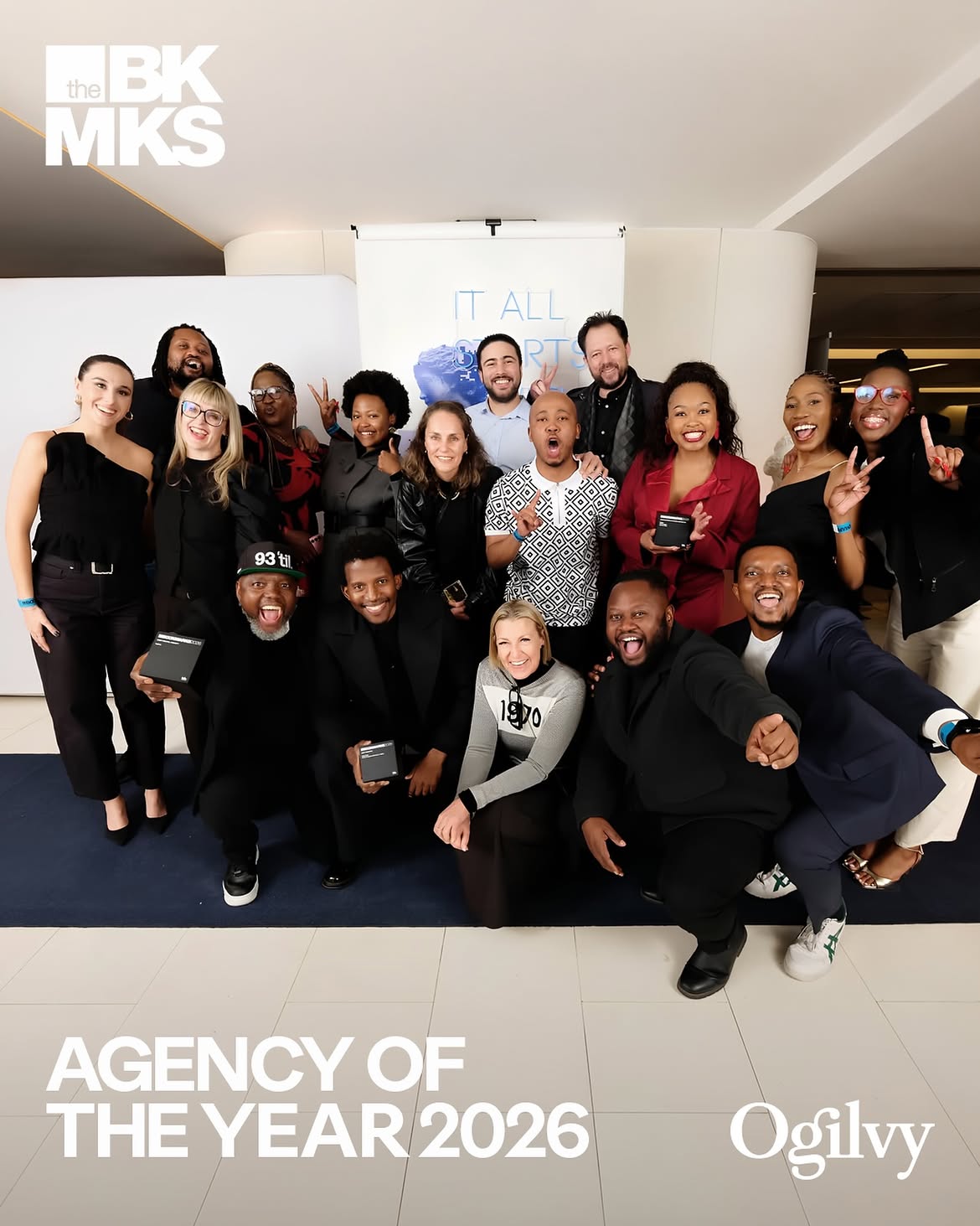
This is a particularly pertinent concept in relation to Ogilvy South Africa. Recently, the agency won a total of 42 awards at the 2026 Assegai Awards, comprising of eight Golds, and the prestigious Zinthatu Award for Agency of the Year. Its award-winning work has covered 12 brand accounts including Vodacom, Google, KFC, Dove, Carling Black Label, Mastercard, Cadbury, Volkswagen, Old Mutual and Vaseline.
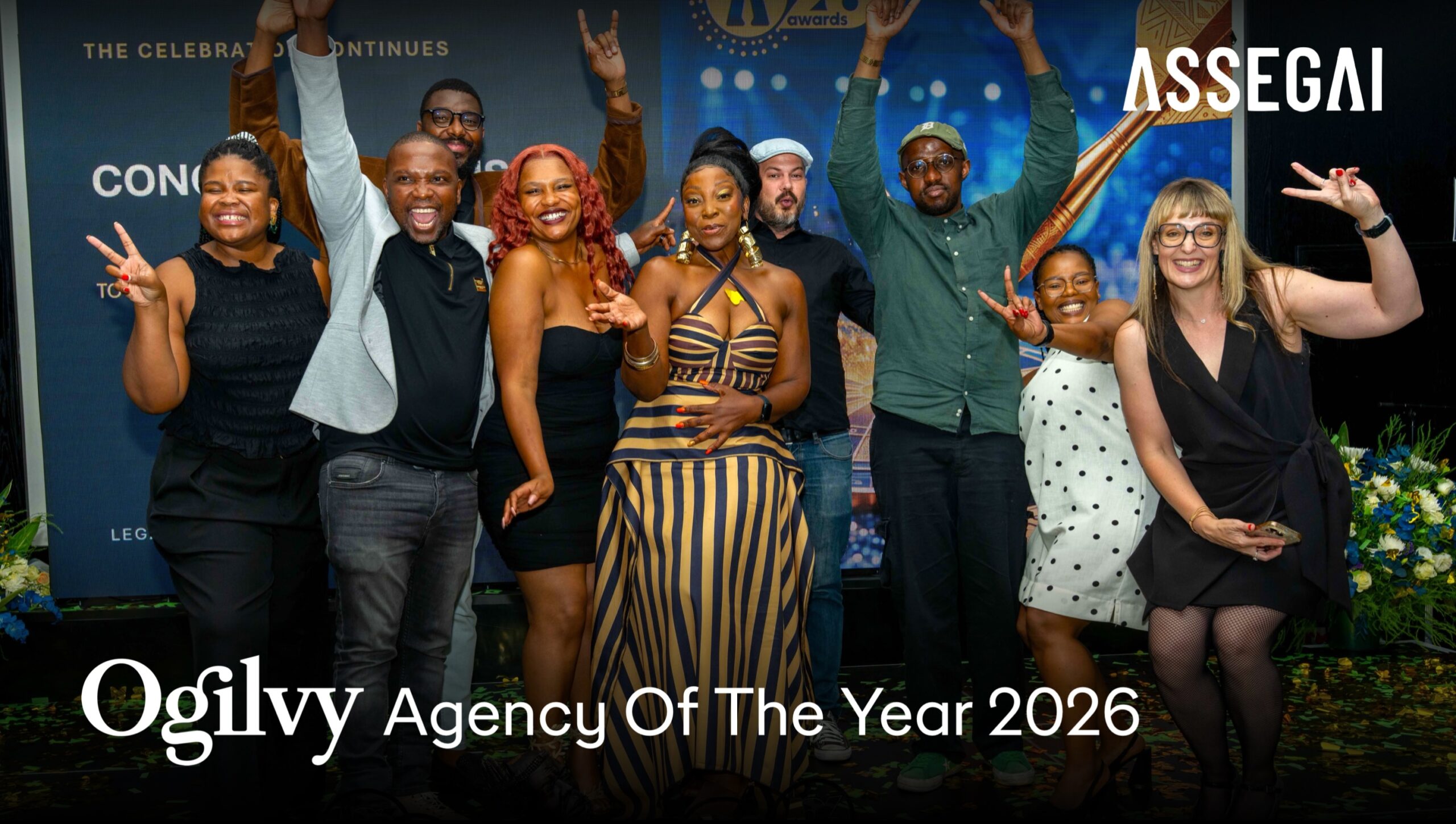
The result adds to a series of achievements across the advertising industry. In 2026, Ogilvy was also recognised at the IAB Bookmarks, where it shared the Digital Agency of the Year title with Accenture Song, and received more Effie Awards than any other agency in South Africa.
The question, then, is what allows an agency to sustain this level of recognition across different clients, creative disciplines and industry platforms?
The advantages of interdisciplinary work
Modern advertising requires agencies to understand more than the traditional relationship between a brand and its audience. Campaigns now move across social media, digital platforms, public relations, experiential marketing, commerce, entertainment and technology. The challenge is finding ways for these different disciplines to contribute to a coherent creative idea.
Ogilvy’s integrated agency model brings together capabilities across advertising, brand strategy, customer engagement and commerce, public relations and influence, digital transformation and partnerships. Its organisational structure also recognises specialist crafts such as creative, strategy, data, technology, production and client service.
This interdisciplinary capability can then be applied to a specific brand brief. Often, a concept will stem from strategy and will then evolve into a creative idea. Innovation may further be introduced and the concept can then be distributed to an audience via a variety of digital, social and physical experiences.
The value of this approach becomes clearer when looking at the range of work recognised at the 2026 Assegai Awards. Campaigns for Google, Dove, KFC, Vodacom and Carling Black Label address very different audiences and business challenges. They require different kinds of thinking, execution and cultural understanding.
At the Bookmarks, the agency’s recognised work included Vaseline’s #VaselineVerified, Volkswagen’s Forever Golf and Audi’s TikTok Test Drive. These campaigns demonstrate different approaches to digital creativity, from building consumer participation and drawing on cultural nostalgia to designing experiences around the behaviours of a particular platform.
An integrated structure does not automatically guarantee better work. It does, however, provide an agency with a wider range of capabilities to draw on when approaching a brief. The ability to effectively combine these diverse skills is where the real advantage lies.
The people behind the work
An agency’s creative output is closely connected to the people responsible for developing and delivering it. Behind every campaign is a combination of strategists, designers, writers, producers, account teams, technologists and other specialists whose contributions shape the final result.
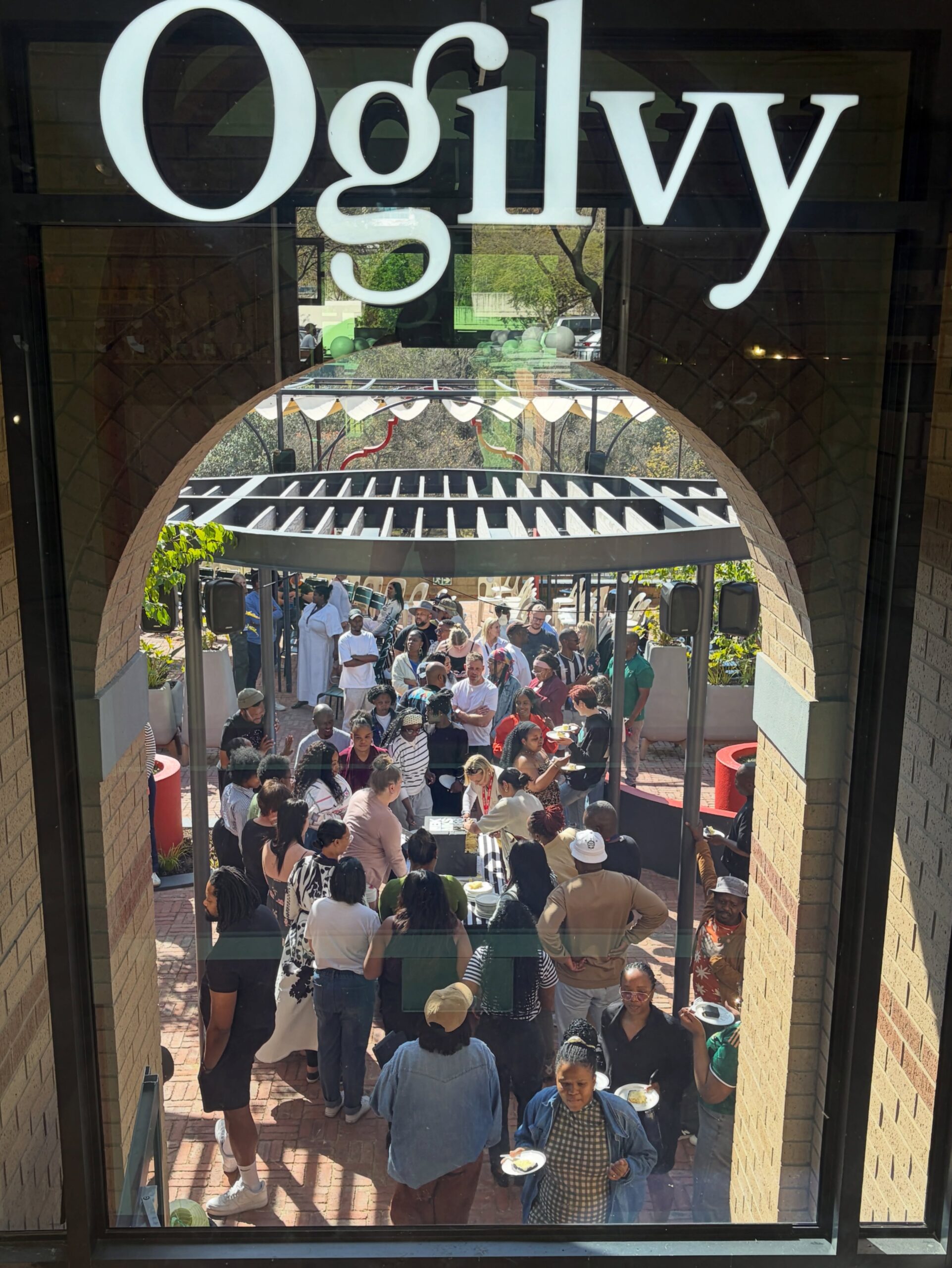
Ogilvy South Africa has over 900 employees in Johannesburg, Cape Town and Durban. Ensuring a uniform creative culture must therefore involve teamwork, good leadership and a supportive company culture which enables staff from different sections of the business to contribute to the creative process.
There is also an interesting point of recognition beyond the agency’s creative output. In the 2025/26 Scopen report, Ogilvy was named Best Creative Agency to Work For and Best Agency Group to Work For in South Africa. The rankings were based on feedback from more than 230 agency professionals, alongside industry research into workplace perceptions.
Clearly, the quality of an agency’s working environment can influence its ability to attract and retain talent. Creative industries depend on people bringing their knowledge, experience and perspectives into an environment where ideas can be developed, challenged and improved.
The recognition does not tell us everything about the day-to-day experience of working at the agency, nor does it mean that a positive workplace culture automatically produces award-winning campaigns. It does, however, provide another part of the picture when examining the conditions behind its creative output.
The diversity of its client work also makes the question of talent particularly relevant. Producing work for a financial services brand, a fast-food chain, a telecommunications company and a beauty brand requires an understanding of different markets, consumer behaviours and cultural contexts. That range depends on people with different specialisms being able to work towards a shared objective.
Creativity that delivers
Creative recognition and commercial effectiveness are often discussed as separate measures of success. In advertising, however, the most valuable work needs to engage audiences while addressing a real challenge for the brand.
This is where the different award platforms offer a useful way of examining Ogilvy’s work. The Assegais evaluate the market impact of advertising; the Effies analyse effectiveness; the Bookmarks reward digital innovation and creativity and the Loeries assess overall creative quality within brand communications.
Ogilvy’s 2026 Effie performance is particularly relevant here. The agency received more awards than any other agency at the South African ceremony, with seven campaigns recognised across six client partnerships. The work included campaigns for KFC, Volkswagen, Google, Audi, Vaseline and Carling Black Label.
Consider Carling Black Label’s Champion Coach campaign. The idea connected consumer purchases with football participation, using the brand’s relationship with football supporters to create a mechanism for fans to influence the game. The campaign demonstrates how a brand can build participation around an existing cultural connection while addressing a commercial objective.
Another example is Dove’s work around access to the creator economy. The Real Creators initiative used the brand’s social community as a talent-scouting opportunity, connecting its position around real beauty with the discovery of new creative voices.
KFC’s digital work offers a different illustration. Its campaigns have explored platform behaviour, cultural relevance and ways of creating engagement beyond conventional advertising formats. At the 2026 Bookmarks, its work was recognised alongside campaigns for Volkswagen, Vaseline and Audi.
These examples reveal the importance of understanding the problem before deciding on the creative solution. A successful campaign for one brand cannot simply be replicated for another. The audience, category, cultural context and business objective all influence the kind of idea that will work.
The challenge for an agency operating across so many categories is maintaining that distinction while continuing to deliver work that is recognisable for its ambition and execution.
The consistency question
One award-winning campaign can be the result of a particularly strong idea, an exceptional client partnership or a moment when everything comes together. Sustaining recognition across several years and different award platforms requires a broader set of capabilities.
Ogilvy’s recent results provide a useful timeline. In 2025, the agency received nine Effies from 12 shortlisted entries, with work recognised across clients including Volkswagen, KFC, Mondelez, the Gates Foundation and Vodacom. At the 2026 Bookmarks, it received 23 accolades and shared the Digital Agency of the Year title. Its 2026 Effie results recognised seven campaigns across six client partnerships, followed by the 42 awards received at the Assegais.
Its performance at the Loeries also provides a longer-term perspective. The agency ranked first in the 2023 South African agency rankings, third in 2024 and fourth in 2025. Although continuity does not imply that an agency must always win awards or be in pole position, it does signify that it continues to be involved in, and contribute to, an evolving industry, whether this be in terms of creative trends, the sectors in which it works or its competition.
There is no single campaign, client or creative discipline responsible for the agency’s recent recognition. The work spans different industries, audiences and platforms, while the awards themselves measure different aspects of advertising.
Once more, the notion of divine discontent is highly relevant. In an industry where consumer behaviour, technology and cultural conversations are constantly changing, past success can quickly become an outdated measure of what an agency is capable of achieving. Being able to critically analyse existing practice, respond to new issues and continually innovate is fundamental to an agency’s competitiveness.
David Ogilvy’s divine discontent notion therefore provided a compelling rationale as to why one should avoid becoming too content with prior success. For an agency such as Ogilvy, which continues to work within such a broad scope of clients and disciplines, it offers a useful way of understanding the mindset behind the work.
The trophies are visible evidence of industry recognition. The more interesting story lies in the creative infrastructure behind them: the people, partnerships, disciplines and thinking that allow an agency to keep returning to the work with the ambition to make it better.