South African musician, composer, and performer Selaelo Selota is entering a new creative chapter with the launch of his first clothing collection, a project that brings together his relationship with music, identity, memory and personal style.
For Selota, fashion is not a departure from music but an extension of the same creative language he has spent decades developing.
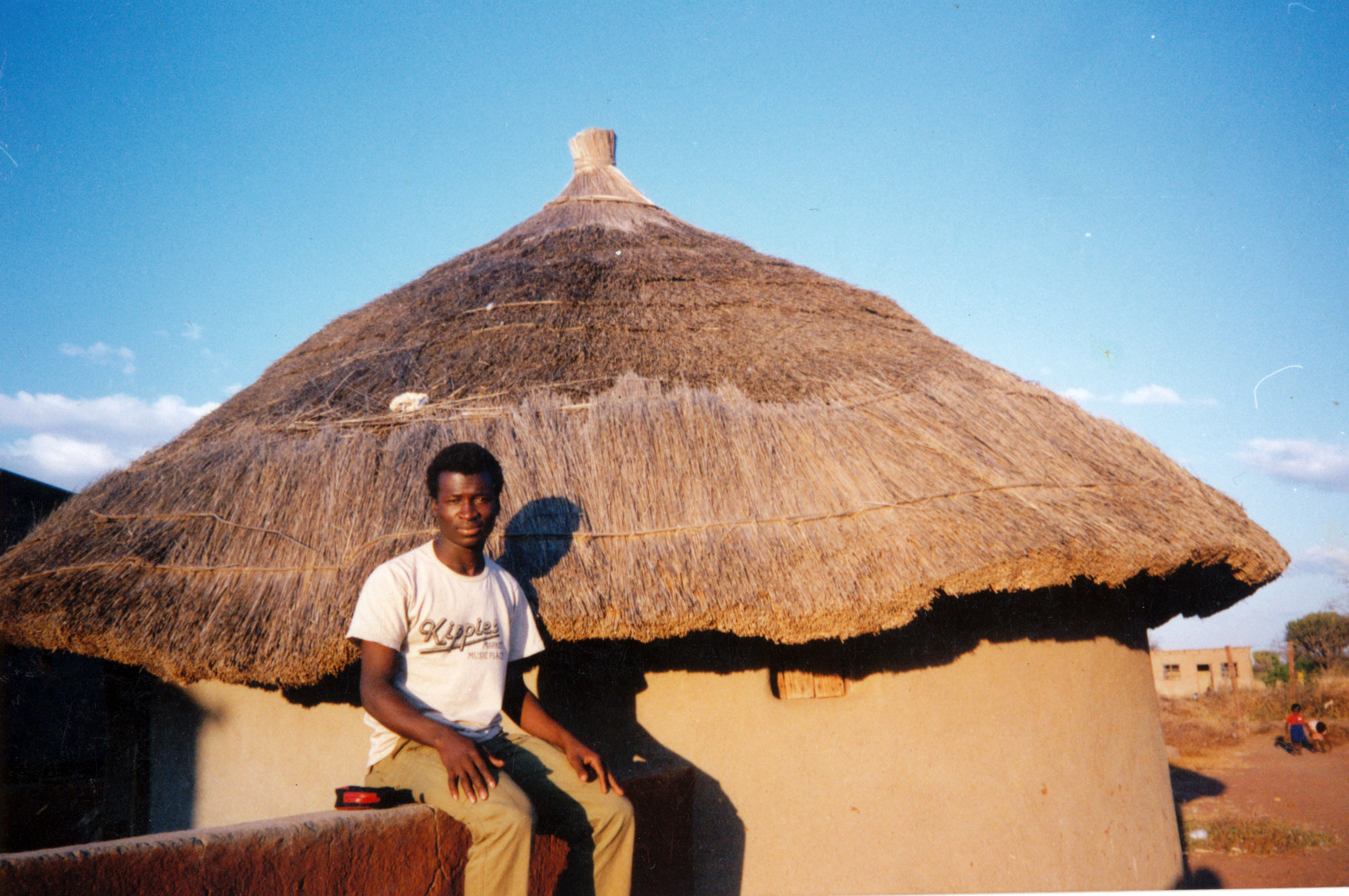
His relationship with clothing began long before the collection itself. Growing up without much access to new clothes, he experienced firsthand how appearance could influence the way a person was perceived and treated. Years later, that experience would intersect with his understanding of branding, intellectual property and the importance of creating a distinct identity.
In conversation with SA Creatives, Selota reflects on his childhood, discovering music, studying jazz, building an unmistakably South African sound, and the years of thought that eventually led him into fashion.
You are widely known as a musician, but there is a much bigger story behind the music. Where does that story begin?
The story begins with a young man, probably around four or five years old, who started noticing the absence of a father figure. After my mother got married, I was left with my grandparents. That displaced me a little bit.
My mother was married in the same village, so I used to run away from my grandparents’ home and go to my mother’s. That search for identity, and later finding that the new home where my mother had gone was also somewhat hostile, put me in a position of not belonging.
Then I discovered music. I saw that music could make people who were not known or recognised become known and recognised. So, for me, falling in love with music was part of a pursuit of identity. That’s how it started.
Was that period of searching for a place to belong a difficult one for you?
It became very real when I matriculated. I matriculated at 17 and felt very off-balance because, as I said, I did not belong.
I wanted to find home. If I finished my matric at 17 and didn’t have a place to call home, it meant I didn’t have somebody to take me further with my studies.
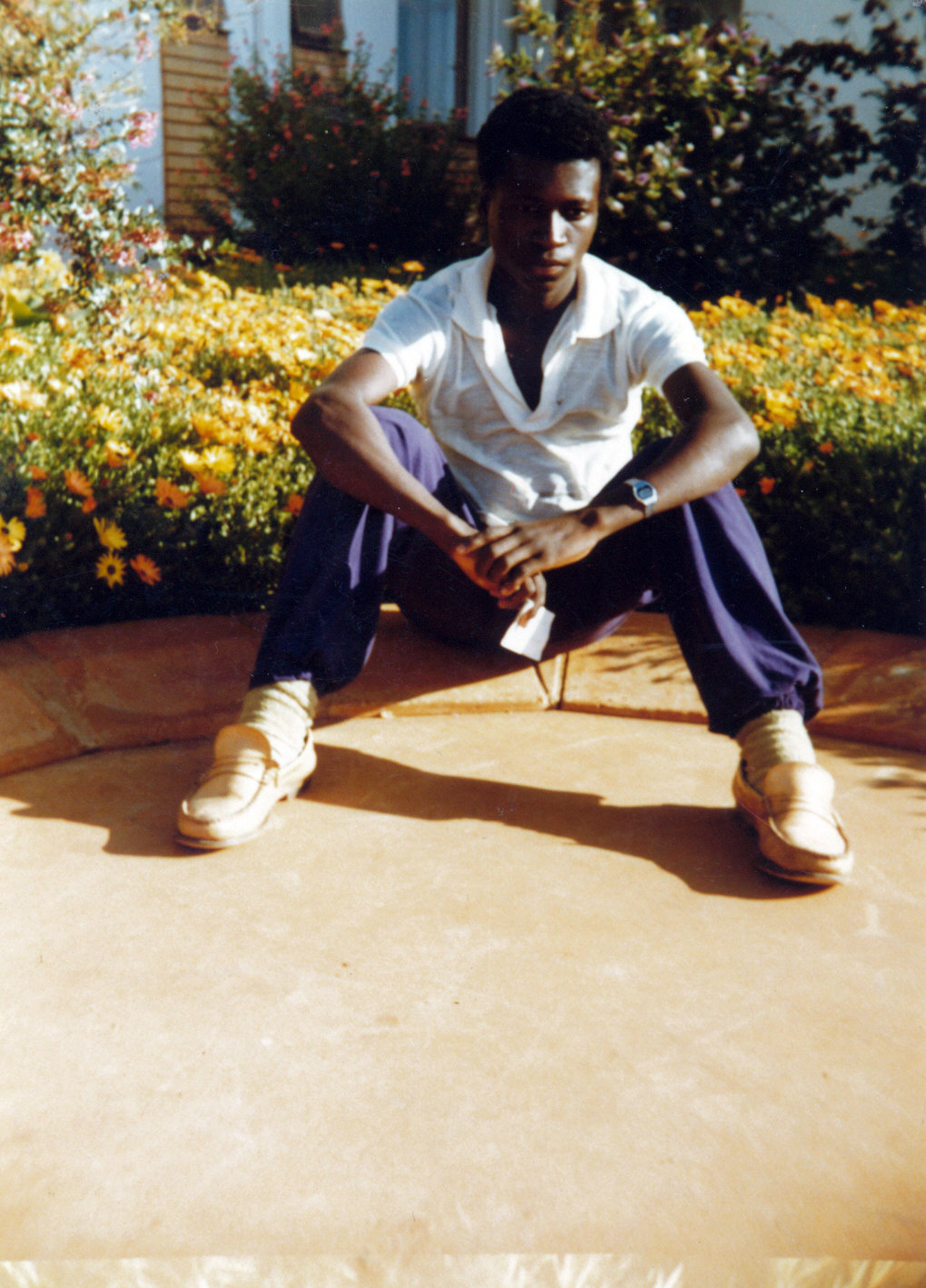
So I ended up getting employment in the mines. I was essentially going to town and hanging around until I came across an office block that was an agency recruiting people for the mines.
When I left for the mines, mentally I told myself, I’m never coming back here. I’m going to start afresh, build my life, change my name, become somebody else.
What did that period in the mines give you creatively?
I think I became grounded by the common backgrounds I encountered there. The mines were dominated by migrant workers from KwaZulu-Natal, Limpopo, the Eastern Cape and other parts of South Africa.
I immersed myself in culture. On weekends, I would go to the amphitheatre, where Batswana would compete every month, with a yearly competition as well.
I also had a friend from KwaZulu-Natal who played the accordion and guitar. I used to follow him everywhere.
So my immersion into culture actually started in the mines.
You grew up in Sekuruwe, and later travelled to Seshego in search of your father. How did that journey shape the song “Seshego,” and what does the song represent for you?
I grew up in a village called Sekuruwe in Limpopo. But Seshego is where I found my father.
As I told you, when I was growing up, I didn’t have sight of my father. Seshego is connected to that place and to that part of my story.
I wrote the song while I was on my way there. It was my first composition. I composed it on a train while I was going there, knowing that I was going to find him.
Some of those details are in my autobiography, so I won’t write the whole book here.
What are some of the earliest sounds or experiences from growing up in Sekuruwe that you can still hear in your music?
The earliest sound I remember was hearing a gramophone. One of my uncles had one of those music systems.
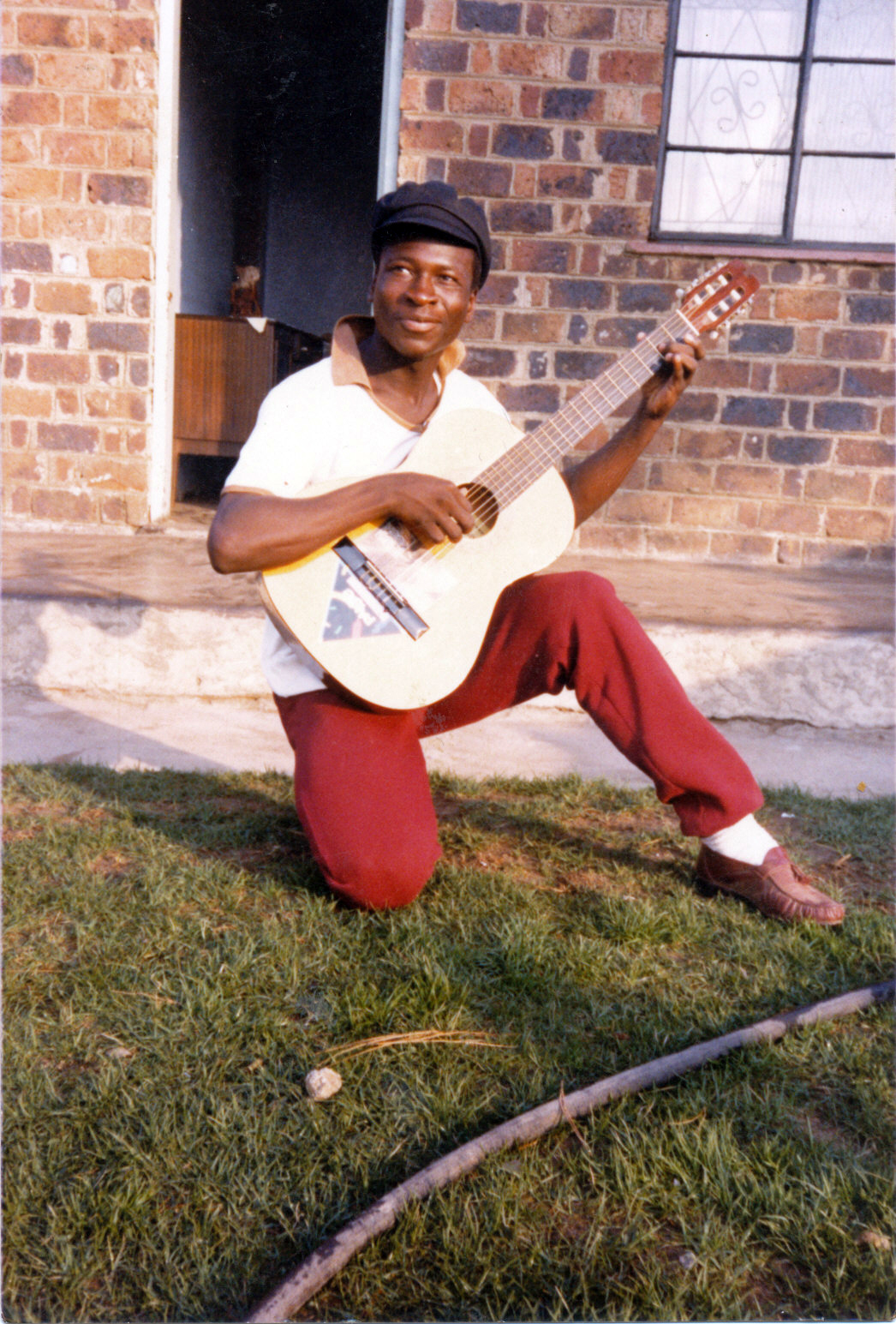
There was also an instrument, almost a toy or homemade instrument, called a setolotolo. I saw my uncles playing it. I don’t know how I learned it, but I learned very quickly. I was probably around five and I could already play it.
When I was in secondary school, my sister would gather with her friends at night and tell them, “My younger brother can play setolotolo.” So I became the entertainer. I was the music system. I’d bring the setolotolo and play while they were hanging out.
I didn’t think music was something I could pursue. I just knew that it was something I loved very much. Then I started listening to the records my uncle bought. Whenever everybody had gone, I’d put them on and listen.
It wasn’t only traditional or South African music. It stretched across different influences. I listened to Abdullah Ibrahim and many others.
Was there a particular moment when you realised music could actually be performed by people, rather than simply coming from the radio?
I was about 13 when I went to town for the first time with my mother. I saw a band playing Groove by Ben E. King on a Sunday afternoon.
That was the first time I heard a band play a song that I had regarded as something that belonged on a record. That’s when I realised, Oh, this thing is what people are doing.
The music is not from the radio. It is the people who play it who put it on the radio.
You later studied jazz formally. What did jazz give you that you didn’t already have through the traditional music you grew up with?
Jazz became an institution for me. To play jazz, you need to be very skilled on your instrument, whether it’s voice, guitar, piano or drums.
Jazz itself became a school. It teaches you to become very well acquainted with your instrument and very skilled.
But jazz also became a movement for me. When I studied jazz history, I learned that it developed out of a revolution of people who wanted to define themselves.
That attracted me because I also wanted to define myself and my identity.
I found that jazz was a sociopolitical art form. It allowed me to find other societies that I could belong to. I could communicate without even opening my mouth.
And then there was also the way jazz musicians presented themselves. When you look at pictures of Miles Davis, Charlie Parker and others, they were all well dressed.
If I’m going to play in a jazz setup today, even if I’m not playing my own music, I’ll go to town and get myself my best suit. Jazz itself is connected to politics, culture and being culturally revolutionary.
Your music brings together traditional South African sounds, jazz and contemporary influences. How intentional was that?
It was very intentional.
When I was in Johannesburg, before I went to study formally at the University of Cape Town, I was practising jazz the way I heard it on records. At the same time, I was already playing with musicians who came from traditional backgrounds.
The first band I played with was called Mzansi. It was predominantly made up of guys from KwaZulu-Natal who loved maskandi and all that.
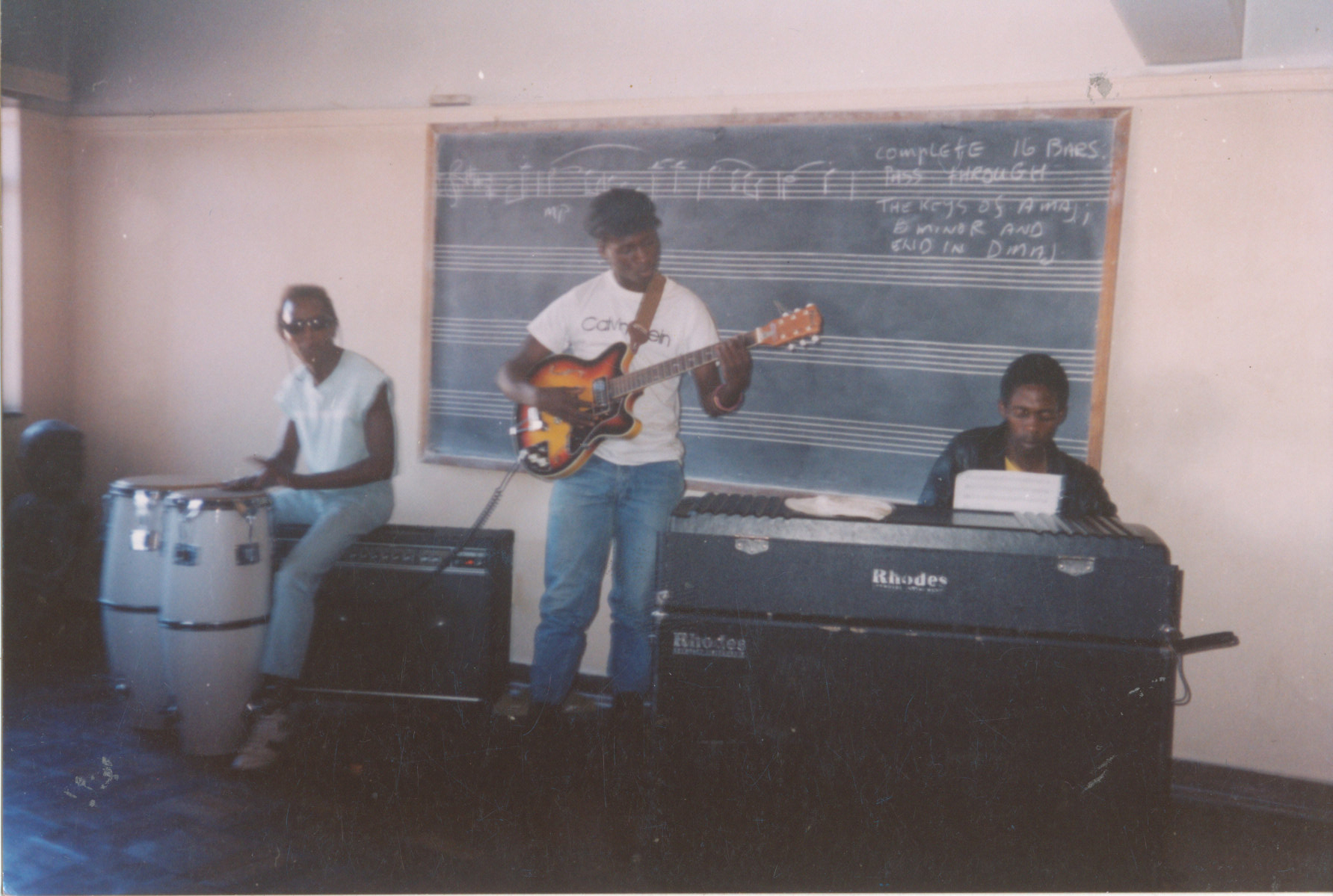
I realised that if I became what they call a purist, I would end up playing more like an American. I didn’t want to sound like that.
When people listen to me, they must find themselves in me.
So I consciously mixed the two, and it became a voice for me.
Did you ever feel pressure to make your music more accessible to an international audience?
No. I always felt that my sound was very international.
People tend to think that when we play ourselves, we are not very international. But you can’t bring a sound to America that Americans already have, or to the UK something that the UK already has.
In 2009, I was sitting here and received an email from the University of Southern California in Los Angeles inviting me for a residency.
I wondered where they had found my music. I discovered that they had picked up my album Lapeng Laka on Amazon. The album tapped into African rhythms but also had an element of jazz improvisation.
When I arrived, I found that four songs from the album had been given to doctoral students to rearrange so they could perform the music with me.
They told me they were interested in understanding how I had intertwined something that sounded so African and traditional with jazz, so naturally, as if the two had been born together.
That’s why I say my music has always been international. I’ve never tried to create an “international sound.” I’ve never felt that what I’m creating wouldn’t appeal internationally.
People are still discovering my music for the first time, even today.
What does maintaining a career at your level actually require that audiences don’t necessarily see?
Your career lies and dwells in the people themselves: in their hearts, their souls and their heads.
When I released my first and second albums, I understood that I was taking something from history and making it move with the people as they developed.
For example, Thrrr…Phaaa! came from something I heard my grandfather say when I was four or five years old. Even though he passed away in 1990, I kept hearing my aunts saying it.
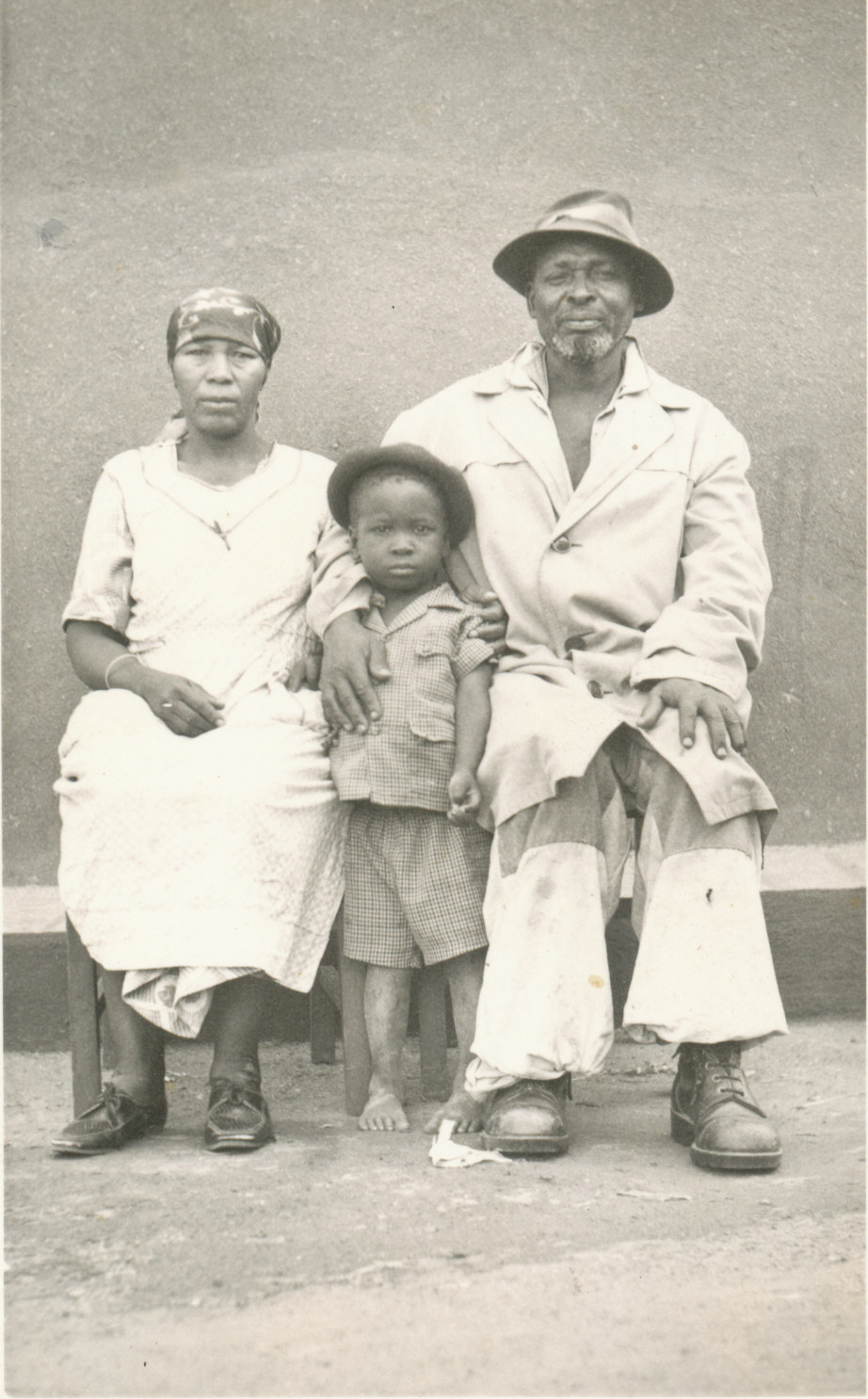
Later, when I was working on music composition, I realised that if my grandfather used to sing this in the 1950s when he worked in Johannesburg and the mines, then I had taken something historic and made it current.
For me, it’s about taking something that used to belong in history and making it evolve with the people as they move forward.
Do you think artists today understand the value of creating something that can outlive a song, album or viral moment?
Many don’t understand that.
Just recently, I met someone who recognised me from my first two albums. They looked at me and asked, “Is this Selaelo Selota?” I said yes, and they said, “We thought you would be walking in here with a walking stick.”
What they were saying was that those first albums sounded like they belonged to somebody much older.
So if you want to create something for the future, create it to appeal to the parent and the older person of today. That parent or older person will play that music in the house, and the child growing up in that house won’t have any resistance to it. It becomes the soundtrack of their life.
Then, in the future, when they encounter that same music as a remix or perhaps as a clothing brand, they identify with it.
For me, this generation doesn’t always understand how powerful it is to have your own identity.
Look at our fingerprints. No matter how many people are born, not one person has the same fingerprints as another.
That’s exactly my point. Whatever you have created that feels natural to you, that is you. It is international.
You’ve now moved into fashion. Why did you decide to make that transition, and why now?
I wanted to go into fashion anyway. It took a long time.
Fashion touched me a lot because, when I was young, just having something on you meant a lot. I didn’t have clothes.
At some point, clothing was used as an instrument of power over somebody. If you didn’t have great or beautiful clothes, people could undermine you. They would say things about you.
I went through that because my background wasn’t one where I grew up in a flashy home with everything.
I used to receive old clothes from cousins and relatives. It still happens in many families.
At one point in my life, because I grew up in an environment where there were tensions within families, that was even used as a weapon against me.
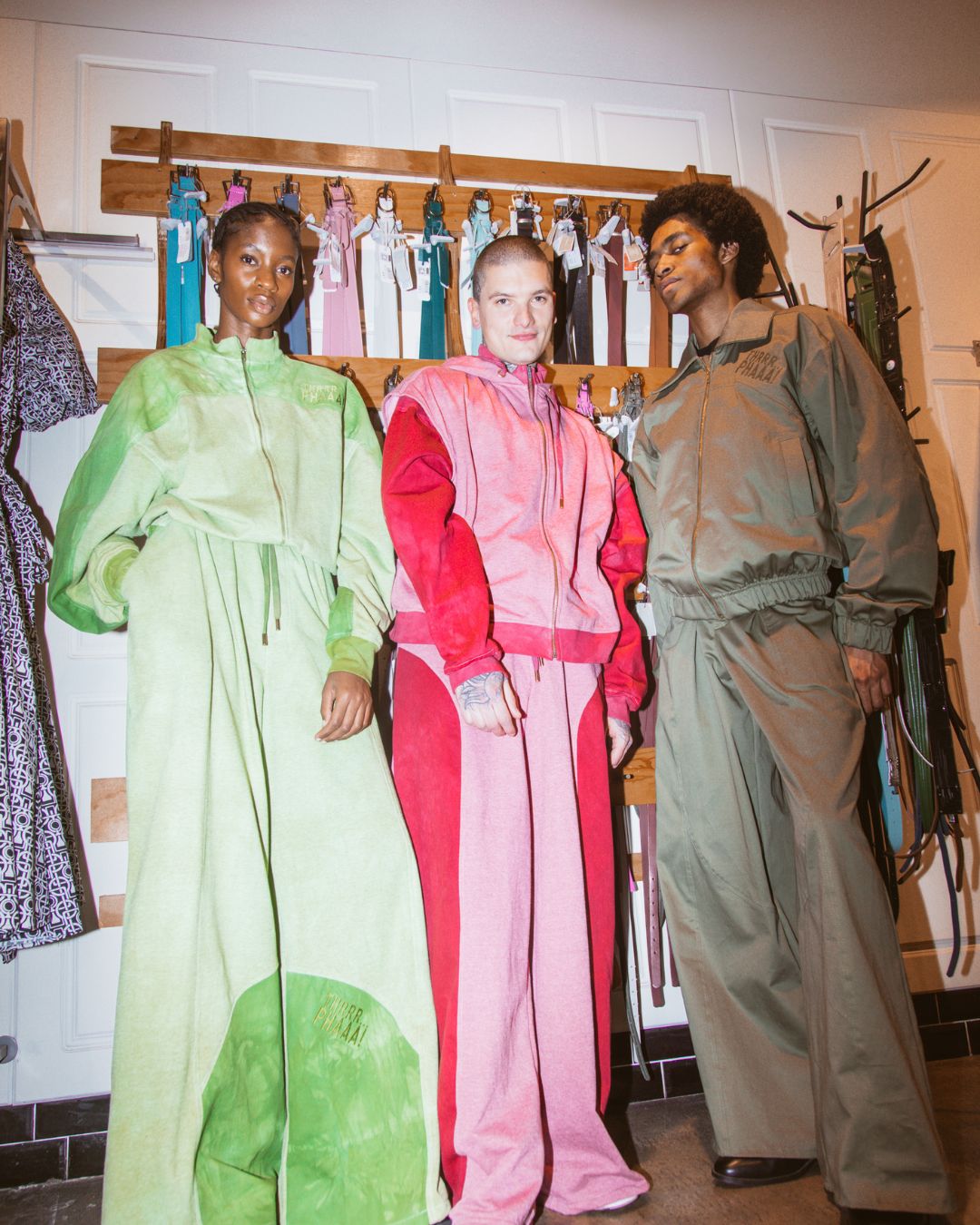
It made me think, What if I could just have my own pieces of cloth and put them together and do my own thing?
Was clothing also something that made you more conscious of how you were perceived when you entered the world of music?
Absolutely.
While I was still working in the mines, I would knock off from a night shift and take a bus from Carltonville to Johannesburg for my music classes.
In my first music theory class, the teacher encouraged us to form groups. Everybody ran to their friends and formed bands, and I was left alone.
The teacher asked one of the groups to take me into their band. They refused. When he asked why, they said, “But he looks primitive.”
I went into my own corner and looked at myself in the bathroom. I was wearing a mining jacket and boots.
That’s when I understood: I don’t look the part.
It made me conscious of how much clothing meant.
You eventually trademarked your name and Thrrr…Phaaa! and began building the idea of a clothing brand. Where did that come from?
I went into trademarks and intellectual property quite early. In 2012, I trademarked Selaelo Selota.
I discovered that Louis Vuitton was actually the name of a person, and that person had become known as the name of a clothing brand. I realised you could trademark your own name under Class 25, which applies to clothing.
I fancied seeing a shop with the name Selaelo Selota on it.
Then, in 2015, after realising that Thrrr…Phaaa! was becoming so popular that everybody was calling me Thrrr…Phaaa!, I trademarked it.
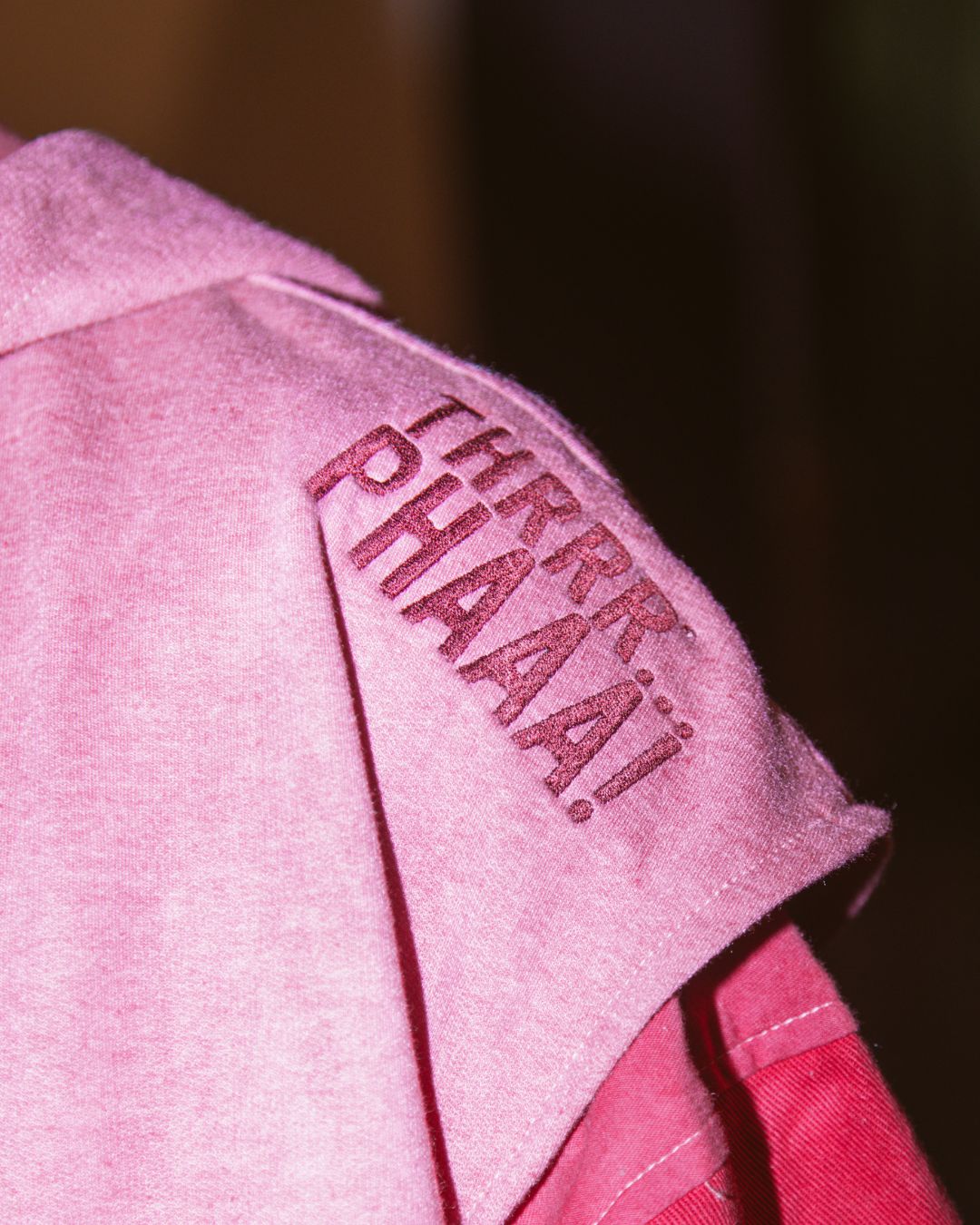
Then something happened in 2016. The township craze moved towards a motor vehicle that sounded similar to “Thrrr…Phaaa!” because of its exhaust and its power.
I thought, Somebody is going to take this and try to commercialise it.
So I trademarked it for clothing and started focusing on building the brand.
What do you want the clothing to communicate that music perhaps couldn’t?
I want the clothes to communicate love for the self, love for identity and energy.
When people think about my performances, they see the energy.
For a sound to be heard, you have to disturb the air. If you put a string in front of you, hold it and pluck it, you disturb the air and create a sound wave.
That’s what I regard as energy: vibration, reverberation, power.
When I perform and punch the air, it indicates the energy produced from within my soul and my conscience, when I think about possibility and when I think about a non-apologetic sense of identity.
That’s what I want Thrrr…Phaaa! to communicate: identity, energy, power and being unapologetic.
That’s why the logo has the exclamation mark.
How involved were you in the creative process behind the collection?
I wasn’t drawing as much, but I brought pictures to give examples. I brought pictures of myself in different poses, including how I pose when I perform.
I kept coming back to the idea that, as a song and as a word that I trademarked, I wanted people to understand the notation.
I’m the person who put the pen down and wrote the song title Thrrr…Phaaa! with the punctuation and exclamation mark. Before that, there was no word like that.
So even when people later wanted to use it commercially, as happened with a chip company in 2021, I had to stand up and say, “No, you can’t do that.” Nobody else came up with that.
With the collection, I came with pictures and theories. We didn’t arrive at the final designs immediately. There were other designs before these.
I would bring what I was seeing, and because the team comes from the practical artistic side, they would show me what they thought I was saying. I would either say yes, or say, “No, let’s change this.”
So I was part of that process.
How long has this process been developing?
With this team, we started in February last year.
But before that, I had been doing research on my own and working with different people. I met Thato Matabane, who had been developing Afrikanswiss, now Muntu Jeans.
I met Laduma Ngxokolo, whose work I had admired for a while. When I eventually met him over lunch, I learned that he was trained as a textile engineer. That helped me understand why his work stood out.
I’ve been following fashion designers for years. The first designer I approached was David Tlale in 2006. He created something for me to wear during performances.
I also became friends with Ephraim Molingoana of Ephymol. He used to style me for photoshoots.
Even when I was studying at the University of Cape Town, I met a designer in 1996. I used to go to the Health and Racquet Club in Claremont, and there was a shop nearby with clothes that I liked.
The man introduced himself as Fred Eboka. I later learned that he had dressed Miss South Africa.
There have been many moments in my life where I was drawn into this space.
What has working on fashion taught you about yourself that you didn’t know from working in music?
I discovered that I’m now more armed.
Some of the things that will come into my fashion space were created in the music space. I think that’s going to be my path.
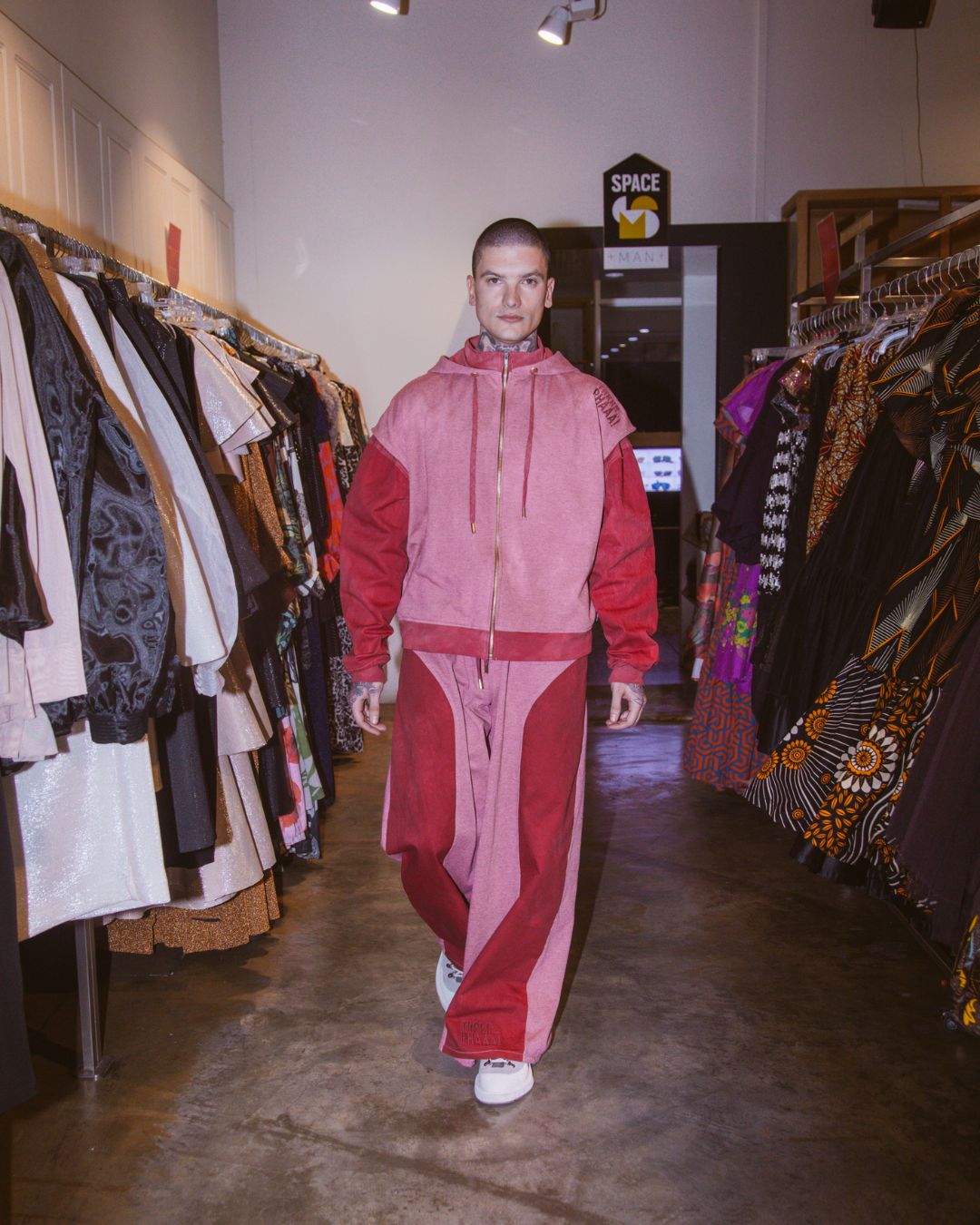
In the same way that I created something as a copyright in a song and it has now crossed into fashion, I have already identified things in my latest musical works that now want to be seen and touched rather than heard.
For me, it’s not about leaving one and taking the other. It’s about the meeting.
So fashion isn’t a departure from music. It’s a continuation of it?
Yes. It’s a continuation.
Is this the first collection of many?
This is the first.
Creativity is overflowing. If this collection is finished and there’s a need for replenishment, it will be done. But there’s more coming. There’s a lot.
Where can people access the collection?
At the moment, we exist physically at The Space, and there’s also the Instagram page, @thespace.
We also have an online store at www.thrrrphaaa.shop.
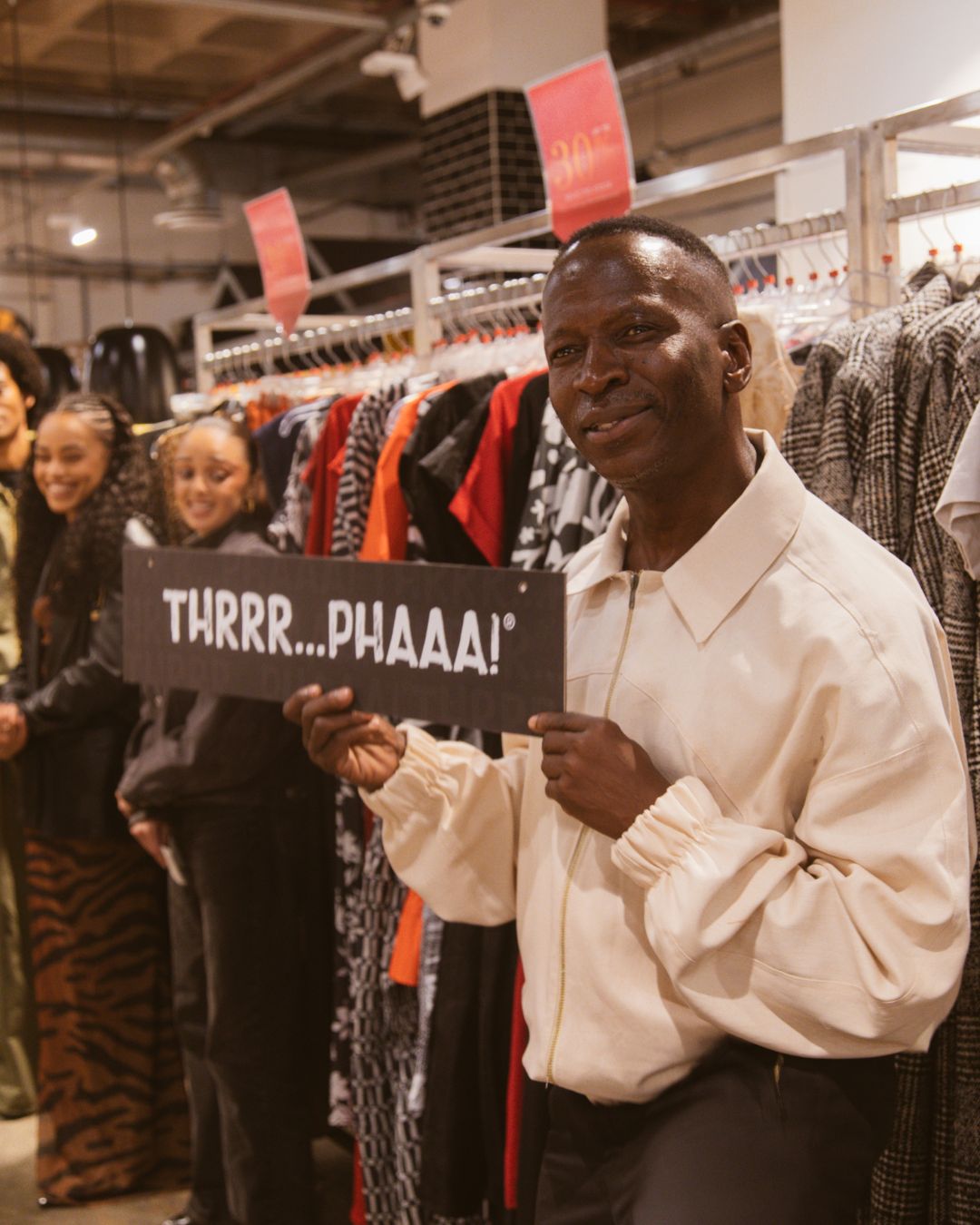
For people who are lucky, wherever I’m engaged in a musical setting or performance, there should be collections around for people to get.
I’ve seen that people are more engaged and want to purchase a piece of history whenever they’ve had an experience of something.
I’m still here. I’m not like Louis Vuitton, for example, who can’t get on stage and perform.
So what’s next for the brand?
It’s exciting.
Thrrr…Phaaa! is an apparel brand, and it’s going to come in many forms. It’s registered under Class 25, which covers clothes, headgear and footwear.
I’m already in the process of developing that.
Someone even contacted me about eyewear and said, “Whenever you think of eyewear in the future, come and let’s have coffee.” I’ve already seen samples.
It’s exciting.