Every week, countless artworks pass through our feeds. We double tap, save a post, maybe share it to our stories, and then continue scrolling. Most disappear into the endless stream of content that defines life online.
But every now and then, an artwork refuses to be scrolled past because it stays with us. It opens a conversation we weren’t expecting to have, asks a question we hadn’t considered, or gives shape to a feeling we have struggled to put into words.
This week, two South African artists did exactly that. Although their works differ in style and subject matter, both remind us that art is capable of revealing something deeply human. One asks us to imagine our mothers before motherhood. The other reminds us that creating is rarely a straight line from inspiration to completion.
Before She Carried Us
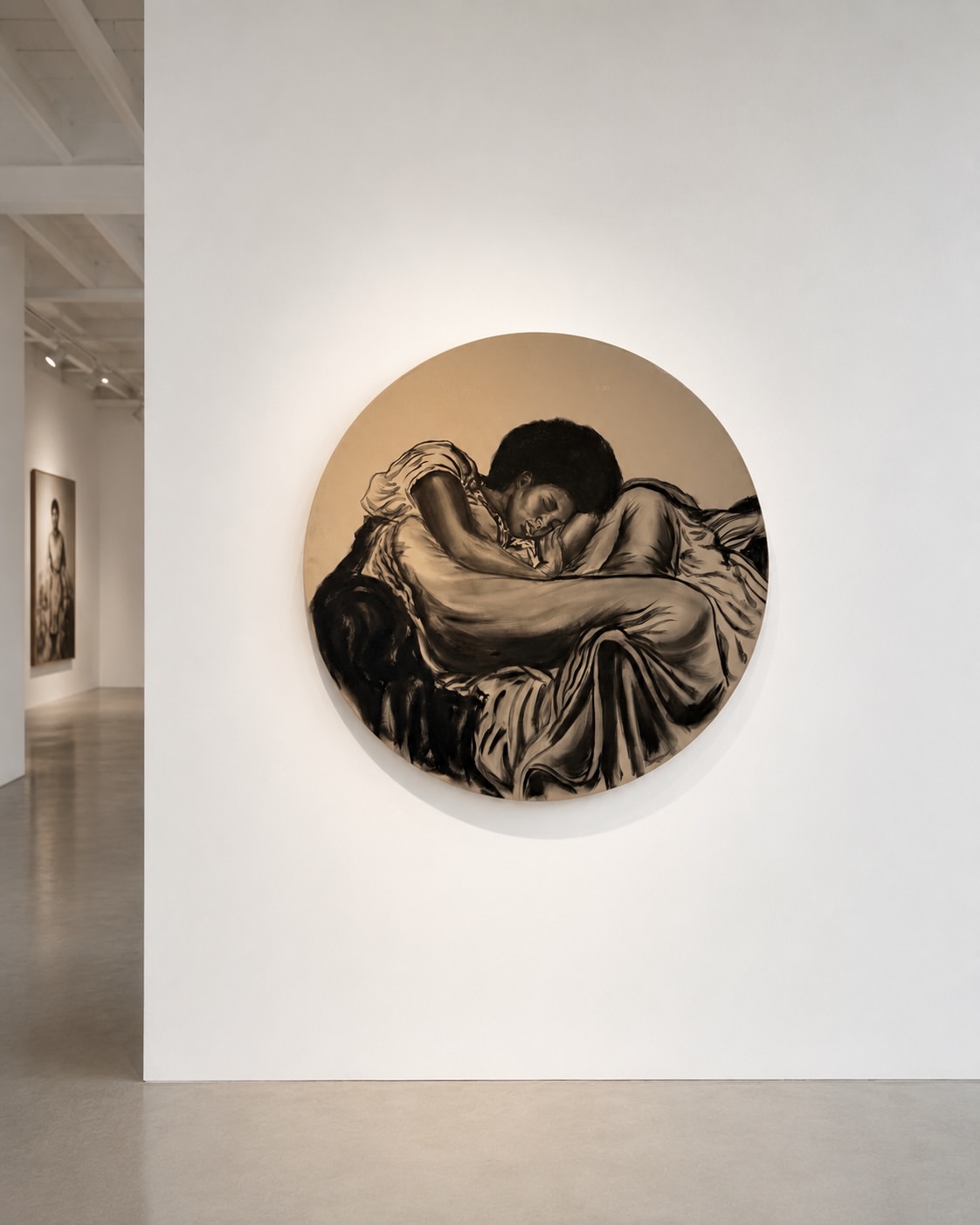
In Before She Carried Us, Fhatuwani Mukheli offers an act of imagination.
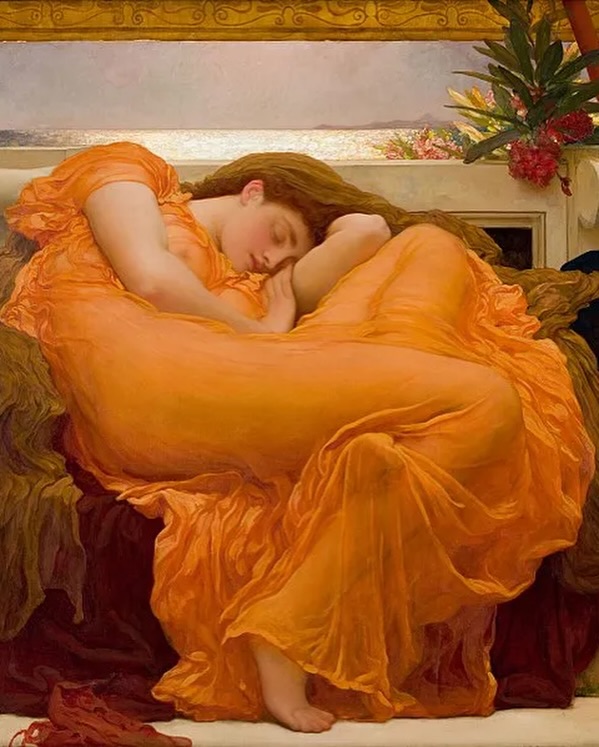
Inspired by Frederic Leighton’s iconic painting Flaming June, Mukheli reimagines the composition with a Black woman at its centre. But rather than simply recreating a familiar image, he transforms it into something deeply personal.
The woman in the painting is his mother.
Not the mother he has always known, but the woman she may have been before responsibility, before sacrifice and before raising a family became the defining chapter of her life.
Accompanying the work, Mukheli writes, “I never knew my mother before she became my mother. I only knew the woman carrying the weight of raising a family.”
It is a simple observation, yet one that resonates with remarkable force.
As children, we often understand our parents only through the roles they play in our own lives. It is only much later that we begin to realise they once held dreams, ambitions, fears and possibilities entirely separate from us.
Mukheli’s portrait quietly asks viewers to consider that version of their own mothers, not through nostalgia, but through empathy.
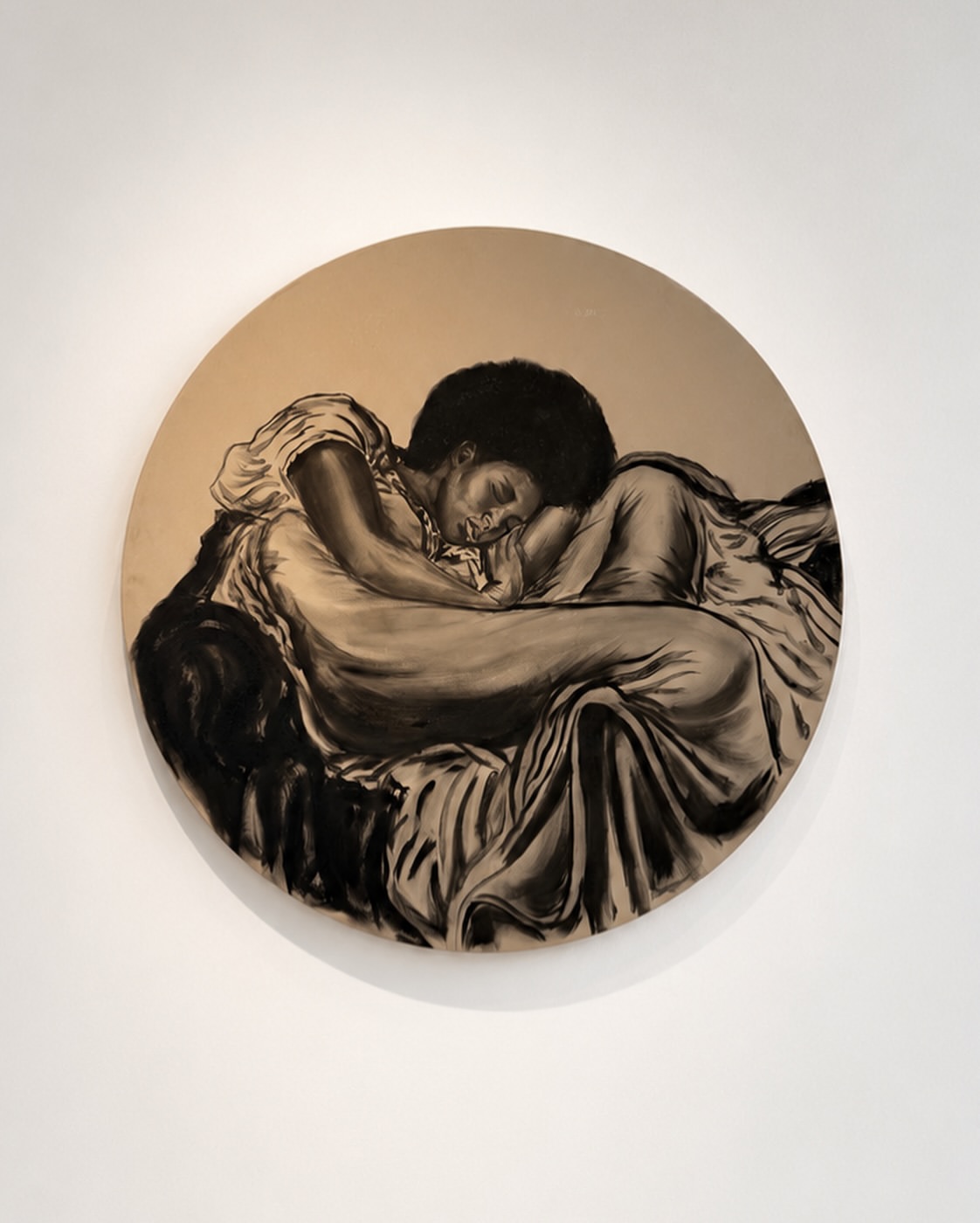
It also speaks to a broader conversation around representation. By placing a Black woman within a composition inspired by a canonical Western artwork, Mukheli creates space for Black womanhood within art history while remaining rooted in his own lived experience.
Rather than treating the past as something fixed, Before She Carried Us imagines what memory might look like if it centred tenderness instead of obligation.
Within
Where Mukheli’s work invites reflection, Terence Ntsako Maluleke’s Within reminds us that creativity itself is a journey.
The finished artwork is striking. A portrait built through clean geometry, expressive line work and a restrained colour palette, it carries both confidence and vulnerability.
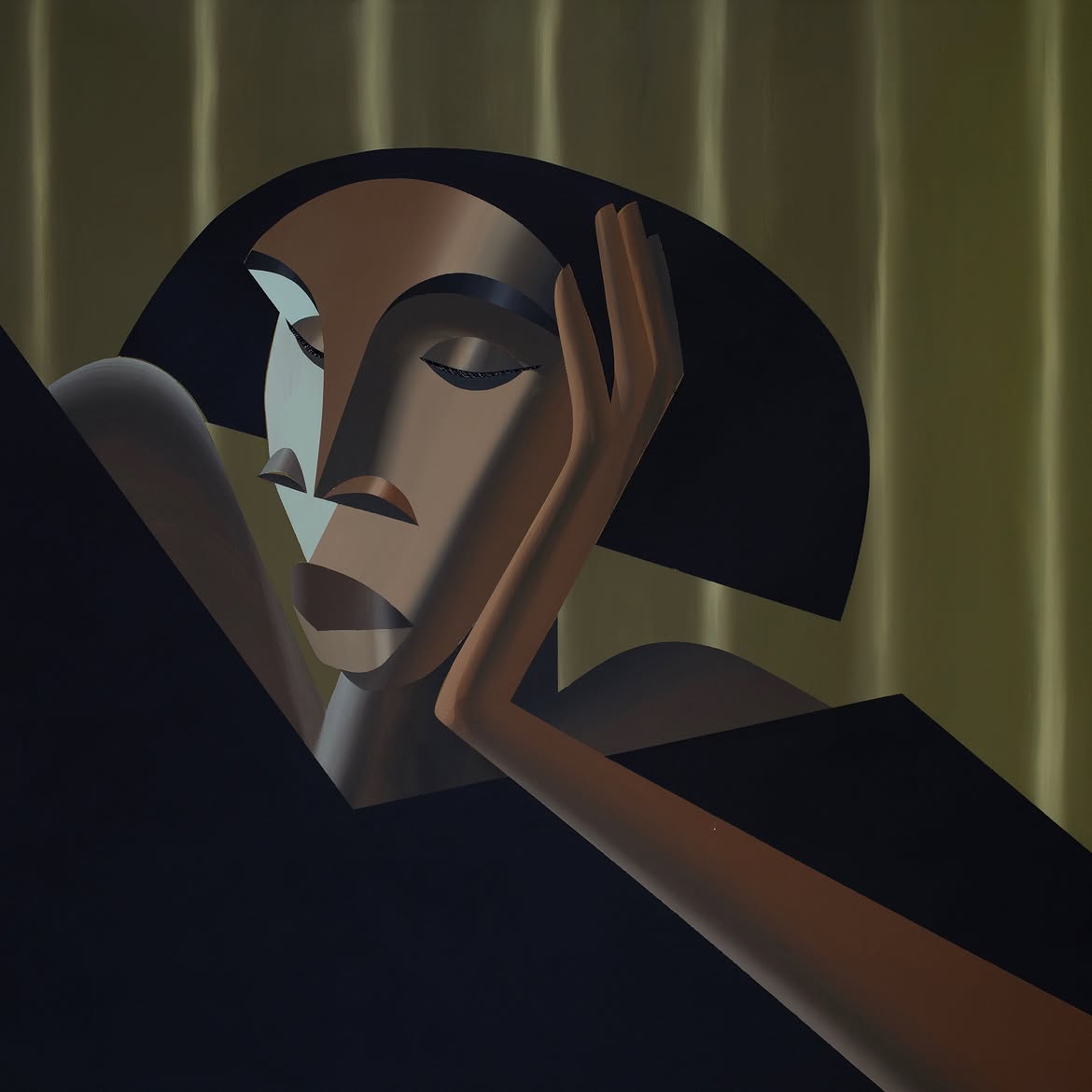
Yet what makes the piece particularly compelling is the process behind it.
In the accompanying video, viewers watch Maluleke tape, paint, peel, pause, reconsider and continue. His own caption captures the rhythm perfectly: “Drawing. Tape. Paint. Peel. Hate it. Love it. Do it again.”
Those few words will feel familiar to anyone who has ever made something.
Behind every polished painting, beautifully edited film, carefully written article or finished design lies a cycle of uncertainty. The creative process is rarely linear. It demands revision, patience and the willingness to begin again.
Watching Within emerge layer by layer is almost meditative. The peeling away of tape becomes more than a satisfying visual moment. It becomes a metaphor for making itself, revealing that clarity often arrives only after uncertainty.
In a culture that tends to celebrate finished products over the work required to create them, Maluleke reminds us that process deserves attention too.
Why These Works Stayed With Us
Although they explore different ideas, both artworks linger for the same reason.
Mukheli asks us to see someone we love through new eyes. Maluleke encourages us to see our own creative journeys with greater compassion.
Neither artwork relies on spectacle. Instead, they trust viewers to sit with the emotions they evoke, whether that is tenderness, curiosity, frustration or hope.
In an age where images are consumed at remarkable speed, these works ask us to slow down. To look again. To think a little longer.
Perhaps that is what memorable art does best. It doesn’t simply ask to be seen. It changes the way we see.
And this week, these two works did exactly that.