Aviwe Plaatjie, a South African artist whose portraits breathe life into the community that surrounds him. With his unique approach to portraiture, Plaatjie transforms ordinary moments into extraordinary narratives, leaving views in awe by the psychological depth of his subjects. Born and raised in Cape Town, his journey has taken him from self-taught beginnings to critical acclaim on the global stage.
Aviwe’s talent was evident from a young age, drawing attention to his innate gift. While mostly self-taught, he honed his skills through classes at the Frank Joubert Art Centre and a transformative mentorship program with Vuyile Voyiya in 2011. This mentorship introduced Plaatjie to the world of printmaking, adding depth and texture to his artistic repertoire.
READ MORE: Dipina tsa Kganya: A lighthouse Of Healing And Memory
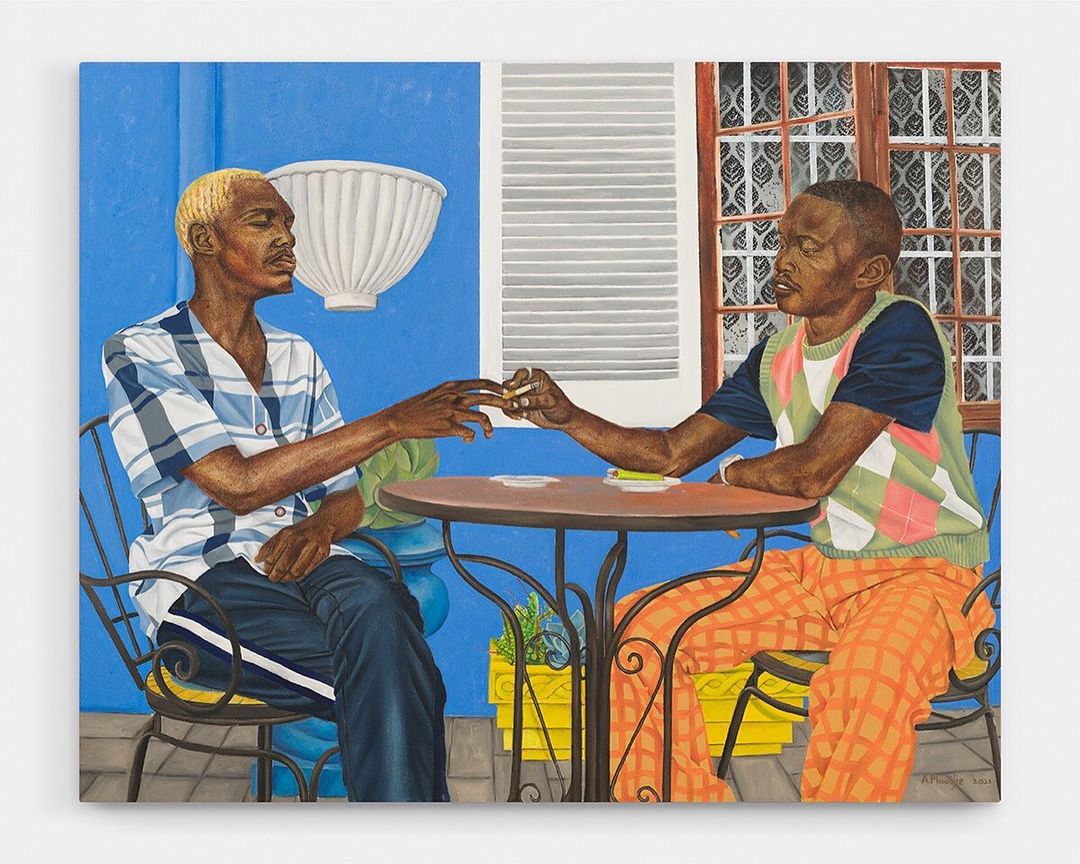
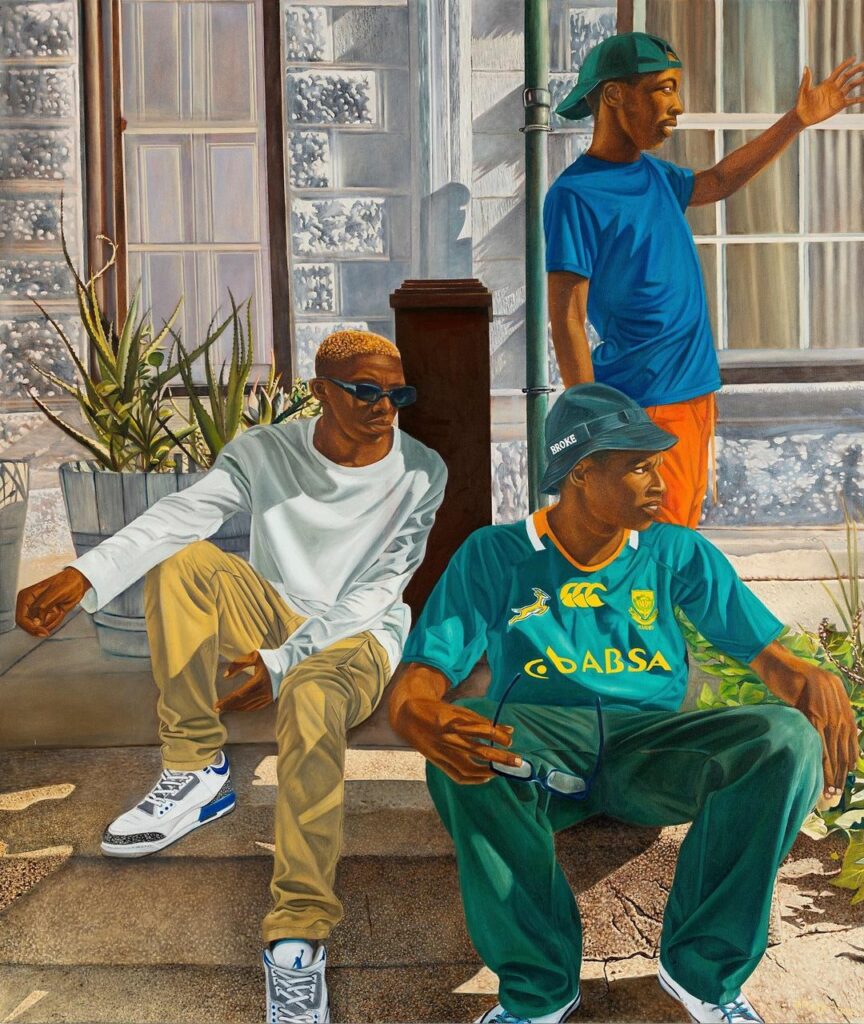
His muse lies in the world that surrounds him, drawing inspiration from the people and places of his beloved Cape Town. Friends, family members and neighbours become the protagonist of his visual stories, often caught in the moments of introspection and quiet contemplation. Through his paintings, Plaatjie offers a unique commentary on life, showcasing the beauty and complexity found in everyday experiences.
READ MORE: Duo Exhibition: Ennck & Semi Showcase Family Values Artwork
While rooted in South African art, Aviwe’s approach to portraiture goes beyond the boundaries of social realism. His distinctive style adds a new dimension to his subjects, infusing their skin with dots of vibrant colours- white, yellow, blue, pink and red. This expressive register elevates his portrayals, capturing the emotional essence of his characters and inviting viewers to walk in their inner worlds.
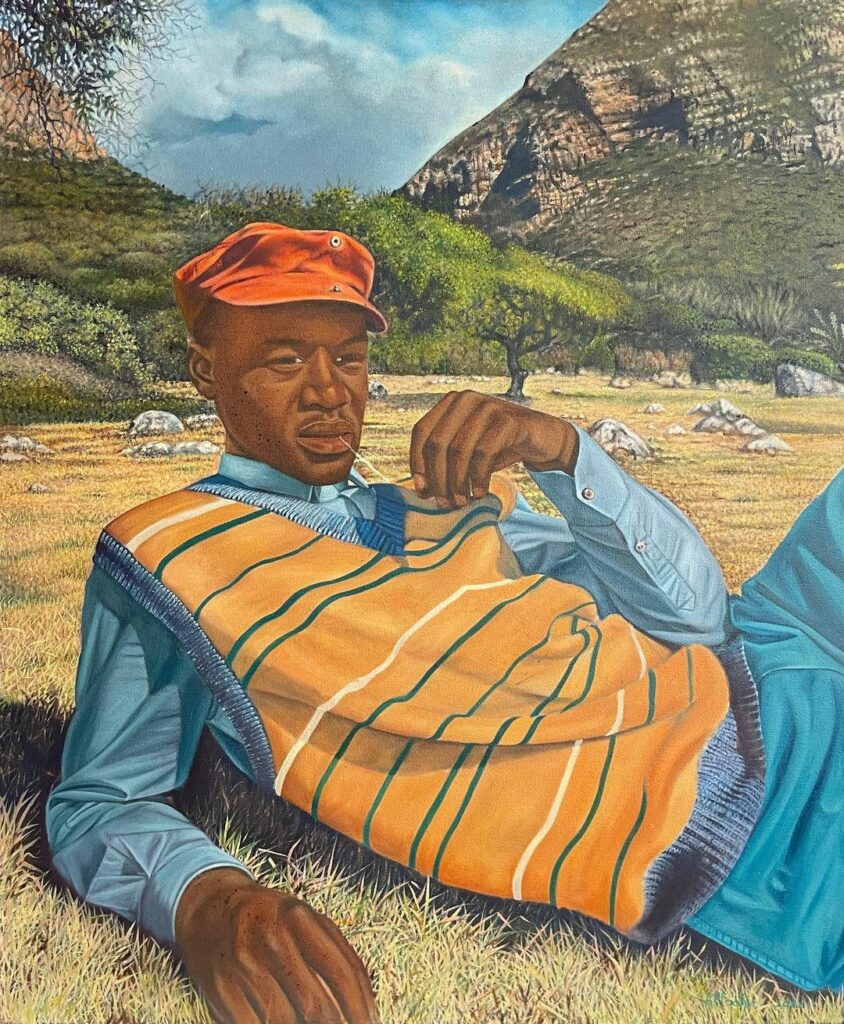
In 2021, Aviwe Plaatjie made waves with his debut solo exhibition title Makwande, meaning “let there be growth” in Nguni. Held at the prestigious Ebony/Curated Cape Town gallery, the show was an instant success, capturing the attention of critics and art enthusiasts alike. Aviwe’s work, with its rich visual narratives and captivating use of colour, transcended borders and was showcased at the London 1-54 Contemporary African Art Fair later that same year.