For decades, getting discovered in South Africa’s creative industries required permission.
An editor would have to want to publish the piece. A radio DJ would have to want to play the song. A record label would have to want to sign the artist. A gallery would have to want to showcase the work. An agency would have to want to employ the designer. A broadcaster would have to want to put you on TV.
Gatekeepers, in other words, controlled the ability for creatives to make a living and share their work with the world.
The internet has changed that.
A musician can publish a song online, unencumbered by the approval of a record label. An artist can seek an audience on a digital platform, unfettered by the constraints of a gallery. A filmmaker can distribute their work without the blessing of a broadcaster. A designer can find clients independently, without the help of an agency. A writer can get their columns read on a digital platform, without the imprimatur of a publication. A creator can grow a following, without first getting permission from a traditional publication.
For South Africa’s creative industries, that shift has changed everything.
But what has it let loose?
South Africa’s creative industries no longer have gatekeepers.
The most obvious consequence of the shift toward digital media is that gatekeepers have lost their leverage.
Distribution channels are no longer controlled or limited by any one organisation.
Social media, publishing platforms and other digital tools allow creatives to reach out and directly engage their audiences.
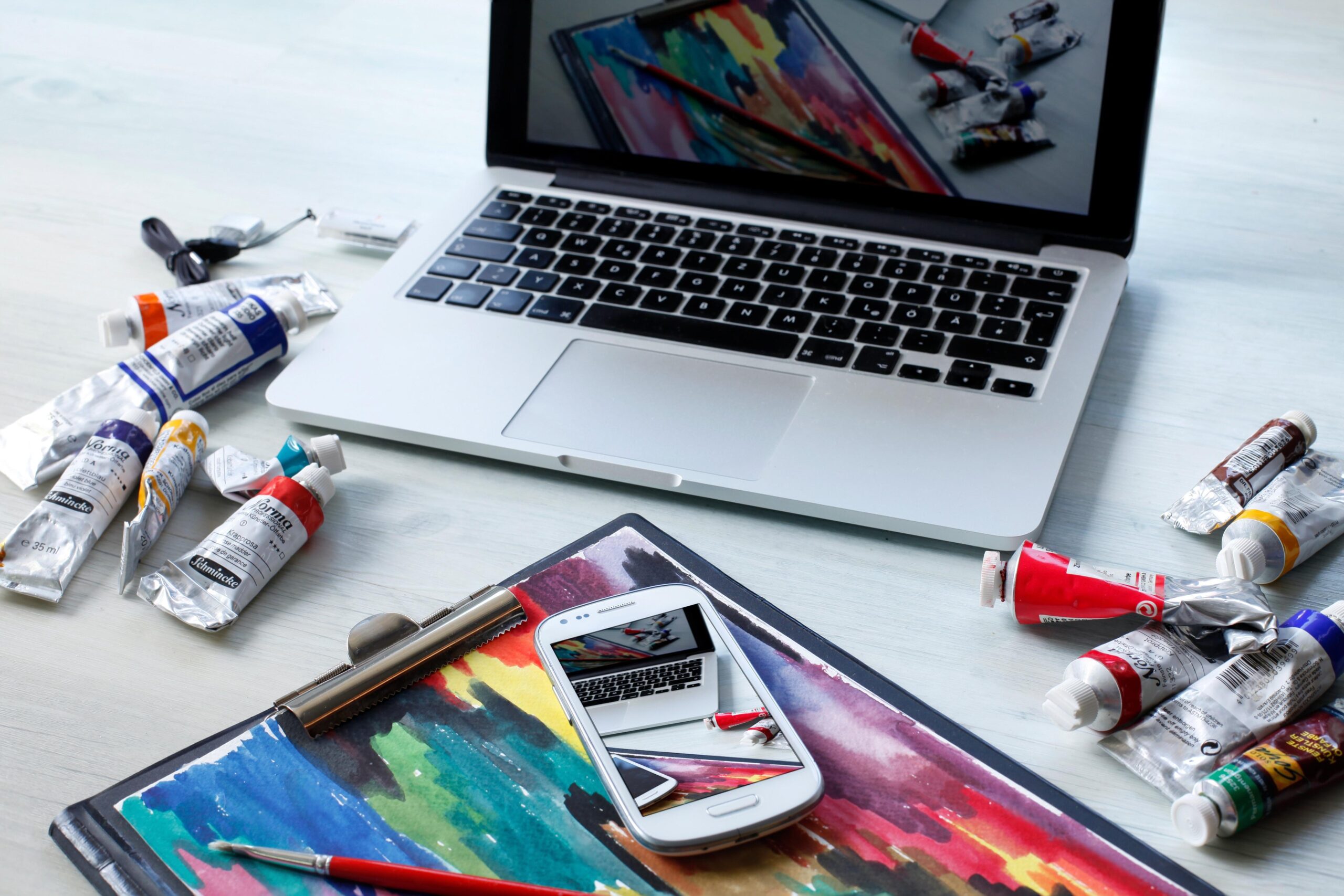
They can construct their own bodies of work, without the permission of a gallery or magazine.
That is an advantage to South Africa’s creative industries, which have long struggled to diversify representation, discover local talent and get South African work in front of local audiences.
Opportunity is more widespread.
A young photographer does not need to get assigned by a magazine to get their shots seen. An independent musician does not need the endorsement of a record label to find fans. A creative does not need an agency to help them pitch their ideas before they demonstrate their competencies.
But while opportunities have multiplied, there are other consequences.
The internet did not kill gatekeeping, it changed who does it.
Gatekeeping is still a thing. The difference is in who does it.
Publishing platforms employ algorithms to decide what gets promoted or buried. The number of followers on a social media post acts as a proxy for perceived quality, clout and popularity. Search engines decide what content is discoverable and why. The commercial logic of the platforms dictates what gets amplified. All of these are forms of gatekeeping, only their inner workings are not as transparent.
In short, it is easier to get passed a human gatekeeper. It is not always easy to get past an algorithm.
The challenge for South Africa’s creative industries is that while more voices can be heard, the ones that dominate the conversation are frequently decided by forces that are not always obvious.
That is the other consequence of a digital creative economy gatekeeping by other means: creatives now have to understand distribution as well as their practice.

An artist has to think about their content strategy and distribution channels. A musician has to think about the viability of short video in their repertoire. A designer has to think about personal branding in addition to their technical skills. A writer has to think about SEO as well as their prose. A filmmaker has to think about discoverability on digital platforms in addition to their craft.
Their practice necessarily extends beyond their art.
That is another form of gatekeeping, one that favours those with the time, money and expertise to master the distribution economy.
South Africa’s creative industries are in an unequal position to compete in this environment.
A different cultural shortlist for South Africa
There is a deeper reason to rethink cultural gatekeeping, however.
If South Africa is to define itself culturally, it cannot rely on a few institutions to determine what gets seen and what remains in the shadows.
The country’s creative industries are spread out across many centres, and its culture is defined by its multiplicity. There are artists, designers, photographers, filmmakers, writers, and musicians across the Eastern Cape, Western Cape, KZN, Northern Cape, Mpumalanga, Limpopo, and the rest of the country.
There is no one South Africa, and consequently no one definitive shortlist of creative achievers.
This decentralised nature of South Africa’s creative industries has implications for who gets to be a cultural gatekeeper.
If the task of cultural curation has been historically concentrated in a few nodes, it is because those areas had the resources and audiences to justify the investment. In other words, Johannesburg and Cape Town dominate South Africa’s creative industries for a reason: centres of population and affluence tend to be natural magnets for cultural production and distribution.
But that also means that when it comes to defining what gets attention, what is desirable and what is worthy of discussion, those in the industry have to take account of the existence of alternative cultural centres.
Who gets to be the new shortlist makers?
The problem with the existing cultural gatekeeping model is that it is simultaneously elitist and unrepresentative. There is nothing wrong with institutions choosing what they want to publish, design, distribute, exhibit or display, so long as they understand that their choices are contextually dependent and do not have the power to dictate cultural value.
The future of South Africa’s creative industries does not lie in the reduction of gatekeeping but rather in its dispersion.
There need to be more shortlists, more tastemakers, more opportunities for people to identify and amplify work that they find interesting, exciting or important.
That diversity of opinion is healthy, both for the institutions that seek to employ creatives and the creators who seek to engage audiences.
Who gets to decide what matters?
Perhaps the most interesting consequence of the end of cultural gatekeeping is that discoverability is no longer dependent on permission.
A creator can achieve visibility before an industry representative takes notice. An artist can gain traction among audiences before a critic takes note. A song can trend before radio programmers take action. A filmmaker can distribute digitally before a broadcaster sees it.
That does not mean all popular things are important, or that algorithms are fair judges of quality.
But it does mean that the traditional values of the cultural gatekeeping class are no longer universally applicable, and that the old system is best replicated by dispersion rather than consolidation.
For South Africa’s creative industries, that is an opportunity to rethink the fundamentals of cultural authority.
Rather than relying on a few institutions to decide what is valuable, the industry needs to be more inquisitive about the origins of talent and more willing to invest in individuals before they have demonstrated their mettle within an existing system.
South Africa needs access, not permission
While South Africa’s creative industries grapple with the implications of a digital future, the debate about gatekeeping misses something important.
Gatekeeping always existed in South Africa’s creative industries.
The difference is that in the past, it took many forms and was dispersed among different organisations.
The concentration of power among a few publishers, broadcasters, record labels and galleries meant that a small number of people had disproportionate control over who got exposure and who did not.
The internet and digital platforms have disrupted that environment, fragmenting distribution and giving creators more direct access to audiences.
The consequence has been to reduce the barriers to entry but increase the complexity of exposure.
Gatekeeping is not dead.
It has merely shifted to other organisations, frequently with less transparent criteria.
South Africa’s creative industries must grapple with this new set of distribution and discovery rules.
It would be incorrect to romanticise the old system while dismissing the new one.
The truth is that neither gatekeeping model is ideal.
Both suffer from the fundamental problem that someone gets to decide who gets to participate in the cultural conversation, which inevitably reduces diversity and makes gatekeepers prone to capture by vested interests.
What South Africa’s creative industries require is an ecosystem where there are many gatekeepers, not just a few.
A thriving creative economy needs multiple entry points, so that opportunities are not concentrated among the privileged few.
Gatekeeping will always exist, but its presence should be limited and its authority diluted by offering alternatives.