“Culture” has become one of the most sought-after terms in brand marketing. Brands want to celebrate culture, connect with culture, shape culture and, increasingly, position themselves as part of it. But what do they actually mean?
In South Africa, culture is a particularly broad and complicated thing. It can mean traditional practices and languages, music and fashion, street culture, food, sport, art, nightlife, internet communities or the identity of a particular neighbourhood. It can belong to a generation, a subculture, a city or a family.
It is difficult to put all of that into a campaign brief. But brands increasingly want to. The reason is fairly obvious. Culture creates relevance. It gets brands access to communities, conversations and identities that cannot be manufactured in a boardroom
But there is a difference between participating in culture and borrowing its language.
Culture is an economy
Culture is often treated as an intangible idea, but there are real people and industries behind it.
South Africa’s Cultural, Creative and Sports Industries contributed an estimated R271.2 billion to the country’s GDP in 2023 (around 3.9% of the national economy), and provide more than a million jobs.
There are musicians recording albums, designers producing collections, photographers renting studios, filmmakers hiring crews, artists making work and organisers keeping cultural spaces alive.
So when a brand says it wants to “support culture”, it is worth asking what that support actually looks like.
When culture becomes an aesthetic
South African advertising has a long history of borrowing cultural shorthand.
Nando’s 2018 “Afro-tising” campaign poked fun at the advertising industry’s tendency to recycle a familiar collection of African visual references, from gritty streets and neon to “tribal” imagery and other signifiers of African identity. The campaign’s creators said they had identified more than 40 examples of this kind of advertising within three years.
But the point is bigger than advertising. A brand can know which neighbourhood looks good on camera, which musician is trending, which slang phrase is circulating and which genre is filling clubs – but that does not necessarily mean it understands the culture it is drawing from.
A campaign can look authentic while being built entirely from the outside.
But brands can contribute
Commercial involvement in culture is not inherently a bad thing. Brand money has helped creative scenes grow for decades.
Sprite’s relationship with South African hip-hop, for example, has included initiatives such as the Sprite Hip Hoop Tour and its Ventilation street tape series, which helped uncover artists including Kwesta.
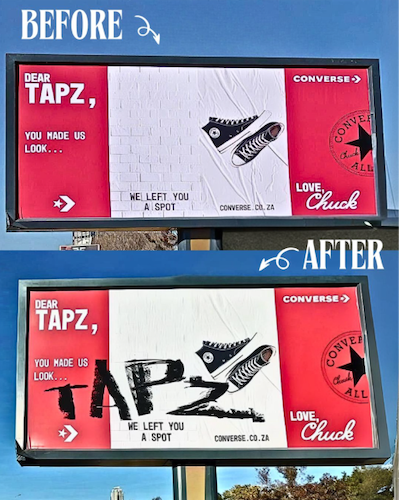
More recently, Converse used its Johannesburg advertising spaces in a 2025 campaign inviting anonymous street artist Tapz to paint on its billboards. The campaign framed the gesture around creating space for an existing Johannesburg artist rather than simply putting that artist into a conventional advertisement.
These are still marketing campaigns that have commercial objectives. That’s fine. The more interesting question is what the commercial relationship makes possible. Is the brand paying the people who make the culture? Creating opportunities? Supporting spaces and infrastructure? Commissioning new work? Giving creatives meaningful ownership or access? Or is it simply borrowing their credibility for the duration of a campaign?
Culture is more than a moodboard
This is where the word “culture” starts to lose meaning. A brand deck can turn a living community into a collection of references: sneakers, graffiti, township streets, a popular song, a few lines of isiZulu
Suddenly, culture becomes an aesthetic.
But South Africa does not have one culture that can be neatly packaged for commercial use. Our cultural landscape is complicated precisely because it is made up of different histories, communities, identities and creative movements.
If brands want to participate in that landscape, perhaps the question should shift from “How can we make ourselves culturally relevant?” to “What can we contribute to the people already making culture?”
Culture does not need brands to exist. Brands increasingly need culture to remain relevant. The least they can do is make sure that relationship goes both ways.